Introduction to Sports Court Surfaces in India
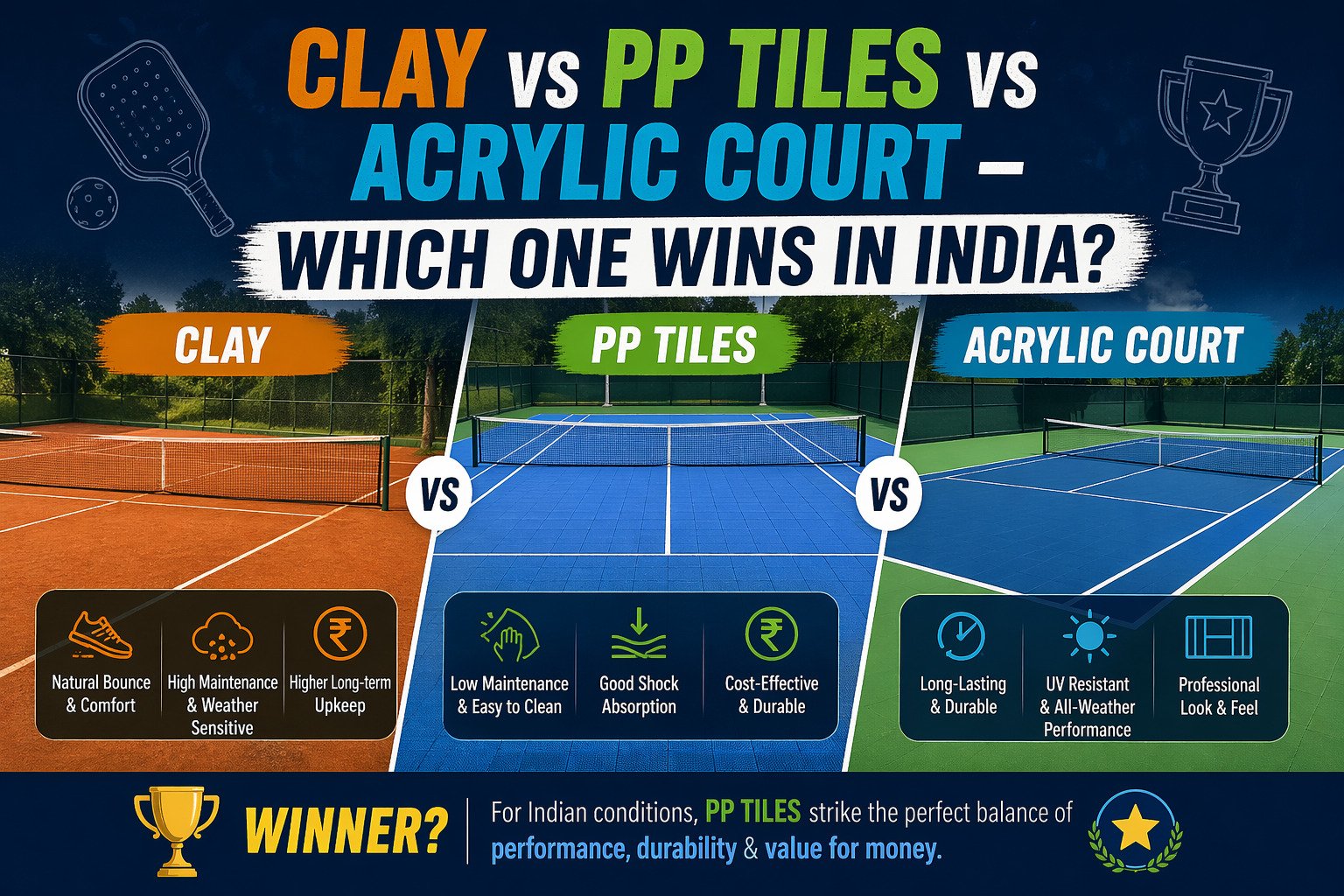
India’s sports infrastructure is evolving rapidly, and one of the most debated topics in this transformation is the choice of court surfaces—especially when comparing Clay vs PP Tiles vs Acrylic Court options. Whether it’s tennis, basketball, badminton, or multi-purpose courts, the type of surface you choose directly impacts performance, durability, maintenance costs, and even player safety. If you’ve ever stepped onto a clay court after rain or played on a hot acrylic surface in peak summer, you already know how dramatically surfaces can change the game experience.
Table of contents
Across India, three major types of surfaces dominate the conversation—clay courts, polypropylene (PP) tiles, and acrylic courts. Each comes with its own strengths, weaknesses, and suitability depending on the environment and usage. But here’s the catch: what works perfectly in Europe or the US doesn’t always translate well to Indian conditions. Climate variability, budget constraints, and usage intensity make the decision far more complex.
In cities like Delhi, Mumbai, Bengaluru, and even Tier-2 towns, institutions and private developers are investing heavily in sports infrastructure. From school playgrounds to premium sports clubs, everyone wants a surface that offers the best balance between cost, performance, and longevity. But is there truly a “winner,” or does it depend on specific needs?
This article dives deep into each surface type, breaking down their composition, advantages, drawbacks, costs, and performance in Indian conditions. By the end, you won’t just know the differences—you’ll know exactly which one makes the most sense for your situation.
Why Surface Choice Matters More Than You Think
Choosing a court surface isn’t just about aesthetics or budget—it’s about the entire playing experience. Think of it like choosing the right tires for your car. You wouldn’t use racing tires on rough village roads, right? The same logic applies here. The surface affects how the ball bounces, how players move, and even how their bodies absorb impact.
For instance, clay courts are known for slower gameplay and higher bounce, which favors endurance-based players. Acrylic courts, on the other hand, offer speed and consistency, making them ideal for competitive matches. PP tiles bring a modern twist, offering modular flexibility and shock absorption. Each of these characteristics influences not only performance but also injury risk.
In India, where temperatures can soar above 45°C and monsoons can flood outdoor courts, durability becomes a critical factor. A poor surface choice can lead to frequent repairs, higher maintenance costs, and ultimately, a poor return on investment. That’s why understanding the nuances of each surface is essential before making a decision.
Another overlooked factor is user diversity. A school court, for example, will be used by children of varying skill levels, while a professional academy demands high-performance standards. The same surface may not serve both purposes effectively. So, the “best” surface is always contextual—it depends on who’s using it and how often.
Rising Popularity of Multi-Sport Courts in India
India is witnessing a surge in demand for multi-sport courts, especially in urban residential complexes, schools, and corporate campuses. These courts are designed to accommodate multiple games—basketball, volleyball, badminton, and sometimes even futsal—on a single surface. This trend is driven by limited space availability and the need for cost-effective solutions.
PP tiles and acrylic surfaces are leading this revolution, largely because clay courts are not practical for multi-sport use. Modular PP tiles, in particular, have gained traction due to their ease of installation and versatility. You can literally snap them together like Lego pieces, and they’re ready to use within days. Acrylic courts, while slightly more permanent, also offer flexibility in markings and customization.
What’s interesting is how user expectations are evolving. People now want surfaces that are not just functional but also visually appealing and low-maintenance. Bright colors, anti-slip textures, and all-weather usability are becoming standard requirements. Clay courts, despite their traditional charm, struggle to meet these modern demands, especially in urban settings.
Another driving factor is government initiatives promoting sports at grassroots levels. Programs like Khelo India have increased awareness and funding for sports infrastructure, pushing institutions to invest in better surfaces. As a result, the debate between clay, PP tiles, and acrylic courts is more relevant than ever.
So, where does each surface stand in this changing landscape? Let’s break it down, starting with the most traditional option—clay courts.
Overview of Clay Courts
What Are Clay Courts Made Of?
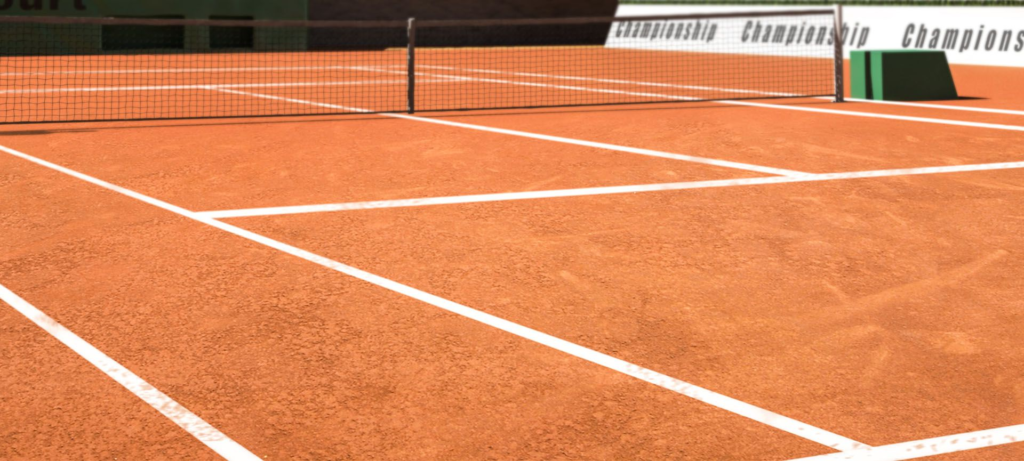
Clay courts are often romanticized as the soul of traditional tennis, but in reality, they are a carefully engineered surface made from crushed stone, brick, shale, or other fine aggregates. In India, most clay courts are constructed using locally available materials like red soil or brick powder, layered over a compacted base. The top layer is what gives the court its distinctive color and playing characteristics.
The construction process is both an art and a science. Multiple layers are laid down to ensure proper drainage, stability, and surface smoothness. A well-built clay court requires precise grading to prevent water accumulation, especially during monsoons. Without proper drainage, the court can quickly become unusable, turning into a muddy mess after heavy rain.
One unique aspect of clay courts is their dynamic surface behavior. Unlike hard courts, clay shifts slightly underfoot, which affects movement and ball bounce. This is why players often slide on clay—a technique that’s almost impossible on acrylic or PP tile surfaces. The ball tends to bounce higher and slower, leading to longer rallies and a more strategic style of play.
However, the quality of a clay court in India can vary significantly depending on construction standards and maintenance practices. While professional-grade clay courts offer excellent performance, many local courts suffer from uneven surfaces and poor upkeep. This inconsistency is one of the biggest challenges associated with clay courts in the Indian context.
Despite these challenges, clay courts remain popular in certain regions and among traditional tennis enthusiasts. But are they still relevant in today’s fast-paced, multi-sport environment? Let’s explore their advantages and limitations next.
Advantages of Clay Courts
Clay courts bring a certain old-school charm that’s hard to ignore, but beyond aesthetics, they offer some genuinely practical benefits—especially in a country like India where climate and cost sensitivity play a big role. One of the biggest advantages is player comfort. Clay is a softer surface compared to acrylic, which means it absorbs impact better. For players who spend hours training, this translates to reduced stress on joints, knees, and ankles. That’s one reason why many coaches prefer clay for beginners and long training sessions.
Another major plus is the slower pace of the game. The ball loses speed when it hits the clay, leading to longer rallies. This encourages players to develop patience, strategy, and endurance rather than relying purely on power. If you’re training young athletes, this can be incredibly beneficial for skill development. It’s like learning to drive in traffic before hitting the highway—you build better control.
Cost is another factor where clay often shines, at least initially. Construction costs are relatively low because the materials are locally available. For schools or small academies operating on tight budgets, clay courts can be an attractive option. You don’t need expensive synthetic layers or imported materials, which keeps upfront investment manageable.
There’s also an environmental angle. Clay courts are more eco-friendly compared to synthetic alternatives. They don’t involve plastics or chemical coatings, making them a greener choice. In an era where sustainability is gaining importance, this can be a subtle but meaningful advantage.
That said, these benefits come with conditions. A clay court performs well only when it’s properly maintained. Without regular watering, rolling, and leveling, the surface can quickly deteriorate. So while it offers comfort and affordability, it demands consistent care to stay playable.
Limitations of Clay Courts
Here’s the reality check—clay courts can quickly become more trouble than they’re worth if you’re not prepared for the upkeep. The biggest drawback is high maintenance. Unlike acrylic or PP tiles, clay courts require daily attention. Watering is essential to keep the surface compact and prevent dust, especially in India’s dry and hot regions. Skip maintenance for even a few days, and you’ll notice cracks, uneven patches, and inconsistent bounce.
Weather is another major challenge. India’s climate is anything but predictable, and clay courts don’t handle extremes very well. During the monsoon season, heavy rainfall can make the court completely unusable. Waterlogging is a common issue unless the drainage system is top-notch. On the flip side, in peak summer, the surface can dry out too quickly, leading to excessive dust and poor playing conditions.
Durability is also a concern. Clay courts wear out faster compared to synthetic surfaces. Frequent use, especially in public or school settings, can lead to rapid degradation. This means you’ll need periodic resurfacing, which adds to long-term costs. What seems affordable initially can become expensive over time if maintenance isn’t managed efficiently.
Another limitation is lack of versatility. Clay courts are primarily suited for tennis and don’t adapt well to other sports. In a country where space is limited and multi-sport usage is often required, this becomes a significant disadvantage. You can’t easily convert a clay court into a basketball or badminton court without major modifications.
Finally, there’s the issue of consistency. Even well-maintained clay courts can have slight variations in bounce and surface texture. For professional-level play, this inconsistency can be frustrating. Players who are used to predictable surfaces like acrylic may find clay less reliable.
So while clay courts have their strengths, they demand a level of commitment that not everyone is ready for—especially in modern Indian sports infrastructure.
Understanding PP Tiles Courts
What Are Polypropylene (PP) Tiles?
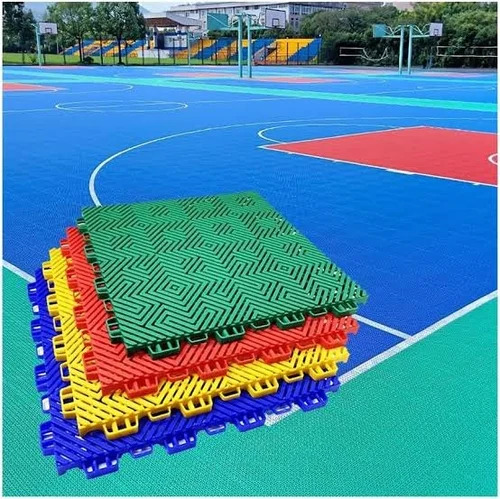
Polypropylene (PP) tiles represent a modern, modular approach to sports flooring that’s gaining serious traction across India. These tiles are made from high-impact plastic polymers and are designed to interlock seamlessly, creating a durable and flexible playing surface. Think of them as giant puzzle pieces that snap together to form a court—simple in concept but highly engineered in execution.
What makes PP tiles stand out is their modular design. Unlike traditional surfaces that require extensive groundwork and curing time, PP tiles can be installed relatively quickly. In many cases, a court can be ready for use within a few days. This is a huge advantage for schools, residential societies, and commercial spaces that want minimal disruption during installation.
The structure of these tiles is also quite interesting. Most PP tiles feature a suspended design, which means there’s a slight gap between the tiles and the base surface. This allows for better shock absorption and drainage. Rainwater can pass through the gaps, making the court usable soon after rainfall—a big win in India’s monsoon-prone regions.
Another key feature is customization. PP tiles come in various colors and textures, allowing for visually appealing court designs. You can easily mark multiple sports on the same surface, making them ideal for multi-purpose use. Whether it’s basketball, futsal, volleyball, or even skating, PP tiles can handle it all.
However, not all PP tiles are created equal. Quality can vary significantly depending on the manufacturer. High-quality tiles offer UV resistance, anti-slip properties, and long-lasting durability, while cheaper options may fade, crack, or become slippery over time.
In short, PP tiles bring flexibility and convenience to the table, but their performance largely depends on quality and proper installation.
Benefits of PP Tile Courts
PP tile courts are often seen as the Swiss Army knife of sports surfaces, and for good reason. Their biggest strength lies in versatility. If you’re dealing with limited space but need to accommodate multiple sports, PP tiles are hard to beat. You can have a basketball court in the morning, a badminton game in the evening, and a futsal match at night—all on the same surface.
One of the standout benefits is shock absorption. The suspended design reduces impact on players’ joints, making it a safer option for both kids and adults. This is especially important in schools and community spaces where players may not have professional training or conditioning.
Weather resistance is another area where PP tiles shine. Unlike clay, they don’t turn into mud during rain, and unlike acrylic, they don’t become unbearably hot under the sun. High-quality PP tiles are designed to withstand UV exposure, ensuring they don’t fade or degrade quickly in India’s harsh sunlight.
Maintenance is relatively आसान compared to clay courts. You don’t need daily watering or rolling. A simple cleaning routine—like sweeping or occasional washing—is usually enough to keep the surface in good condition. This makes PP tiles a practical choice for facilities with limited maintenance resources.
Installation speed is another big win. Traditional courts can take weeks to complete, but PP tile courts can be set up in a fraction of that time. This reduces labor costs and allows quicker utilization of the facility.
That said, PP tiles aren’t perfect. While they offer great flexibility, they may not deliver the same level of professional performance as acrylic courts, especially for high-level competitions. Still, for most practical purposes in India, they strike a very appealing balance.
Drawbacks of PP Tiles
While PP tiles offer flexibility and convenience, they’re not without their flaws. One of the main concerns is initial cost. Compared to clay courts, PP tiles require a higher upfront investment. High-quality tiles, especially those with UV protection and advanced shock absorption, can be quite expensive. For budget-conscious projects, this can be a limiting factor.
Another issue is surface feel and performance. While PP tiles are great for recreational play, they may not provide the same consistent ball bounce as acrylic courts. For sports like tennis or professional basketball, this can affect gameplay quality. Serious athletes often prefer more predictable surfaces.
Heat retention, although better than acrylic in some cases, can still be a concern. On extremely hot days, the tiles can become warm, though not as intense as hard courts. Lower-quality tiles may also become slippery when dusty or wet, posing a safety risk.
Durability depends heavily on quality. Cheap PP tiles can crack, warp, or lose color over time. This makes it crucial to invest in reputable brands, which again pushes up the cost. Repairs can also be tricky—while individual tiles can be replaced, matching colors and ensuring uniformity can be challenging after years of use.
Lastly, there’s the perception factor. In professional settings, PP tiles are sometimes seen as less “premium” compared to acrylic courts. This may not matter for schools or residential complexes, but for high-end sports facilities, it can influence decision-making.
So while PP tiles are incredibly versatile, they’re best suited for multi-purpose and recreational use rather than elite-level competition.
Acrylic Courts Explained
What Is an Acrylic Sports Surface?
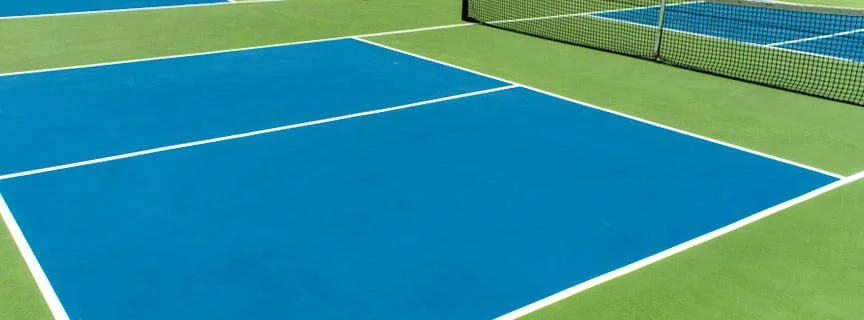
Acrylic courts are often considered the gold standard in modern sports infrastructure, especially for tennis, basketball, and multi-purpose arenas. If you’ve ever watched professional tournaments like the US Open or Australian Open, you’ve already seen acrylic surfaces in action. These courts are built by applying multiple layers of acrylic coating over a concrete or asphalt base, resulting in a smooth, durable, and visually striking playing surface.
The construction process is quite technical. It begins with a solid base—usually concrete—which is then layered with primers, resurfacing compounds, and finally, acrylic color coatings. Each layer serves a purpose, from leveling the surface to enhancing grip and durability. The final result is a court that offers consistent bounce, excellent traction, and long-lasting performance.
One of the standout characteristics of acrylic courts is their customizability. You can control the speed of the court by adjusting the texture and number of coating layers. Want a faster court? Use smoother finishes. Prefer slower gameplay? Add more texture. This flexibility makes acrylic courts suitable for both recreational and professional use.
In India, acrylic courts have gained popularity in urban areas, sports academies, and premium residential complexes. They’re often seen as a long-term investment due to their durability and relatively low maintenance compared to clay courts. However, the initial setup requires skilled labor and precise execution—cutting corners during installation can lead to cracks, uneven surfaces, and costly repairs later.
Another important aspect is aesthetics. Acrylic courts are visually appealing, with vibrant colors and clean lines that elevate the overall look of a facility. In a competitive market where appearance matters, this can be a significant advantage.
So while acrylic courts demand a higher upfront investment, they deliver a professional-grade experience that’s hard to match.
Key Benefits of Acrylic Courts
Acrylic courts bring a level of reliability and performance that makes them a top choice for serious sports facilities. One of their biggest advantages is consistency. The ball bounce on an acrylic surface is highly predictable, which is crucial for competitive play. Players can rely on uniform behavior across the court, allowing them to focus on strategy and skill rather than adjusting to surface irregularities.
Durability is another major strength. When properly constructed, acrylic courts can last for years with minimal degradation. They’re designed to withstand heavy usage, making them ideal for academies, clubs, and public facilities. In India, where courts often see high footfall, this durability translates into better long-term value.
Maintenance is relatively straightforward. Unlike clay courts, there’s no need for ежеднев watering or rolling. Basic cleaning and occasional resurfacing—typically every 4–6 years—are enough to keep the court in good condition. This reduces ongoing costs and operational hassle.
Weather resistance is also a strong point. Acrylic surfaces can handle heat, humidity, and moderate rainfall without significant damage. They dry relatively quickly after rain, allowing for faster resumption of play. High-quality coatings also include UV protection, which prevents fading and surface breakdown under intense sunlight.
Another underrated benefit is multi-sport adaptability. While acrylic courts are often associated with tennis, they can be easily adapted for basketball, volleyball, and other sports with proper markings. This makes them a versatile option for facilities that want both performance and flexibility.
From a professional standpoint, acrylic courts carry a certain prestige. They’re widely used in international tournaments, which adds credibility to any facility that installs them. For academies aiming to train competitive athletes, this can be a significant advantage.
Downsides of Acrylic Courts
Despite their many strengths, acrylic courts aren’t without drawbacks, and it’s important to consider them before making a decision. The most obvious challenge is the high initial cost. Compared to clay and even some PP tile systems, acrylic courts require a larger upfront investment. This includes not just materials but also skilled labor for proper installation.
Another concern is surface hardness. Acrylic courts are essentially hard courts, which means they offer less shock absorption compared to clay or PP tiles. Over time, this can put stress on players’ joints, especially for those who play frequently. Injuries like knee pain or shin splints are more common on harder surfaces, particularly among beginners or older players.
Heat retention is a significant issue in Indian conditions. During peak summer, acrylic courts can become extremely hot, making them uncomfortable to play on during the day. The surface can absorb and retain heat, sometimes reaching temperatures that discourage usage altogether.
Cracking is another potential problem. If the base layer (concrete or asphalt) isn’t constructed properly, cracks can develop over time. These cracks can affect gameplay and require costly repairs. This is why proper site preparation and professional installation are critical.
Lastly, while maintenance is lower than clay, it’s not zero. Periodic resurfacing is necessary to maintain performance and appearance. Ignoring this can lead to faded colors, reduced grip, and overall deterioration.
So while acrylic courts offer top-tier performance, they demand careful planning, quality construction, and a willingness to invest upfront.
Cost Comparison in India
Installation Costs Breakdown
When it comes to choosing between clay, PP tiles, and acrylic courts, cost often becomes the निर्णायक factor. In India, where budgets can vary widely depending on the project, understanding the financial implications of each option is essential.
Here’s a simplified comparison of average installation costs in India (per sq. ft.):
| Surface Type | Approx Cost (INR/sq. ft.) | Installation Time | Skill Requirement |
|---|---|---|---|
| Clay Court | ₹80 – ₹150 | Medium | Moderate |
| PP Tiles | ₹250 – ₹450 | Fast | Low |
| Acrylic | ₹300 – ₹600 | Slow | High |
Clay courts are clearly the most affordable in terms of initial setup. The materials are locally sourced, and the construction process is relatively straightforward. However, this low cost can be misleading if you don’t factor in maintenance.
PP tiles fall in the mid-range. While the tiles themselves can be expensive, the quick installation reduces labor costs. Plus, you don’t need heavy groundwork, which saves time and money.
Acrylic courts sit at the higher end of the spectrum. The need for a मजबूत base, multiple coating layers, and skilled labor drives up the cost. However, this investment often pays off in terms of durability and performance.
The key takeaway here is that initial cost doesn’t tell the whole story. You need to consider how much you’ll spend over the next 5–10 years.
Maintenance Costs Over Time
If installation cost is the first chapter of the story, maintenance cost is the long-running sequel that often surprises people. Clay courts, while cheap to build, are expensive to maintain. Daily watering, नियमित rolling, and frequent resurfacing add up quickly. Over a few years, the total cost can surpass that of acrylic courts.
PP tiles, on the other hand, offer low maintenance requirements. Cleaning is simple, and there’s no need for specialized care. However, damaged tiles may need replacement, and over time, color fading can occur, especially with lower-quality products.
Acrylic courts strike a balance. They require minimal daily maintenance but need periodic resurfacing every few years. This can be a significant expense, but it’s infrequent compared to the ongoing upkeep of clay courts.
Here’s a quick comparison:
| Surface Type | Maintenance Level | Long-Term Cost |
|---|---|---|
| Clay Court | High | High |
| PP Tiles | Low | Moderate |
| Acrylic | Moderate | Moderate |
In India, where labor and water costs can vary, these factors become even more important. A surface that seems affordable initially may turn into a financial burden if maintenance isn’t considered.
Performance Comparison
Player Comfort and Injury Risk
When players step onto a court, they’re not just interacting with a surface—they’re putting their bodies on the line. That’s why player comfort and injury risk are critical factors when comparing clay, PP tiles, and acrylic courts, especially in India where facilities are often used intensively and by mixed skill levels.
Clay courts are widely regarded as the most joint-friendly surface. Their soft, slightly loose top layer absorbs impact and allows for controlled sliding, which reduces sudden stress on knees and ankles. For beginners, young athletes, or players recovering from injuries, this can make a noticeable difference. You’re less likely to experience the kind of jarring impact that hard courts can produce. However, there’s a trade-off—sliding requires technique. Without proper training, players can lose balance or strain muscles.
PP tiles sit comfortably in the middle. Thanks to their suspended design, they offer a degree of shock absorption that hard acrylic surfaces lack. This makes them a popular choice for schools and recreational facilities where safety is a priority. The grip is generally good, though it depends on tile quality. High-end tiles provide anti-slip textures, while cheaper versions can become slippery when dusty or wet, increasing the risk of falls.
Acrylic courts, while excellent for performance, are the hardest on the body. The rigid base means minimal shock absorption, which can lead to joint fatigue over time. For professional athletes, this is often an acceptable trade-off for speed and consistency. But for casual players or older users, prolonged play on acrylic surfaces can increase the risk of injuries like shin splints or knee pain.
In India, where courts often serve a wide demographic—from schoolchildren to adults—the choice becomes even more nuanced. If safety and comfort are your top priorities, clay and PP tiles have a clear edge. But if you’re aiming for competitive performance, acrylic courts still dominate.
Weather Resistance and Durability
India’s climate doesn’t play nice. Scorching summers, heavy monsoons, dust, humidity—you name it. So how do these surfaces hold up under such conditions? This is where the real differences start to emerge.
Clay courts struggle the most with weather variability. Rain is their biggest enemy. Even moderate showers can render a clay court unusable, and heavy monsoons can cause severe damage if drainage isn’t perfect. In summer, excessive heat dries out the surface, leading to cracks and dust issues. Maintaining a clay court in India often feels like a full-time job, especially during extreme seasons.
PP tiles are designed with weather in mind. Their perforated structure allows water to drain through, making them playable soon after rain. They also handle heat better than acrylic in many cases, although they can still warm up under direct sunlight. High-quality tiles come with UV protection, ensuring they don’t degrade quickly. In terms of durability, PP tiles can last for years, but only if you invest in reputable brands.
Acrylic courts offer strong all-weather performance, but with some caveats. They can withstand rain and humidity without major issues, and they dry relatively quickly. However, extreme heat can make them uncomfortable to use during the day. Durability-wise, they’re excellent—provided the base is constructed properly. Poor installation can lead to cracks, which are expensive to fix.
Here’s a quick snapshot:
| Factor | Clay Court | PP Tiles | Acrylic Court |
|---|---|---|---|
| Rain Resistance | Poor | Excellent | Good |
| Heat Handling | Moderate | Good | Poor–Moderate |
| Durability | Low–Moderate | Moderate–High | High |
In Indian conditions, PP tiles and acrylic courts clearly outperform clay in terms of weather resistance and long-term durability. The choice between the two then depends on budget, usage, and performance expectations.
Which Surface Wins for Indian Conditions?
Best Choice for Schools and Academies
If you’re building a court for a school or training academy in India, the decision isn’t just about performance—it’s about practicality. You need something safe, versatile, and cost-effective over the long run. In this context, Acrylic often emeemergesrge as the most balanced option.
Why? Because schools typically require multi-sport functionality. A single court might host basketball, volleyball, badminton, and even recreational activities. Clay courts simply can’t handle that level of versatility. Acrylic courts can, but their hardness and higher cost may not be ideal for younger खिलाड़ियों.
PP tiles strike a sweet spot. They’re safer than acrylic, more versatile than clay, and easier to maintain than both. Installation is quick, which means minimal disruption to school operations. Plus, the modular nature allows for easy repairs—if one section gets damaged, you don’t need to redo the entire court.
Another important factor is usage frequency. School courts are used ежедневно, often by large groups of students. PP tiles can handle this without deteriorating quickly. And since they don’t require daily maintenance like clay, schools can save on operational costs.
That said, if the primary focus is tennis training, clay courts can still be a good option for academies that prioritize skill development and have the resources for maintenance. But for general-purpose use, PP tiles are hard to beat.
Best Option for Professional and Commercial Use
When it comes to professional sports facilities, क्लब, and commercial complexes, the priorities shift. Performance, durability, and brand image take center stage. In this arena, acrylic courts usually come out on top.
Professional खिलाड़ियों demand consistency. They need a surface where the ball behaves predictably, and acrylic delivers exactly that. Whether it’s tennis or basketball, the uniform bounce and smooth finish make it ideal for competitive play. This is one reason why most international tournaments use acrylic surfaces.
From a business perspective, acrylic courts also offer better long-term value. While the initial investment is high, the durability and relatively low maintenance costs make them cost-effective over time. They also enhance the visual appeal of a facility, which can attract more users and justify premium pricing.
PP tiles can still be a strong contender in commercial setups, especially for multi-sport arenas or recreational centers. They’re quicker to install and offer flexibility. However, for high-end facilities aiming to host tournaments or attract serious athletes, acrylic courts carry more credibility.
Clay courts, in this segment, are becoming increasingly rare in India. Their maintenance demands and limited versatility make them less appealing for commercial use, unless the facility specifically targets tennis enthusiasts.
So, if you’re aiming for professional-grade performance and long-term returns, acrylic courts are the clear winner.
Conclusion
Choosing between clay, PP tiles, and acrylic courts in India isn’t about picking a universal winner—it’s about finding the right fit for your specific needs. Each surface has its own personality, strengths, and limitations, and the “best” choice depends on how and where the court will be used.
Clay courts offer comfort and tradition but demand constant care and struggle with Indian weather. PP tiles bring flexibility, safety, and ease of maintenance, making them ideal for schools and multi-purpose use. Acrylic courts deliver unmatched performance and durability, making them the top choice for professional and commercial facilities.
FAQ’S
Yes, acrylic courts are well-suited for India’s diverse climate. They can handle heat, humidity, and moderate rainfall without major damage. While they may get warm during peak summer afternoons, high-quality coatings with UV resistance help maintain surface integrity. Unlike clay courts, they don’t get muddy during monsoons, making them more usable year-round.
When you compare Clay vs PP Tiles vs Acrylic Court, acrylic clearly leads in overall performance and reliability. Clay courts offer comfort but require heavy maintenance and struggle in Indian weather. PP tiles are versatile and easy to install, but they lack the professional consistency many players expect. Acrylic courts, on the other hand, provide consistent bounce, long-term durability, and a professional playing experience, making them the best all-round choice.
India’s climate can be harsh, and this is where acrylic courts shine. Clay courts become unusable during rain and require constant care in summer. PP tiles handle rain well but may lose grip or fade over time. Acrylic courts offer the best balance—they are weather-resistant, quick-drying, and durable, making them ideal for year-round use across most regions in India.
Clay courts demand daily maintenance like watering and leveling, making them the most labor-intensive. PP tiles require occasional cleaning and tile replacement. Acrylic courts are the most practical—they need minimal routine maintenance and only periodic resurfacing, which makes them highly efficient over time.
Clay courts may seem cheap initially but become expensive due to ongoing maintenance. PP tiles fall in the mid-range with moderate upkeep. Acrylic courts, despite higher upfront costs, deliver better long-term value because of their durability and lower maintenance frequency. Over time, acrylic often turns out to be the smarter investment.
Acrylic courts are the clear winner for professional use. Clay courts are slower and less consistent, while PP tiles are more suited for recreational play. Acrylic surfaces provide uniform bounce, better grip, and tournament-level performance, which is why they are used in global competitions.