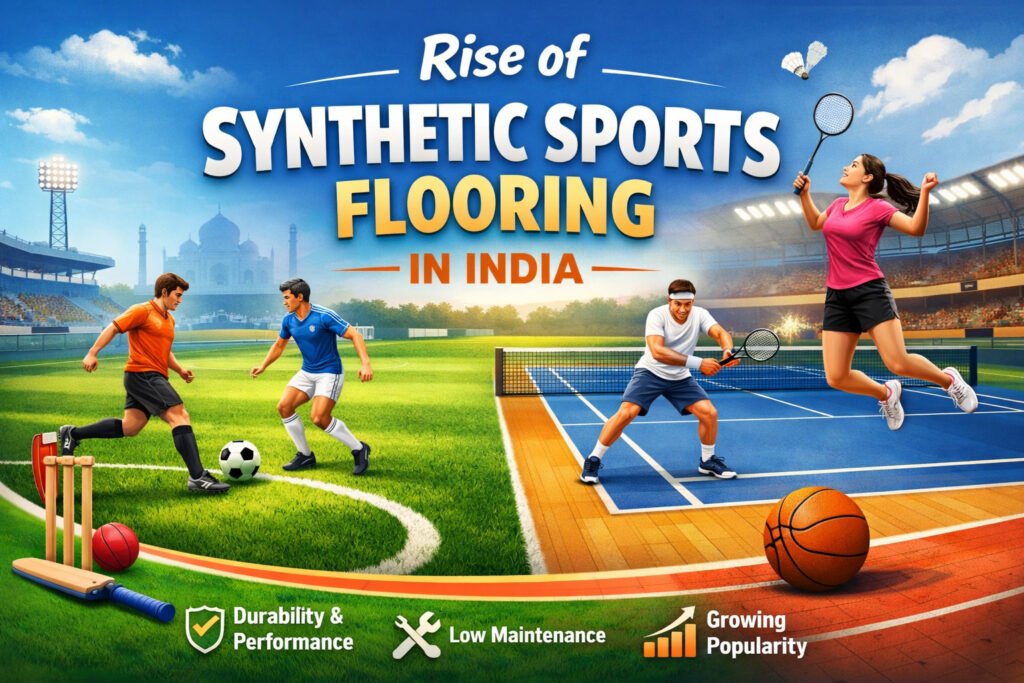
Rise of Synthetic Sports Flooring in India
India is witnessing a silent revolution beneath the feet of its athletes, driven by the rapid rise of synthetic sports flooring in India. Walk into a modern sports complex today—whether in Delhi, Mumbai, Bengaluru, or even tier-2 cities—and you’ll notice something different. The dusty, uneven grounds and cracked concrete courts are steadily being replaced with vibrant, cushioned, high-performance surfaces. This transformation isn’t accidental. It reflects a larger shift in how India perceives sports, fitness, and infrastructure. Synthetic sports flooring has emerged as a game-changer in this evolution. As sports culture expands beyond cricket into badminton, basketball, athletics, tennis, futsal, and more, the need for professional-grade surfaces has become undeniable. After all, would you expect athletes to deliver world-class performances on outdated grounds? Probably not. The rise of synthetic sports flooring in India is closely linked to urbanization, increased health awareness, private investments, and government-backed sports initiatives like Khelo India. Schools are upgrading their playgrounds. Residential societies are installing multi-sport courts. Even rural areas are slowly adopting modern flooring systems to support aspiring athletes. But what exactly is synthetic sports flooring, and why is it gaining so much traction? Is it just about aesthetics, or does it genuinely enhance performance and safety? Let’s break it down and explore how this industry is reshaping India’s sporting landscape—one court at a time. What Is Synthetic Sports Flooring? Synthetic sports flooring refers to specially engineered surfaces made from artificial materials like polyurethane, acrylic, PVC, rubber, or synthetic turf, designed specifically for sports activities. Unlike traditional mud, grass, or cement surfaces, these floors are built with performance, durability, and athlete safety in mind. Think of it as upgrading from a basic bicycle to a high-performance sports bike. Both can take you from point A to point B, but the experience, comfort, and efficiency are worlds apart. Synthetic flooring offers shock absorption, better grip, consistent bounce, and improved traction—all of which directly impact athletic performance. These floors are not one-size-fits-all. Different sports require different surface properties. For example: The materials are layered carefully. A typical system may include a base layer for stability, a cushioning layer for shock absorption, and a topcoat for grip and durability. This multi-layered construction ensures athletes can train longer and compete harder without excessive strain on their joints. In India, where climate conditions vary drastically—from humid coastal regions to dry northern plains—synthetic sports flooring offers adaptability. Many surfaces are UV-resistant, water-resistant, and designed to withstand heavy foot traffic. In simple terms, synthetic sports flooring transforms ordinary spaces into high-performance arenas. It bridges the gap between amateur play and professional standards, allowing athletes to train in conditions similar to international venues. Evolution from Traditional to Modern Surfaces Not too long ago, most sports activities in India took place on basic surfaces—mud fields, cemented courtyards, or natural grass grounds. While these surfaces served generations of athletes, they came with limitations. Uneven terrain led to injuries. Grass fields required constant maintenance. Cement courts were hard on knees and ankles. As India began producing more professional athletes competing at global platforms, the shortcomings of traditional surfaces became evident. Performance consistency matters. Injury prevention matters even more. The shift toward synthetic sports flooring began in metropolitan cities and elite institutions. Initially, it was considered a luxury—something only international schools or high-end sports clubs could afford. But over time, the narrative changed. It became less about luxury and more about necessity. Urbanization played a crucial role. With shrinking open spaces, multi-purpose courts became popular. Synthetic surfaces allowed multiple sports to be played on a single ground without damaging the base. This flexibility made them economically attractive. Another turning point was India hosting international tournaments. Exposure to global standards raised expectations. Athletes training on substandard surfaces found it difficult to adjust to professional tracks abroad. The solution? Upgrade the home infrastructure. Today, synthetic sports flooring is no longer confined to elite spaces. Tier-2 and tier-3 cities are investing in acrylic tennis courts, PU running tracks, and artificial turf football fields. Even government schools are slowly transitioning toward modern surfaces under sports development schemes. The journey from mud fields to high-tech flooring mirrors India’s broader development story—a nation stepping confidently toward global standards while nurturing grassroots talent. Why India Is Embracing Synthetic Sports Flooring If you pause for a moment and observe the sports ecosystem in India today, you’ll notice something remarkable—it’s no longer limited to cricket stadiums packed with fans. Badminton academies are flourishing, football leagues are expanding, marathons are filling city streets, and children are choosing basketball and skating alongside traditional games. This cultural shift is one of the strongest reasons behind the rapid rise of synthetic sports flooring in India. Sports are no longer just extracurricular activities; they’re careers, passions, and even lifestyle choices. Parents who once insisted on textbooks now encourage professional coaching. Schools compete in inter-state tournaments. Corporate houses sponsor leagues. With this surge in participation comes the demand for professional-grade infrastructure. And let’s be honest—no serious athlete wants to train on a cracked cement floor. Another driving factor is urban development. As cities expand vertically, open playgrounds shrink. Synthetic sports flooring allows multi-purpose courts to be installed in compact spaces like rooftops, basements, and residential complexes. A single synthetic court can host badminton in the morning, basketball in the afternoon, and futsal in the evening. That kind of flexibility is a game-changer. Moreover, awareness about injury prevention is growing. Coaches and fitness experts now emphasize the importance of shock-absorbing surfaces. Hard concrete can damage joints over time, especially for young athletes. Synthetic floors reduce impact stress, offering safer playing conditions. In short, India is embracing synthetic sports flooring because it aligns perfectly with its evolving sports culture—modern, ambitious, and performance-driven. Growing Sports Culture and Awareness India’s sports narrative is undergoing a powerful transformation. Gone are the days when cricket overshadowed every other sport. Today, athletes like PV Sindhu, Neeraj Chopra, Mary Kom, and Mirabai Chanu have inspired millions. Their success stories have ignited a nationwide realization: with the right training and infrastructure,