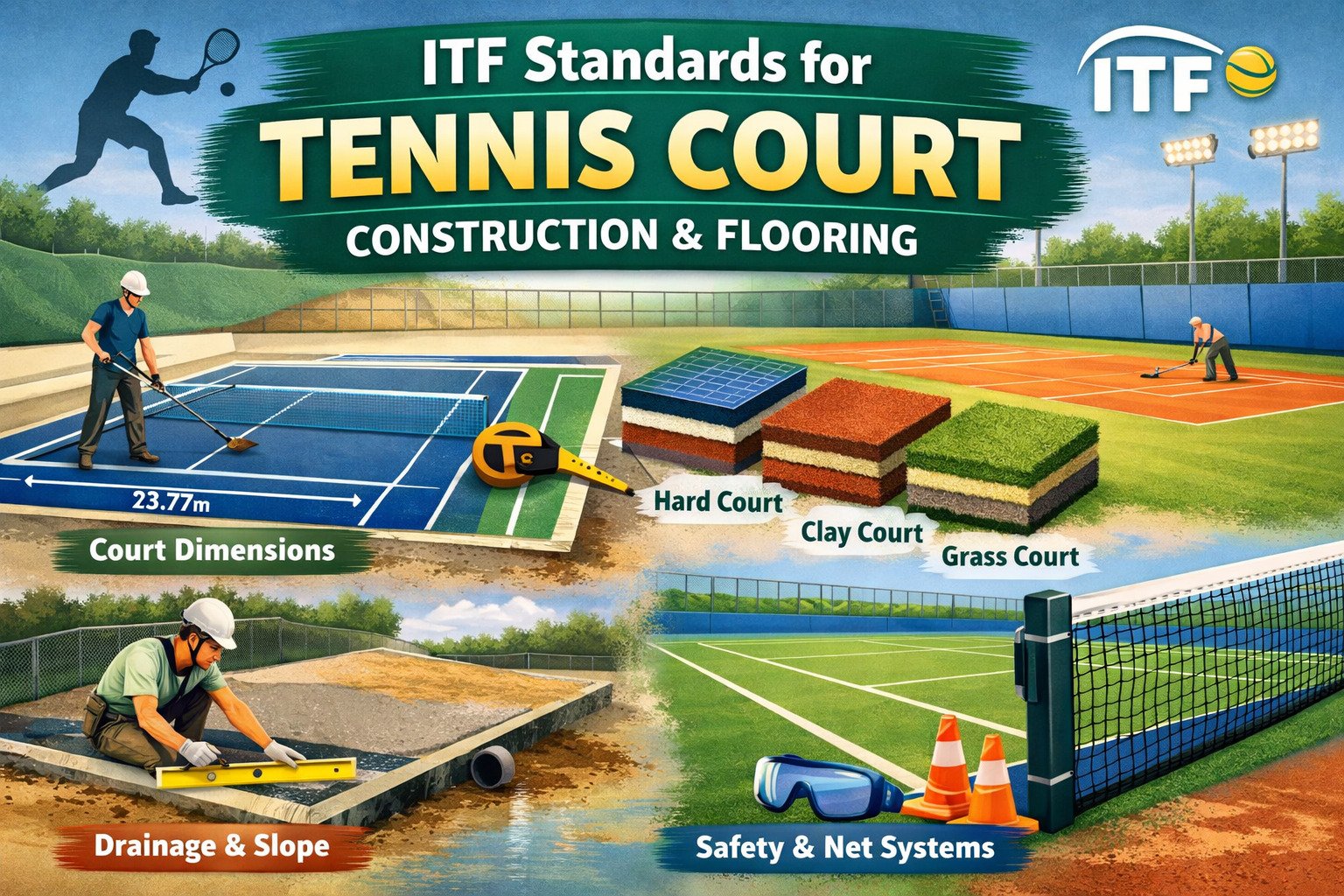
If you’ve ever wondered who actually sets the rules for tennis courts across the globe, the answer lies with the International Tennis Federation (ITF). Think of the ITF as the invisible architect behind every professional and many recreational tennis courts you see. It doesn’t just regulate tournaments—it plays a crucial role in Tennis Court Construction by defining how the game is physically played, right down to the surface beneath your feet. That includes dimensions, materials, and even how the ball should bounce after hitting the court.
Table of contents
Founded in 1913, the ITF has evolved into the global governing body for tennis, overseeing more than 200 member nations. But its role goes far beyond organizing competitions like the Davis Cup or Billie Jean King Cup. One of its most impactful contributions is setting standardized guidelines for court construction and flooring, ensuring consistency whether you’re playing in New York, Paris, or a local club in your town.
Why does that matter so much? Imagine playing tennis on a court where the ball behaves unpredictably—bouncing too high, skidding too fast, or slowing down unevenly. That’s not just frustrating; it disrupts the integrity of the game. The ITF ensures that every certified court provides a predictable and fair playing experience, regardless of surface type.
Another interesting aspect is how the ITF bridges professional and amateur play. Even if you’re not competing at Wimbledon, the court you practice on may still follow ITF-inspired guidelines. This creates a universal language of play, making transitions between courts and competitions seamless.
In essence, the ITF acts like a quality control system for tennis infrastructure. Without it, the sport would lack uniformity, and players would constantly struggle to adapt to inconsistent conditions. Whether you’re a seasoned pro or a weekend enthusiast, the ITF’s influence shapes every rally you play.
Why ITF Standards Matter in Court Construction
At first glance, tennis court construction might seem like a straightforward process—flatten some land, add a surface, draw lines, and you’re good to go. But the reality is far more intricate, and this is exactly where ITF standards become essential. These guidelines ensure that courts are not only playable but also safe, durable, and consistent across different environments.
One of the biggest reasons ITF standards matter is performance consistency. Players train for years to perfect their timing, footwork, and shot precision. If the court behaves unpredictably, all that training can feel useless. ITF standards ensure that factors like ball rebound, surface friction, and speed are within controlled ranges, allowing players to perform at their best without second-guessing the surface.
Safety is another critical factor. A poorly constructed court can lead to injuries, especially if the surface lacks proper shock absorption or has uneven areas. ITF guidelines specify materials and construction techniques that minimize impact stress on joints, which is particularly important given that tennis involves rapid lateral movements and sudden stops.
There’s also a financial angle to consider. Building a tennis court is a significant investment, often ranging from $25,000 to over $100,000 depending on the surface and location. Following ITF standards ensures that this investment pays off in the long run by reducing maintenance costs and extending the court’s lifespan. Skipping these guidelines might save money upfront but often leads to costly repairs later.
Another underrated benefit is global recognition and usability. Courts built according to ITF standards can be used for official matches and tournaments, opening up opportunities for clubs and facilities to host events. This can significantly boost visibility and revenue.
Ultimately, ITF standards act like a blueprint for excellence. They bring together science, engineering, and sport to create courts that not only look professional but also perform flawlessly. Ignoring them is like building a car without following safety regulations—it might work, but it won’t take you far.
Classification of Tennis Court Surfaces
Overview of Surface Categories
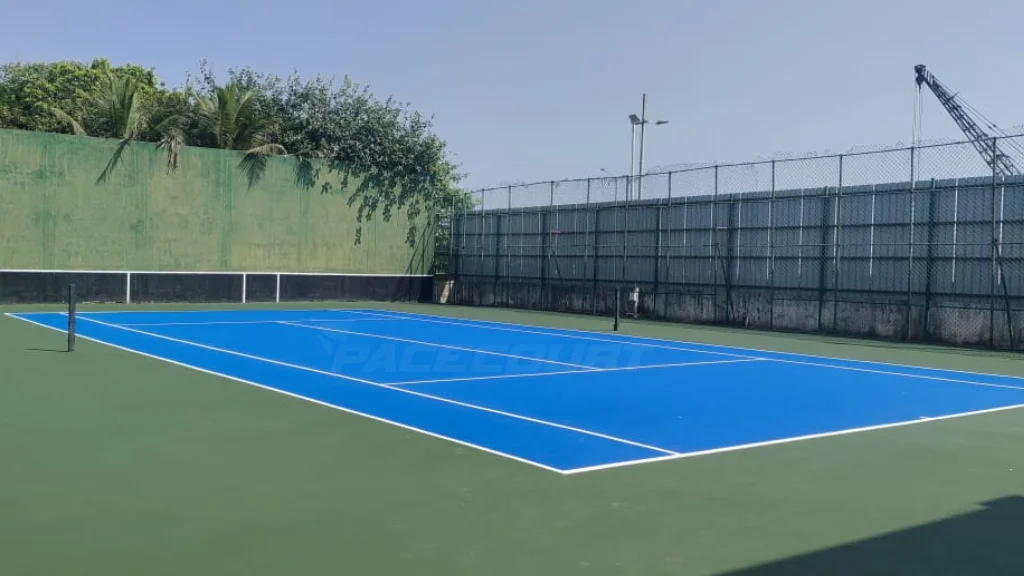
When you step onto a tennis court, the surface beneath your shoes does more than just support your movement—it completely shapes how the game unfolds. The ITF classifies tennis court surfaces into distinct categories, each offering a unique playing experience. These categories aren’t random; they’re based on how the ball interacts with the surface and how players move across it.
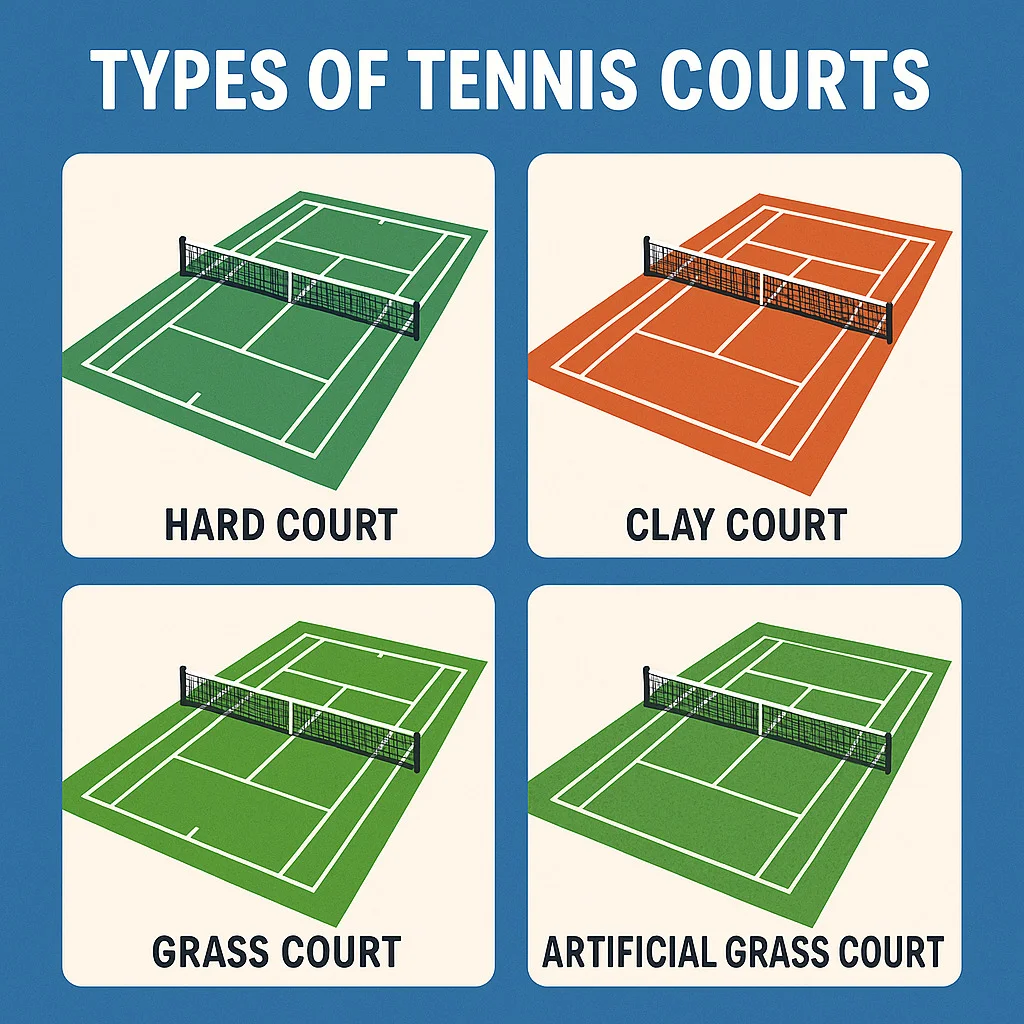
Broadly speaking, tennis surfaces fall into four main types: hard courts, clay courts, grass courts, and artificial/synthetic courts. Each one brings its own personality to the game. Hard courts, for example, are the all-rounders—offering a balance of speed and bounce that suits a wide range of playing styles. Clay courts, on the other hand, slow the game down, creating longer rallies and demanding patience and strategy. Grass courts are the speed demons, producing low, fast bounces that reward aggressive, attacking play.
Synthetic surfaces are where things get interesting. These are engineered to mimic traditional surfaces while offering enhanced durability and lower maintenance. They’ve become increasingly popular, especially in regions where maintaining natural surfaces like grass or clay is challenging due to climate or cost constraints.
What’s fascinating is how these categories influence player development. A player who grows up on clay courts often develops exceptional endurance and defensive skills, while someone trained on grass might excel in quick reflexes and net play. The ITF recognizes these differences and ensures that each surface type meets specific performance benchmarks, so no matter where you play, the game retains its core identity.
Upgrade Your Sports Court Today
Get premium synthetic acrylic flooring designed for durability, grip, and performance.
Get Free ConsultationIn a way, choosing a court surface is like choosing a personality for your tennis facility. It determines not just how the game is played, but also who it attracts and how it’s experienced. That’s why understanding these categories is the first step toward building a court that aligns with your goals.
ITF Court Pace Rating System Explained
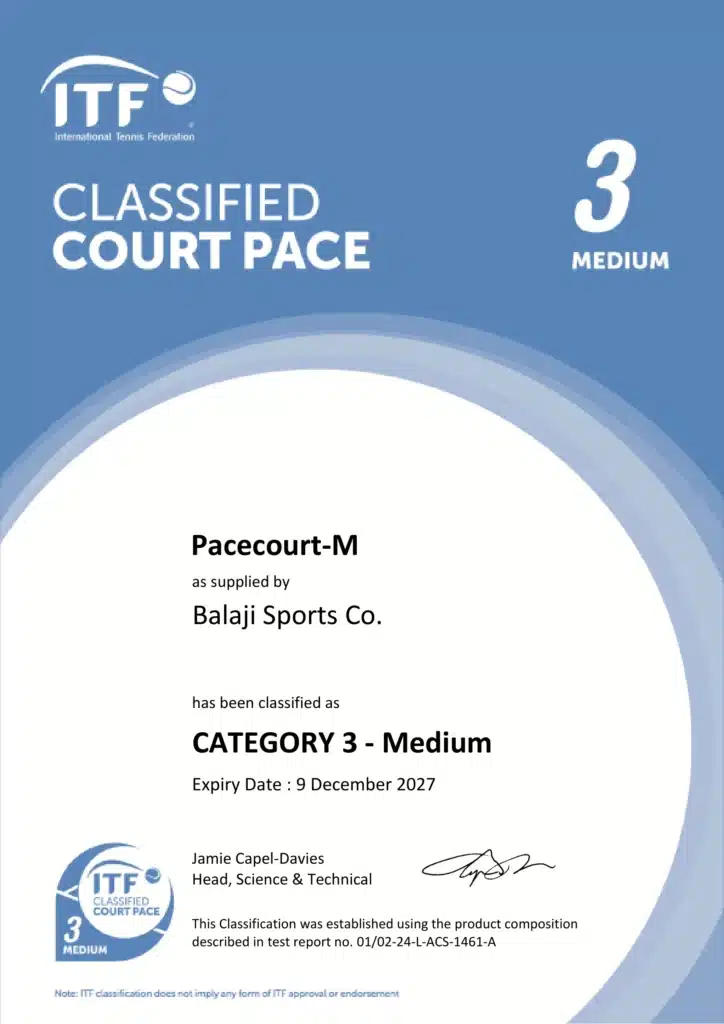
Not all tennis courts are created equal—and the ITF Court Pace Rating (CPR) system is proof of that. This system is essentially the science behind how fast or slow a tennis court plays, and it’s one of the most critical standards in modern court construction. Instead of relying on vague descriptions like “fast” or “slow,” the ITF uses measurable data to classify courts into five pace categories.
Here’s how it breaks down:
| Pace Category | Description |
|---|---|
| Category 1 | Slow |
| Category 2 | Medium-Slow |
| Category 3 | Medium |
| Category 4 | Medium-Fast |
| Category 5 | Fast |
The rating is determined by measuring ball rebound speed and surface friction. In simple terms, it looks at how quickly the ball loses speed after hitting the court and how much grip the surface provides. A high-friction surface like clay slows the ball down, while a low-friction surface like grass speeds things up.
Why does this matter so much? Because the pace of the court directly affects gameplay strategy. On a slow court, rallies tend to be longer, favoring baseline players who rely on consistency and endurance. On a fast court, points are shorter, rewarding players with powerful serves and quick volleys.
From a construction standpoint, achieving the desired pace isn’t just about choosing a surface type—it involves precise calibration of materials, coatings, and even subsurface layers. For example, adjusting the texture of an acrylic coating on a hard court can shift its pace category significantly.
The ITF CPR system also plays a crucial role in tournament organization. Major events often select specific court speeds to create a certain style of play, adding another layer of strategy to the sport.
Think of the CPR system as the “speed dial” of tennis courts. It allows builders and facility owners to fine-tune the playing experience, ensuring that every match feels just right.
Dimensions and Layout Requirements
Standard Court Dimensions
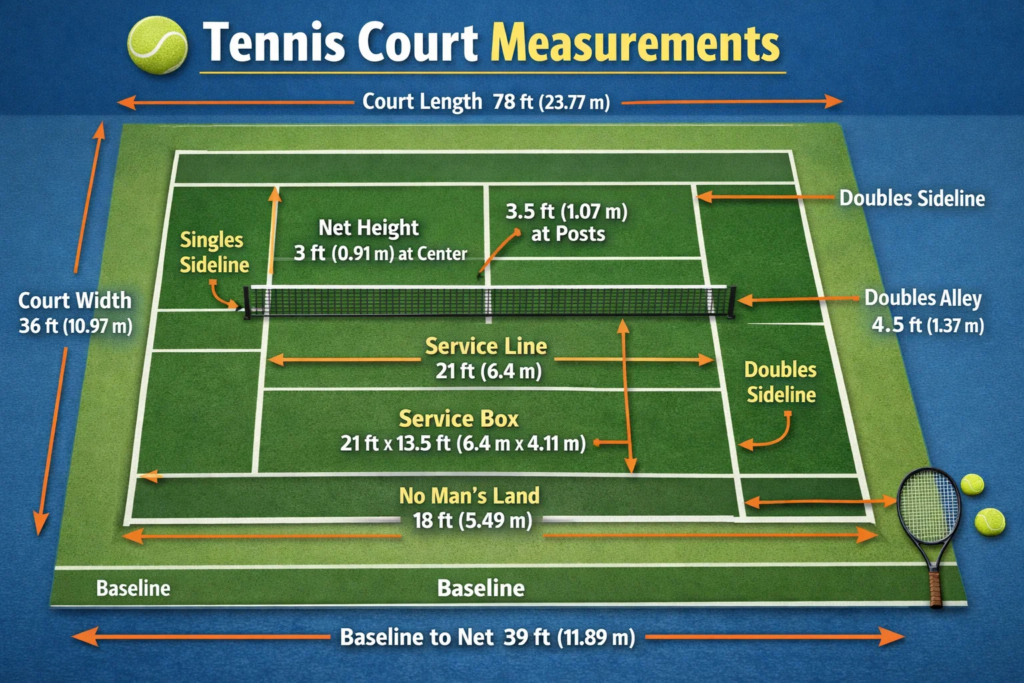
Precision is everything in tennis, and that precision starts with the court itself. The ITF has established exact dimensions that every standard tennis court must follow, ensuring uniformity across the globe. Whether you’re playing in a local club or a Grand Slam stadium, these measurements remain consistent.
A standard tennis court measures 78 feet (23.77 meters) in length. The width varies depending on whether it’s singles or doubles play. For singles matches, the court is 27 feet (8.23 meters) wide, while doubles courts expand to 36 feet (10.97 meters). These dimensions aren’t arbitrary—they’re carefully designed to balance offense and defense, giving players enough space to strategize without making the game too easy or too difficult.
The net divides the court into two equal halves and stands at 3 feet (0.914 meters) high at the center. The baseline, service lines, and center marks are all positioned with exact measurements, ensuring that every serve, rally, and shot adheres to standardized rules.
What’s often overlooked is how these dimensions influence gameplay psychology. A slightly narrower court would make it harder to hit angled shots, while a wider one could make defending nearly impossible. The ITF’s standardized dimensions create a perfect equilibrium, where skill—not environment—determines the outcome.
Upgrade Your Sports Court Today
Get premium synthetic acrylic flooring designed for durability, grip, and performance.
Get Free ConsultationFor builders, adhering to these dimensions is non-negotiable. Even minor deviations can affect gameplay and disqualify a court from official use. That’s why professional construction teams rely on precise surveying tools and meticulous planning to ensure every line is perfectly placed.
In essence, these dimensions are the backbone of tennis. They provide a consistent framework that allows players to focus on performance, knowing that the court itself will always play fair.
Run-off Areas and Space Considerations
While the marked court dimensions define the playing area, the space surrounding the court—known as run-off areas—is just as important. These zones ensure player safety and allow for unrestricted movement during intense rallies. The ITF provides clear guidelines on how much space should be allocated beyond the court lines.
For recreational courts, a minimum run-off area of 12 feet (3.66 meters) behind the baselines and 6 feet (1.83 meters) on the sides is recommended. However, for professional or tournament-level courts, these dimensions increase significantly—often up to 21 feet (6.4 meters) behind the baselines and 12 feet (3.66 meters) on the sides.
Why does this extra space matter? Imagine chasing down a deep shot near the baseline. Without adequate run-off space, you’d risk colliding with a fence or wall, turning a routine play into a dangerous situation. These areas provide a safety buffer, allowing players to move freely and confidently.
Run-off areas also impact the overall aesthetics and functionality of a facility. Larger spaces make courts feel more open and professional, while cramped layouts can feel restrictive and less enjoyable. Additionally, these zones are often used for seating, equipment storage, or even media setups during tournaments.
From a construction perspective, planning for run-off areas requires careful site selection and layout design. It’s not just about fitting a court into available space—it’s about creating an environment that supports high-quality play and safety.
In many ways, run-off areas are like the unsung heroes of tennis court design. They don’t get much attention, but without them, the game simply wouldn’t flow as smoothly or safely.
Base Construction and Subsurface Preparation
Importance of a Stable Foundation
If a tennis court were a house, the surface would be the paint—but the foundation is the structure holding everything together. And just like a poorly built house develops cracks over time, a tennis court with a weak base quickly becomes uneven, unsafe, and expensive to maintain. This is why the ITF places enormous emphasis on base construction and subsurface preparation.
A stable foundation ensures that the court maintains its shape, level, and performance over years of use. Without it, even the highest-quality surface materials won’t perform as expected. You might notice inconsistent ball bounces, small depressions forming, or even visible cracks. These aren’t just cosmetic issues—they directly affect gameplay and player safety.
Typically, the base consists of compacted layers of crushed stone or asphalt/concrete slabs, depending on the type of court being built. Each layer must be carefully installed and compacted to prevent shifting over time. Precision is key here; even a slight slope miscalculation can lead to water pooling or uneven wear.
Think about it this way: when players sprint, stop abruptly, and change direction, they’re putting constant stress on the court. A solid foundation absorbs and distributes that stress evenly. Without it, the surface begins to deteriorate under pressure, much like a road riddled with potholes after heavy traffic.
Another critical aspect is load-bearing capacity. The base must support not just players but also equipment, maintenance machinery, and environmental forces like rain and temperature fluctuations. This is particularly important in regions with extreme weather, where expansion and contraction can wreak havoc on poorly constructed courts.
Investing in a strong foundation might not be the most glamorous part of court construction, but it’s arguably the most important. It’s the difference between a court that lasts decades and one that needs constant repairs. In the long run, cutting corners here is never worth it.
Drainage and Environmental Considerations
Water might seem harmless, but in tennis court construction, it’s one of the biggest enemies. Poor drainage can turn a perfectly built court into a maintenance nightmare, leading to surface damage, mold growth, and inconsistent playing conditions. That’s why ITF standards strongly emphasize proper drainage systems and environmental planning.
A well-designed tennis court should allow water to drain quickly and efficiently, preventing puddles from forming. This is typically achieved by incorporating a slight slope—usually around 1% gradient—which is subtle enough not to affect gameplay but effective in guiding water off the surface.
Beneath the court, drainage layers made of permeable materials like crushed stone help channel water away from the base. In some cases, especially in areas with heavy rainfall, additional drainage systems such as perforated pipes are installed to ensure excess water is properly managed.
Environmental factors also play a significant role. For instance, courts built in humid regions need extra protection against moisture-related issues, while those in colder climates must account for freeze-thaw cycles that can cause cracks and surface damage. The choice of materials and construction methods often depends on these local conditions.
Another interesting consideration is sustainability. Modern tennis court construction increasingly incorporates eco-friendly practices, such as using recycled materials or designing courts that minimize water usage. While not strictly mandated by the ITF, these practices align with broader environmental goals and can enhance the long-term value of a facility.
Ignoring drainage is like ignoring a slow leak in your roof—it might not seem urgent at first, but over time, the damage becomes unavoidable. Proper planning ensures that the court remains playable, safe, and visually appealing regardless of weather conditions.
Types of ITF-Approved Tennis Court Surfaces
Hard Courts
Hard courts are the backbone of modern tennis, and if you’ve watched tournaments like the US Open or Australian Open, you’ve already seen them in action. These courts are typically made from asphalt or concrete bases coated with acrylic layers, creating a durable and versatile playing surface.
What makes hard courts so popular is their balanced performance. They don’t heavily favor one playing style over another, offering a medium pace and consistent bounce. This makes them ideal for both beginners and professionals, as players can develop a well-rounded game without adapting to extreme conditions.
From a construction standpoint, hard courts are relatively straightforward compared to other surfaces. However, achieving ITF compliance still requires precision. The thickness of the acrylic coating, the texture of the surface, and even the color layers all influence how the ball behaves. Adjusting these elements can shift the court’s pace rating within the ITF classification system.
One of the biggest advantages of hard courts is their low maintenance requirements. Unlike clay courts, which need daily care, or grass courts, which require constant mowing and watering, hard courts are much easier to manage. Regular cleaning and occasional resurfacing are usually enough to keep them in good condition.
However, they’re not without drawbacks. Hard courts can be tough on players’ joints, especially if they lack proper cushioning layers. This is why many modern designs incorporate shock-absorbing systems to improve comfort and reduce injury risk.
In many ways, hard courts are like the “default setting” of tennis—reliable, consistent, and widely accessible. It’s no surprise that they dominate both recreational and professional play worldwide.
Clay Courts
Clay courts bring a completely different flavor to tennis, one that emphasizes patience, strategy, and endurance. Made from crushed stone, brick, or shale, these courts are known for their soft surface and slower pace. If you’ve ever watched the French Open, you’ve seen how dramatically clay can influence the game.
One of the defining characteristics of clay courts is their high bounce and slow ball speed. This combination leads to longer rallies, giving players more time to react and construct points. It’s a surface that rewards consistency and mental toughness rather than raw power.
From an ITF perspective, clay courts typically fall into the slower pace categories, making them ideal for developing defensive skills. However, maintaining these courts is a labor-intensive process. They require regular watering, rolling, and line maintenance to keep the surface in optimal condition.
Despite the upkeep, clay courts offer significant benefits. The softer surface provides excellent shock absorption, reducing stress on players’ joints. This makes them a preferred choice for training, especially for younger players or those recovering from injuries.
Climate plays a huge role in the viability of clay courts. They perform best in regions with moderate temperatures and controlled humidity. In areas with heavy rainfall or extreme dryness, maintaining a consistent playing surface can be challenging.
Clay courts are like the chessboards of tennis—slower, more strategic, and deeply rewarding for those who master them. They may demand more effort to maintain, but the unique playing experience they offer is unmatched.
Grass Courts
Grass courts are the original tennis surface, carrying a sense of tradition and elegance that’s hard to replicate. Think of Wimbledon, with its lush green courts and lightning-fast rallies—that’s grass tennis at its finest.
What sets grass courts apart is their low bounce and high speed. The ball tends to skid and stay low, making it challenging for players to execute high topspin shots. This creates a game that favors serve-and-volley tactics, quick reflexes, and aggressive play.
From a construction perspective, grass courts are among the most complex. They require a carefully prepared soil base, high-quality grass varieties, and precise maintenance routines. Factors like soil composition, drainage, and grass density all influence how the court performs.
Maintenance is where grass courts become particularly demanding. They need frequent mowing, watering, and rolling, along with seasonal care to keep the grass healthy. This makes them less common outside of professional tournaments and high-end clubs.
Despite the challenges, grass courts offer a unique playing experience that many players find exhilarating. The softer surface also provides some degree of cushioning, although uneven wear can sometimes affect consistency.
Grass courts are like classic sports cars—beautiful, fast, and thrilling, but requiring constant care and attention. They may not be the most practical choice for every facility, but they remain an iconic part of tennis history.
Synthetic and Artificial Surfaces
If traditional tennis surfaces are like classic recipes, then synthetic and artificial courts are the modern, engineered upgrades designed for convenience, durability, and adaptability. These surfaces have gained massive popularity in recent years, especially in regions where maintaining clay or grass courts is either too expensive or simply impractical due to climate conditions.
Synthetic courts are typically made using materials like polyurethane, rubber, artificial turf, or modular interlocking tiles. What makes them stand out is their ability to mimic the characteristics of natural surfaces while offering far greater control over performance. Want a court that feels like clay but doesn’t require daily watering? Or one that plays like grass without constant mowing? Synthetic systems can be designed to deliver exactly that.
From an ITF perspective, these surfaces must still meet strict standards for ball bounce, surface friction, and pace rating. In fact, many synthetic courts are engineered specifically to fall within certain ITF pace categories, making them suitable for both recreational and competitive play. This level of customization is one of their biggest advantages.
Durability is another major selling point. Unlike natural surfaces that wear down quickly, synthetic courts are built to withstand heavy usage and varying weather conditions. They’re resistant to cracking, fading, and water damage, which significantly reduces maintenance costs over time. For schools, clubs, and community centers, this makes them an incredibly practical choice.
However, not all synthetic surfaces are created equal. The quality of materials and installation plays a huge role in performance. Lower-grade systems may feel too hard or lack proper grip, which can affect both gameplay and safety. That’s why working with certified manufacturers and installers is essential for achieving ITF compliance.
In many ways, synthetic courts represent the future of tennis infrastructure. They combine the best aspects of traditional surfaces with modern technology, offering a flexible solution that meets the needs of today’s players and facilities.
Flooring Materials and Performance Standards
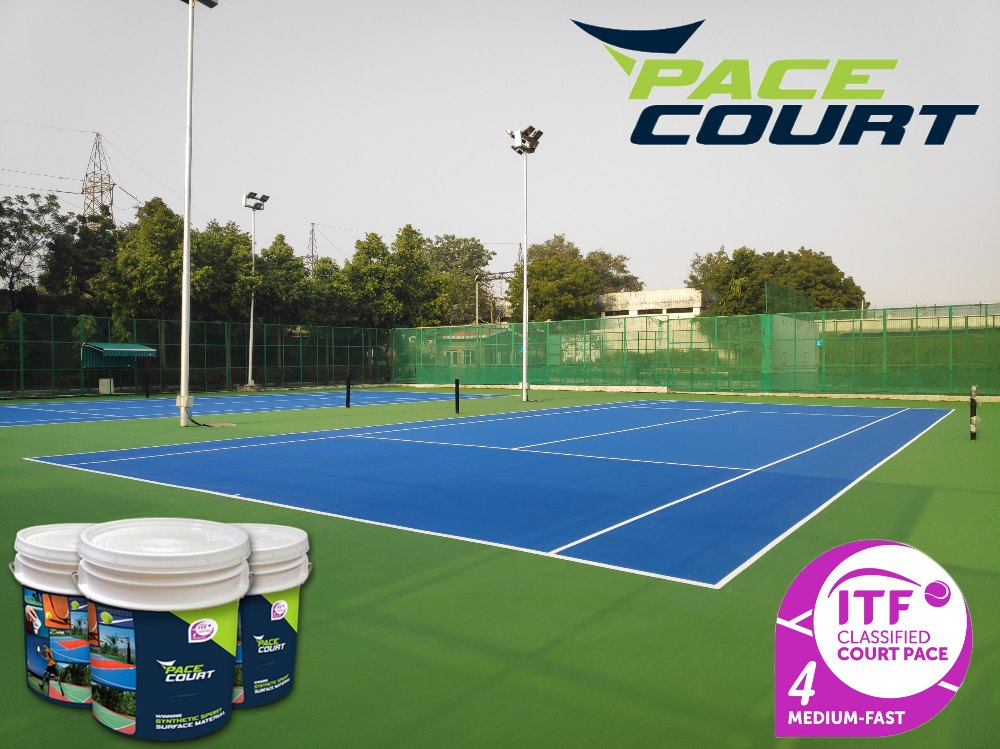
Surface Friction and Ball Bounce
When you strip tennis down to its core, it’s really a game of physics—how the ball moves, how it bounces, and how players respond. That’s why surface friction and ball bounce are at the heart of ITF flooring standards. These two factors determine how a court “feels” during play, influencing everything from rally length to shot selection.
Surface friction refers to how much grip the court provides between the ball and the surface. A high-friction surface, like clay, slows the ball down and produces higher bounces. On the flip side, low-friction surfaces like grass allow the ball to skid and move faster. The ITF carefully regulates this balance to ensure that courts fall within specific performance ranges.
Ball bounce, meanwhile, is all about consistency and predictability. Players rely on knowing how the ball will react after hitting the ground. If the bounce is uneven or erratic, it disrupts timing and can make the game frustrating or even unplayable. That’s why ITF standards require rigorous testing to ensure uniform bounce across the entire court.
Interestingly, achieving the right balance isn’t just about the top layer. It involves a combination of surface coatings, base materials, and even environmental conditions. For example, adding sand to an acrylic coating can increase friction, while adjusting the elasticity of the base can influence bounce height.
Here’s a simple breakdown of how different surfaces compare:
| Surface Type | Friction Level | Bounce Behavior |
|---|---|---|
| Clay | High | High, slow |
| Grass | Low | Low, fast |
| Hard Court | Medium | Consistent, medium |
| Synthetic | Adjustable | Customizable |
What’s fascinating is how players subconsciously adapt to these variations. A seasoned player can step onto a court, hit a few balls, and instantly adjust their timing and strategy based on how the surface behaves.
Ultimately, surface friction and bounce aren’t just technical specifications—they’re the invisible forces shaping every rally, every point, and every match.
Shock Absorption and Player Safety
Tennis might look graceful on the surface, but beneath that elegance lies a physically demanding sport filled with quick sprints, sudden stops, and repeated impact on joints. This is where shock absorption becomes a critical factor in tennis court flooring, and the ITF takes it very seriously.
Shock absorption refers to how well a surface can reduce the impact forces experienced by players. Hard, unforgiving surfaces can lead to fatigue, joint pain, and even long-term injuries. On the other hand, surfaces with good shock absorption provide a cushioning effect, making movement more comfortable and reducing strain on the body.
The ITF doesn’t just recommend shock absorption—it incorporates it into performance standards, especially for surfaces used in professional and high-traffic environments. Modern court systems often include cushioned layers beneath the surface, made from rubber or foam materials, to enhance comfort without compromising performance.
This balance is crucial. Too much cushioning can make the court feel “spongy,” affecting ball bounce and player stability. Too little, and the court becomes harsh and unforgiving. Achieving the right level requires precise engineering and careful material selection.
Player safety goes beyond just cushioning. It also includes factors like surface grip, which prevents slipping, and uniformity, which reduces the risk of tripping on uneven areas. These elements work together to create a safe playing environment, whether for casual players or elite athletes.
There’s also a psychological aspect to consider. When players feel confident in the surface beneath them, they’re more likely to move freely and play aggressively. A poorly designed court, on the other hand, can make players hesitant, affecting both performance and enjoyment.
In the end, shock absorption is like the unsung hero of tennis courts. You don’t always notice it when it’s working well, but when it’s not, the difference is impossible to ignore.
Lighting, Fencing, and Accessories Standards
ITF Lighting Guidelines
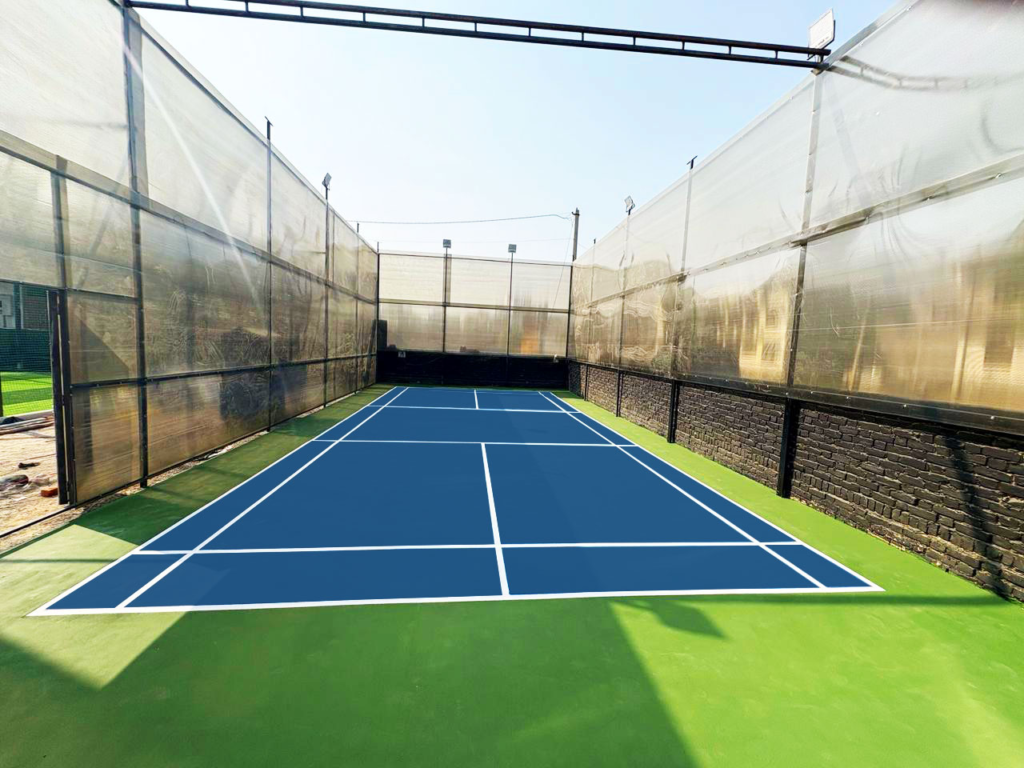
Lighting might not be the first thing that comes to mind when thinking about tennis courts, but once the sun goes down, it becomes absolutely essential. The ITF has established detailed lighting guidelines to ensure that matches can be played safely and fairly, even in low-light or nighttime conditions. And no, it’s not just about making the court visible—it’s about creating an environment where players can track the ball accurately without strain or distraction.
The ITF specifies lighting levels in lux, which measures the intensity of light on a surface. For recreational play, a minimum of 300–500 lux is typically sufficient. However, for professional matches and televised events, this can go up to 1000–2000 lux or more. That’s because high-speed gameplay requires exceptional visibility, especially when players are reacting to serves traveling over 120 mph.
Uniformity is just as important as brightness. Uneven lighting can create shadows or glare, making it difficult to judge the ball’s trajectory. The ITF recommends a uniform lighting ratio to ensure that every part of the court is evenly illuminated. This is achieved through strategic placement of light poles and fixtures, often positioned at specific heights and angles.
Another critical factor is glare control. Poorly positioned lights can shine directly into players’ eyes, especially during serves or overhead shots. Modern lighting systems use LED technology with directional beams to minimize this issue while also improving energy efficiency.
From a construction standpoint, integrating lighting requires careful planning. It’s not just about installing lights after the court is built—their placement must be considered during the design phase to avoid interference with play or surrounding structures.
In many ways, good lighting is like a silent referee. When done right, you barely notice it—but it ensures the game flows smoothly, regardless of the time of day.
Perimeter Fencing and Equipment
While the court itself gets most of the attention, the surrounding infrastructure—especially fencing and equipment—plays a crucial supporting role in meeting ITF standards. These elements might seem secondary, but they significantly impact safety, functionality, and the overall playing experience.
Let’s start with fencing. The ITF recommends that tennis courts be enclosed with perimeter fencing typically between 10 to 12 feet high. This serves multiple purposes: it keeps balls within the playing area, protects spectators, and provides a clear boundary for the court. The materials used—usually chain-link or mesh fencing—must be durable, weather-resistant, and designed to minimize visual obstruction.
Color also matters more than you might think. Darker shades like green or black are commonly used because they reduce glare and make the ball easier to see. It’s a small detail, but one that can significantly enhance visibility during play.
Then there’s the equipment. The ITF has strict specifications for items like nets, net posts, and line markings. For example, the net must be exactly 3 feet high at the center, with posts positioned precisely according to court dimensions. Even the tension of the net is regulated to ensure consistent performance.
Additional accessories, such as umpire chairs, player benches, and scoreboards, are also considered in professional settings. While not always mandatory for recreational courts, they contribute to a more complete and functional facility.
What’s interesting is how these elements come together to create a cohesive environment. A well-designed court isn’t just about the playing surface—it’s about everything surrounding it working in harmony.
Think of fencing and equipment as the frame around a painting. They might not be the main focus, but they enhance and support the overall experience in ways that are impossible to ignore.
Maintenance Requirements for ITF Compliance
Routine Maintenance Practices
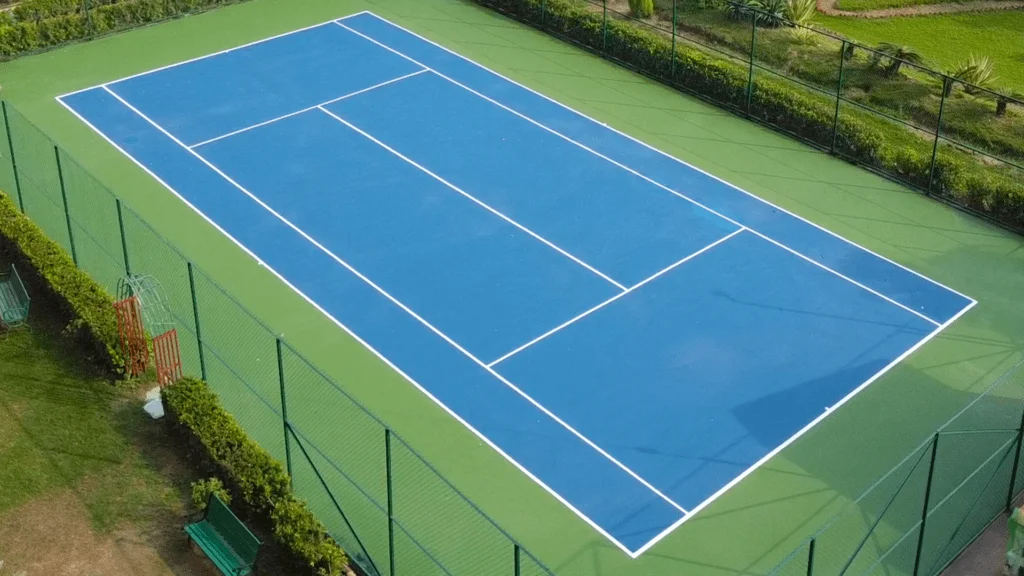
Building a tennis court that meets ITF standards is only half the battle—the real challenge lies in maintaining those standards over time. Even the best-constructed court will deteriorate without proper care, and that’s where routine maintenance becomes essential.
Different surfaces require different levels of attention. For example, hard courts need regular cleaning to remove dirt and debris, along with periodic resurfacing every few years to maintain performance. Clay courts, on the other hand, demand daily upkeep, including watering, rolling, and line sweeping. Grass courts are even more demanding, requiring constant mowing, irrigation, and seasonal care.
But regardless of the surface type, some maintenance practices are universal. These include:
- Inspecting for cracks or uneven areas
- Ensuring proper drainage
- Cleaning lines and markings
- Checking net tension and equipment condition
These tasks might seem routine, but they play a huge role in preserving the court’s quality. Ignoring small issues can lead to bigger problems down the line, turning minor repairs into costly renovations.
Weather also has a significant impact. Rain, heat, and temperature fluctuations can all affect the surface, making regular inspections even more important. In some cases, protective measures like court covers or drainage systems are used to minimize damage.
Maintenance isn’t just about preserving the court—it’s about maintaining the integrity of the game. Players expect consistent conditions, and even slight variations can affect performance.
In a way, maintaining a tennis court is like maintaining a car. Regular check-ups keep everything running smoothly, while neglect leads to breakdowns. The effort you put into upkeep directly determines how long the court will serve its purpose.
Surface Longevity and Repair
Every tennis court has a lifespan, but how long it lasts depends largely on how well it’s maintained and how quickly repairs are addressed. The ITF emphasizes proactive maintenance and timely repairs to ensure courts remain compliant and safe for play.
Different surfaces age in different ways. Hard courts may develop cracks or faded coatings, clay courts can become uneven, and grass courts may suffer from worn patches. Recognizing these issues early is key to preventing more serious damage.
Here’s a general comparison of surface lifespan:
| Surface Type | Average Lifespan | Maintenance Level |
|---|---|---|
| Hard Court | 5–10 years | Low–Moderate |
| Clay Court | Ongoing | High |
| Grass Court | Seasonal | Very High |
| Synthetic | 8–15 years | Low |
Repair strategies vary depending on the issue. Small cracks in hard courts can be filled and sealed, while larger problems may require resurfacing. Clay courts often need re-leveling and material replenishment, and grass courts may require reseeding or turf replacement.
One important aspect of ITF compliance is ensuring that repairs do not alter the court’s performance characteristics. For instance, using a different coating material could change the surface friction or bounce, potentially affecting the court’s pace rating.
There’s also a financial angle to consider. Regular maintenance and minor repairs are far more cost-effective than major overhauls. A well-maintained court can last significantly longer, providing better return on investment.
Ultimately, longevity isn’t just about durability—it’s about consistency. A court that performs the same way year after year is far more valuable than one that constantly changes due to wear and tear.
Certification and Testing Process
ITF Court Pace Certification
If building a tennis court is like crafting a musical instrument, then ITF Court Pace Certification is the tuning process that ensures it plays perfectly. Without certification, even a well-built court can’t be officially recognized for competitive use. This process is where science meets sport, transforming construction work into a verified, standardized playing surface.
The ITF Court Pace Rating (CPR) system is at the center of certification. Once a court is constructed, it undergoes testing to determine its speed category, ranging from slow (Category 1) to fast (Category 5). This isn’t just a label—it defines how the game will be played on that surface.
Certification is typically carried out by ITF-approved laboratories, using specialized equipment to measure ball rebound and friction. The results are then analyzed to assign a pace rating. If the court meets all requirements, it receives an official ITF Court Pace Certificate, which is valid for a specific period.
Why does this matter so much? For one, certification ensures credibility and consistency. Players, coaches, and tournament organizers can trust that the court behaves as expected. It also opens the door for hosting official competitions, which can significantly enhance the reputation and revenue potential of a facility.
Another interesting aspect is how certification influences design decisions. Builders often aim for a specific pace category based on the intended use of the court. For example, training facilities might prefer slower courts for longer rallies, while competitive venues may opt for medium-fast surfaces to create a more dynamic game.
Certification isn’t a one-time process either. Courts may need to be retested after resurfacing or major repairs to ensure they still meet ITF standards. This ongoing validation helps maintain quality over time.
In simple terms, ITF certification is the stamp of approval that turns a tennis court into a professional-grade playing field. Without it, the court might still be playable—but it won’t carry the same level of trust or recognition.
Testing Methods and Compliance Checks
Behind every ITF-certified tennis court lies a series of rigorous testing methods and compliance checks that ensure every detail meets strict performance standards. This isn’t guesswork—it’s a highly technical process designed to eliminate inconsistencies and guarantee fairness in play.
One of the primary tests involves measuring ball rebound speed. A standardized ball is dropped onto the surface under controlled conditions, and sensors record how it reacts. This helps determine how much energy is lost upon impact, which directly influences the court’s speed.
Another key test focuses on surface friction. Specialized equipment simulates the interaction between the ball and the court, measuring how much resistance the surface provides. This data is crucial for calculating the court’s pace rating within the ITF classification system.
But testing doesn’t stop there. Courts are also evaluated for:
- Surface uniformity (ensuring consistent performance across the entire court)
- Slope and leveling accuracy
- Drainage efficiency
- Material durability and wear resistance
These checks ensure that the court not only performs well initially but continues to do so over time.
What’s fascinating is how precise these measurements are. Even small deviations can affect gameplay, which is why ITF-approved labs use advanced instruments and controlled environments to conduct tests. It’s a level of detail that most players never see—but they definitely feel it during a match.
Compliance isn’t just about passing tests—it’s about maintaining standards. Courts may undergo periodic inspections, especially if they’re used for professional events. This ensures that wear and tear haven’t altered their performance characteristics.
In a way, testing is like a quality assurance system for tennis courts. It guarantees that every certified surface delivers the experience players expect, whether they’re practicing serves or competing in high-stakes matches.
Cost Considerations and Planning
Budgeting for Construction
Let’s be honest—building a tennis court isn’t cheap. But here’s the thing: the cost isn’t just an expense; it’s an investment in quality, performance, and longevity. Understanding how to budget effectively while meeting ITF standards is crucial for anyone planning a tennis facility.
The total cost of construction can vary widely depending on factors like surface type, location, materials, and additional features. On average, a standard tennis court can cost anywhere from $25,000 to over $120,000. High-end professional courts with advanced features can go even higher.
Here’s a simplified comparison:
| Court Type | Estimated Cost Range |
|---|---|
| Hard Court | $25,000 – $60,000 |
| Clay Court | $40,000 – $100,000 |
| Grass Court | $80,000 – $150,000+ |
| Synthetic | $30,000 – $90,000 |
But construction costs are just the beginning. You also need to account for:
- Site preparation and excavation
- Drainage systems
- Lighting and fencing
- Labor and professional services
Cutting corners might save money upfront, but it often leads to higher maintenance costs and shorter lifespan. That’s why aligning your budget with ITF standards is a smart move—it ensures you’re building something that lasts.
Planning also involves thinking about the intended use of the court. Is it for casual play, training, or professional tournaments? The answer will influence everything from surface choice to lighting requirements.
In many ways, budgeting for a tennis court is like planning a long journey. You need to consider not just the starting point, but also the road ahead.
Long-Term Investment Value
A tennis court isn’t just a place to play—it’s a long-term asset that can deliver value in multiple ways, both financially and socially. When built according to ITF standards, that value increases significantly.
First, there’s the durability factor. Courts constructed with proper materials and techniques last longer and require fewer repairs. This reduces maintenance costs and ensures consistent performance over time.
Then there’s the revenue potential. Facilities with ITF-compliant courts can host tournaments, coaching programs, and events. This can generate income while also boosting the facility’s reputation. Players are naturally drawn to courts that meet professional standards.
Another important aspect is property value. For clubs, schools, or residential developments, having a high-quality tennis court can increase overall appeal and marketability. It’s not just an amenity—it’s a selling point.
There’s also the player experience to consider. A well-built court attracts more users, encourages regular play, and fosters a sense of community. This intangible value is often overlooked but incredibly important.
Think of it like investing in a high-quality piece of equipment. It might cost more upfront, but it performs better, lasts longer, and delivers greater returns over time.
Conclusion
ITF standards for tennis court construction and flooring are far more than a set of technical guidelines—they’re the foundation of a consistent, safe, and high-quality playing experience. From surface classification and court dimensions to lighting, maintenance, and certification, every detail is carefully designed to ensure that the game of tennis remains fair and enjoyable across the world.
Understanding these standards isn’t just important for professionals—it’s valuable for anyone involved in building, managing, or even playing on a tennis court. The choices made during construction directly impact performance, safety, and longevity.
In the end, a great tennis court doesn’t happen by accident. It’s the result of careful planning, precise execution, and ongoing maintenance—all guided by the principles set by the ITF.
Stay Updated with Pacecourt
Discover expert insights, practical tips, and the latest industry updates from Pacecourt, covering sports flooring, tennis and multi-sport court construction, resurfacing, maintenance, court performance, and innovative sports infrastructure solutions.
Powered by Google's Preferred Sources feature