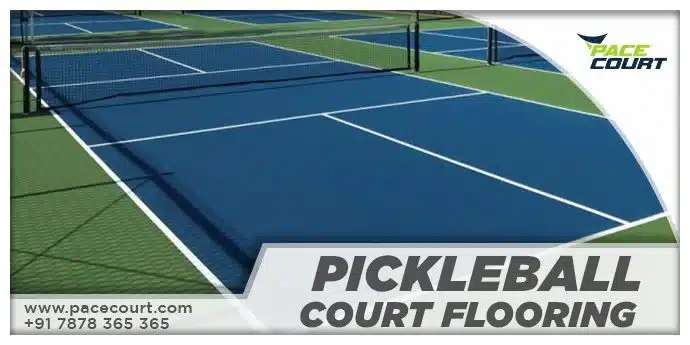
pickleball court flooring

Pickleball Court Flooring Cost in India
Pickleball court cost

Pickleball Court Flooring Cost in India (City-Wise Price Breakdown)

Pickleball might sound like a quirky name, but don’t let that fool you—this sport is quietly becoming one of the fastest-growing recreational games in India. Blending elements of tennis, badminton, and table tennis, pickleball is easy to learn, light on the joints, and incredibly addictive once you start playing. Over the past few years, residential societies, sports clubs, schools, and even luxury villas have begun adding pickleball courts to their facilities. And with that surge in interest comes one big question everyone asks first: how much does pickleball court flooring cost in India? The answer isn’t as straightforward as quoting a single number. Pickleball court flooring costs vary widely depending on the city, type of flooring material, installation method, and whether the court is indoor or outdoor. A pickleball court in Mumbai will naturally cost more than one in a tier-3 city due to labor rates, logistics, and land preparation costs. Similarly, acrylic flooring will have a different price point compared to modular tiles or synthetic surfaces. If you’re planning to build a pickleball court—whether for personal use, a housing society, or a commercial sports facility—understanding the city-wise price breakdown can save you from nasty budget surprises later. This guide is designed to walk you through everything: from types of pickleball flooring available in India to detailed city-wise cost estimates, hidden expenses, and practical tips to optimize your budget. Think of it as your roadmap before you pour that first layer of concrete or snap in your first tile. Understanding Pickleball Court Flooring: What Makes It Different? At first glance, a pickleball court may look similar to a badminton or tennis court, but the flooring requirements are surprisingly specific. Pickleball is played with a perforated plastic ball and paddles, which means the surface must offer consistent bounce, adequate grip, and just the right amount of cushioning. Too hard, and players risk joint strain. Too soft, and ball behavior becomes unpredictable. A standard pickleball court measures 20 feet by 44 feet, the same for both singles and doubles. However, the total area required is usually larger when you factor in run-off space, fencing, and player movement. Flooring systems are typically installed over a concrete or asphalt base, especially for outdoor courts. Indoor courts may use wooden subfloors or existing slabs. What really sets pickleball court flooring apart is the balance it must strike. It needs to be durable enough to handle Indian weather conditions—heat, rain, dust—while also providing player comfort. That’s why most professional installations in India rely on acrylic coatings or modular tiles rather than plain concrete. These specialized surfaces enhance grip, reduce slips, and maintain consistent playability across seasons. Key Factors That Influence Pickleball Court Flooring Cost in India Before diving into city-wise numbers, it’s important to understand what actually drives the cost of pickleball court flooring in India. Think of the total cost as a puzzle made up of several pieces—miss one, and your budget estimate falls apart. Type of Flooring Material This is the biggest cost driver. Acrylic flooring is generally more affordable than cushioned or synthetic systems, while modular tiles can vary widely based on brand and quality. City and Location Labor charges, transportation costs, and local contractor rates differ significantly between metro cities and smaller towns. A court in Bengaluru or Mumbai will almost always cost more than one in Indore or Trichy. Indoor vs Outdoor Installation Outdoor courts require weather-resistant materials, proper drainage, and UV-stable coatings, which add to the cost. Indoor courts may save on weatherproofing but might need additional subfloor work. Base Preparation and Civil Work If the ground is uneven or poorly prepared, costs can shoot up quickly. Leveling, concrete laying, and curing time all add to the final bill. Accessories and Finishing Court markings, nets, poles, fencing, lighting, and seating are often overlooked during budgeting but can account for a significant portion of the total expense. Understanding these factors upfront helps you read cost estimates more intelligently—and negotiate better with contractors. Types of Pickleball Court Flooring Used in India India offers a surprisingly wide range of pickleball court flooring options, each catering to different budgets, usage levels, and playing conditions. Choosing the right one isn’t just about cost; it’s about how the court will be used and who will be playing on it. Acrylic Pickleball Court Flooring This is the most commonly used option in India. Acrylic surfaces are layered systems applied over concrete or asphalt bases. They offer excellent grip, consistent ball bounce, and are relatively easy to maintain. Modular Interlocking Tiles These are snap-fit tiles made from high-impact polypropylene. They’re popular for temporary courts or spaces that need quick installation. They work well both indoors and outdoors. Synthetic Sports Flooring Often used in multi-sport facilities, synthetic flooring provides added cushioning and shock absorption. It’s more expensive but ideal for player comfort. Concrete with Acrylic Coating This is a budget-friendly option where a basic concrete slab is finished with a thin acrylic layer. It’s functional but less forgiving on the joints. Cushioned Pickleball Court Systems These are premium systems with rubber or foam layers beneath the acrylic surface. They significantly reduce impact stress and are popular in high-end clubs. Each of these options comes with its own cost structure, lifespan, and maintenance needs, which we’ll break down in detail as we move forward. Acrylic Pickleball Court Flooring Cost in India Acrylic pickleball court flooring is often considered the sweet spot between performance and affordability in India. It’s the go-to choice for outdoor courts in residential societies, schools, and sports academies—and for good reason. Acrylic systems are weather-resistant, provide excellent traction, and offer a predictable ball bounce that players love. Cost Breakdown On average, acrylic pickleball court flooring in India costs between ₹250 to ₹450 per square foot, depending on the quality of materials and the city. This price usually includes surface preparation, primer coats, acrylic layers, and line markings. However, it may not include major civil work like new concrete laying. Durability and Maintenance A well-installed acrylic court

Pickleball Court Flooring
Pickleball court

Pickleball Court Flooring: Choosing the Right Material for Performance & Safety

Pickleball is one of the fastest-growing sports worldwide, and with its rising popularity, the demand for safe, durable, and high-performance pickleball court flooring is at an all-time high. Whether you’re building a residential court, a sports complex, or upgrading an existing facility, choosing the right flooring material is crucial. The surface directly impacts ball bounce, player comfort, traction, and long-term maintenance costs. This comprehensive guide covers everything you need to know about pickleball court flooring, including the best materials, key selection factors, installation considerations, and expert tips to ensure a safe and high-performance playing experience. What is Pickleball Pickleball is a fast-growing paddle sport that combines elements of tennis, badminton, and table tennis. It is played on a smaller court with a perforated plastic ball (similar to a wiffle ball) and lightweight paddles. The game can be played in singles or doubles, making it fun and accessible for players of all ages and skill levels. One of the main reasons for its popularity is its simple rules and low physical strain, which make it easier to learn compared to many other racket sports. Yet, the game can still be very competitive and strategic, offering great exercise and entertainment. Pickleball is widely played in communities, schools, sports clubs, and recreation centers across the world. From beginners to professional athletes, everyone enjoys the blend of speed, skill, and social interaction that pickleball provides. Why Your Pickleball Court Flooring Matters The court surface is the foundation of every game. A poor surface can lead to unpredictable ball behavior, increased risk of injury, and frequent, costly repairs. A quality court, on the other hand, provides a consistent and enjoyable experience for years. Here’s why flooring selection is so important: What Makes Pickleball Court Flooring Unique? Pickleball courts may resemble tennis or badminton courts, but the flooring requirements differ due to: Hence, the flooring must provide the perfect balance of shock absorption, traction, durability, and weather resistance. Best Flooring Materials for Pickleball Courts Below are the top-performing and most widely recommended materials for building modern pickleball courts. 1. Acrylic Sports Flooring (Most Popular Choice) Acrylic flooring is the gold standard for outdoor pickleball courts. Why It’s Ideal Best For 2. Polypropylene (PP) Interlocking Tiles These modular tiles are becoming increasingly popular due to their versatility and ease of installation. Benefits Best For Commercial sports facilities Temporary or portable courts Multi-purpose indoor/outdoor sports spaces 3. Rubber Sports Flooring (Indoor Courts) Rubber flooring is preferred for indoor pickleball courts that require optimal comfort and shock absorption. Advantages Best For Senior community centers Indoor sports halls Gyms & recreation centers 4. Concrete Base with Textured Coating This remains one of the most durable options if constructed correctly. Pros Cons Best For Budget-friendly court construction Outdoor dedicated pickleball facilities 5. Asphalt Base with Sports Coating Similar to concrete but softer and more forgiving. Benefits Drawback Can crack over time due to temperature changes Side-by-Side Comparison Chart Feature / Material Acrylic Flooring PP Tiles Rubber Flooring Concrete + Coating Asphalt + Coating Ball Bounce Consistency ⭐⭐⭐⭐ ⭐⭐⭐ ⭐⭐ ⭐⭐ ⭐⭐⭐ Traction ⭐⭐⭐⭐ ⭐⭐⭐⭐ ⭐⭐⭐⭐ ⭐⭐⭐ ⭐⭐⭐ Shock Absorption ⭐⭐⭐ ⭐⭐⭐⭐ ⭐⭐⭐⭐ ⭐⭐ ⭐⭐⭐ Weather Resistance (Outdoor) ⭐⭐⭐⭐ ⭐⭐⭐⭐ ⭐ ⭐⭐⭐ ⭐⭐ Maintenance Level ⭐⭐⭐⭐ ⭐⭐⭐ ⭐⭐⭐ ⭐⭐⭐⭐ ⭐⭐ Installation Ease ⭐⭐ ⭐⭐⭐⭐ ⭐⭐ ⭐⭐ ⭐⭐ Durability ⭐⭐⭐⭐ ⭐⭐⭐ ⭐⭐⭐ ⭐⭐⭐⭐ ⭐⭐⭐ How to Choose the Best Material for You With these options in mind, how do you decide? Consider these three key factors. 1. Climate Your local weather plays a huge role in a court’s lifespan. 2. Usage and Player Profile Think about who will be using the court and how often. 3. Budget Your budget will ultimately guide your decision. How to Maintain Pickleball Court Flooring Maintaining pickleball court flooring is essential to ensure safety, longevity, and optimal playing conditions. Here are some tips to help you keep your pickleball court in great shape: 1. Regular Cleaning 2. Inspect for Damage 3. Resurface When Needed 4. Prevent Water Damage 5. Protect the Surface 6. Seasonal Maintenance 7. Regular Repainting 8. Prevent Mold and Mildew 9. Educate Users 10. Professional Inspections By following these steps, you can ensure your pickleball court flooring remains in excellent condition, providing a safe and enjoyable playing experience for years to come. Cost of Pickleball Court Flooring Flooring Material / System Approx. Cost Range (Per Court) Notes Acrylic Coating over Existing Base ₹3,30,000 – ₹6,60,000 Affordable, low-maintenance outdoor option. Concrete Base + Acrylic Surface ₹8,25,000 – ₹12,40,000 Professional, durable outdoor court system. Modular / Interlocking PP Tiles ₹8,00,000 – ₹12,00,000 Fast installation, multi-sport friendly. Premium Indoor Cushioned Flooring ₹10,00,000 – ₹25,00,000+ Best shock absorption and comfort for indoor courts. Court Resurfacing / Re-coating ₹1,50,000 – ₹4,00,000 Regular resurfacing to maintain traction and color quality. DIY Basic Surface Prep Varies (lowest cost option) Painting or minor leveling over an existing slab. Installation Tips for Pickleball Court Flooring Installing pickleball court flooring requires careful planning and execution to ensure a durable, safe, and high-quality playing surface. Here are some essential tips for a successful installation: 1. Choose the Right Location 2. Prepare the Base 3. Select the Right Flooring Material 4. Ensure Proper Installation 5. Allow for Curing Time 6. Add Accessories 7. Test the Surface 8. Maintain the Court By following these tips, you can ensure a professional-quality pickleball court that provides a safe and enjoyable playing experience for years to come. Conclusion Choosing the right pickleball court flooring is essential for creating a safe, durable, and high-performance playing environment. Whether you’re building a residential court, a club facility, or a professional tournament surface, picking the right material ensures excellent gameplay, long-term savings, and enhanced player experience. Acrylic, PP tiles, rubber, and concrete systems each offer unique benefits — so select the one that best matches your budget, location, and performance needs.

Pickleball court, Pickleball Court Dimensions, Pickleball Court Flooring

Planning a Pickleball Court in India? Don’t Start Until You Read This

Pickleball – an exciting fast growing game combining tennis, badminton, and ping-pong – is certainly seen in India. With the specialized playing places gaining additional publicity every day. Careful planning while constructing a pickleball court flooring, court size and surface, alongside the design considerations for the Indian weather. Pacecourt provides best acrylic flooring materials to build world-class pickleball courts. To meet international standards of pickleball court dimensions, that are durable and offer top performance to players of every level. The best plan in pickleball court is that, it has a compact court system. And courts are not nearly as large as tennis courts, it is possible within a fit to accommodate more than one pickleball court in tennis facilities. This flexibility has included conversion of unused spaces into lively pickleball centers, thus attaining maximum community utilization and resource allocation. Standard Pickleball Court Dimensions An official pickleball court dimensions is 20 feet wide and 44 feet long. The lines are 2 inches wide. They mark the bounds for the game.  You should add space along-the-sides of the court. A 5-foot space is a good reference to add on both sides. For the shorter ends, you should have at least 7 feet. That takes the total area of play to 30 feet wide and 60 feet long.  But if you are in for competitive play, a little more space for movement will definitely be a good idea. Then, go for a total area of 34 feet wide by 64 feet long.  You will have spent a lot of space in this setup, so that you would be able to enjoy the game, whether enjoying it just for fun or going for that intense competition. Gather your friends and make your way to the courts! PICKLEBALL COURT SURFACES Asphalt An inexpensive and comparatively easy pickleball installation makes asphalt a common choice for outdoor pickleball court dimensions. It provides a stable and hard surface that is important for having a proper bounce for the ball and player movement. Yet, asphalt requires proper maintenance so that issues such as cracking of the surface or wearing down can be rectified, especially in areas with extreme weather. Regular sealing and resurfacing are required for the good performance of the court over time. Concrete Primer The surfaces of concrete primer courts are their durability and low maintenance requirement. A concrete court presents a flat, smooth surface for interfacing, thereby maximizing ball bounce uniformity and improving quality of play. Once set, concrete primer court requires minimal maintenance, which includes cleaning and checking stability for wear. Importantly, these courts must be engineered with proper drainage to avoid water accumulation and further damage. Synthetic Acrylic Flooring Synthetic acrylic flooring is the best outdoor option for a pickleball facility. Because it combines the durable qualities of concrete with a little softness for the good welfare of the players. This type of surface allows all-weather playability while providing a relaxed game that minimizes fatigue and injuries for its players. Pacecourt manufactures high-quality synthetic acrylic flooring for outdoor sports complexes. These are conditioned for higher performance with good traction, consistent ball bounce, and low maintenance. Also, the cushioning quality of the surface adds player comfort by absorbing impact, as typically required during hours of play. Cushion Coat Cushion coats have become the preferred option for pickleball players who want comfort and performance. It reduce this impact not only in stress reduction but also injury prevention, by allowing longevity and enjoy the game. Cushion coat players have stated that it reduced strain on the joints makes more comfortable experience. Make The Right Pickleball flooring Choice Below are considerations to keep in mind while deciding the best surface for building a court for Pickleball: – Budget: Review and evaluate initial installation of pickleball court cost in India , together with maintenance cost that will be incurred through usage. Select the option that will be the most cost-effective for you in the long run. – Climate: Some surfaces are suited to particular weather elements, so consider the normal weather elements of your area. – Time Will You Use It: Courts that will see heavy traffic benefit most from the installation of durable resilient surfaces.  – Player Experience: Consider surface qualities like hardness, ball bounce, and comfort to ensure the court gives players what they expect. Pickleball COURT Installation in india Case Study Case Study 1: Building Pickleball Courts to Encourage Community Recreation A community center from a suburban locality increased enthusiasm of the local residents regarding pickleball. And include pickleball courts in the recreational facilities. The center had the available space for the courts: underutilized. And it thought that this could have much more life breathed into it with the building of these courts. Four outdoor pickleball court dimensions are 20 feet wide and 44 feet long each. According to standard pickleball court dimensions suitable for singles as well as doubles play. The surface is designed for maximum traction while keeping the joint impact low to provide comfort while playing at any age. Case Study 2: Redesigning Otherwise Unused Space into Pickleball Facility A privately owned sports club experienced issues concerning having some idle open space awkwardly allocated for tennis but almost never used it. It was then decided to turn the space into purposeful pickleball courts after seeing an increasing number of people interested in pickleball. This included repurposing two existing tennis courts to four pickleball courts by resurfacing and repainting the area while reducing the area into the smaller pickleball court size, a very economical approach that optimally used the existing space to avoid the whole facility being subjected to heavy construction. The new construction of pickleball court was equipped with the best in netting and surface material custom-designed for extreme weather conditions. Conclusion Building pickleball courts comes with a bunch of benefits beyond just giving people a place to play. This fun sport mixes tennis, badminton, and ping-pong. It is really taken off with all sorts of people because it is easy to

Pickleball court, Pickleball Court Dimensions

Expert Advice: Selecting the Best Pickleball Court Surface, Dimensions, and Layout

Pickleball has become very popular in India and players of all ages are playing it. Whether for professional tournaments or recreational play, choosing the right court surface, dimensions and layout is important. At Pacecourt, we provide high quality sports flooring solutions so that pickleball courts meet international standards. In this blog we will provide expert advice on choosing the best court surface, dimensions and layout for your pickleball facility. Choosing the Right Pickleball Court Surface The playing surface has a big impact on gameplay, player safety and durability. Here are the top surface options for pickleball courts: Acrylic Sports Flooring Acrylic flooring is one of the best option for pickleball court flooring. Made of synthetic resin which is generated from a chemical named acrylic acid. It form a strong and resilient pickleball surface creating a clear and sharp line markings. Offering a stylish, and shiny look that is both modern and practical. It needs some upkeep, basically in high-traffic areas, such as periodic cleaning and re-coating, its longevity is noteworthy. As it is UV-resistant, the different colors will not fade over time. Acrylic flooring are popular for non-slip texture and durability. They have good ball bounce and are ideal for indoor and outdoor courts. Low maintenance and can withstand extreme weather conditions. Available in various color options so you can customize for branding and aesthetics. There are other flooring options too like – Polyurethane Flooring, Interlocking Sports Tiles, Concrete with Surface Coating, and Artificial Turf for Multi-Purpose Courts. But the better option for pickleball court is acrylic flooring. Standard Pickleball Court Dimensions Understanding the correct pickleball court dimensions is essential for maintaining uniformity and playability. According to the USA Pickleball Association (USAPA) and international standards, the dimensions are: For recreational play, multiple pickleball courts can be designed within a standard tennis court flooring area, allowing for greater accessibility. If designing courts for tournaments, it is essential to provide adequate space around each court for spectators, officials, and warm-up areas. Ideal Pickleball Court Layout An efficient court layout optimizes space and enhances the playing experience. Here are some key considerations: Converting a Tennis Court into Three Pickleball Courts A standard tennis court converted into three ideal pickleball courts by adjusting the layout and markings. As a tennis court size is 78 feet by 36 feet, it provides good space to fit three pickleball courts, each of 44 feet by 20 feet. The pickleball courts can be placed side by side, using temporary or permanent nets to separate them. This will allows more people to play at the same time and makes better use of the court. Key Considerations for a Smooth Conversion When you converting a tennis court, it is important to apply good-quality acrylic coatings or sport-specific surfaces for better traction and consistent ball bounce. Temporary or permanent pickleball court markings can be used, it depends on whether the space will be dedicated to pickleball or shared with tennis players. Proper fencing, lighting, and boundary spacing should also be considered to enhance safety and playing comfort. By converting a tennis court into three pickleball courts, facilities can accommodate more players and make better use of available space. Case Studies 1. Premium Pickleball Facility in Bangalore A leading sports academy in Bangalore partnered with Pacecourt to develop state-of-the-art pickleball courts. We installed acrylic sports flooring to ensure durability and professional gameplay. The project included: The courts have since become a hub for pickleball enthusiasts, hosting regular tournaments and training sessions for players at all levels. 2. Community Pickleball Courts in Pune A residential community in Pune sought an affordable yet high-performance pickleball court solution. Pacecourt provided acrylic materials, which offer excellent grip and easy maintenance. This project helped increase participation in the sport within the community, fostering an active lifestyle. These courts have since encouraged more residents to take up pickleball, with the community organizing weekend tournaments and fitness programs. Read also:- How to Select the Greatest Pickleball Court Color Schemes for Performance  Conclusion Selecting the best pickleball court surface, dimensions, and layout is key to creating a professional and enjoyable playing environment. Whether opting for acrylic, polyurethane, interlocking tiles, or concrete coatings, each surface has its advantages. Proper court dimensions and layout planning further enhance gameplay and safety. Pacecourt provides high-quality sports flooring solutions tailored to meet the needs of professional and recreational pickleball facilities across India. FREQUENTLY ASKED QUESTIONS
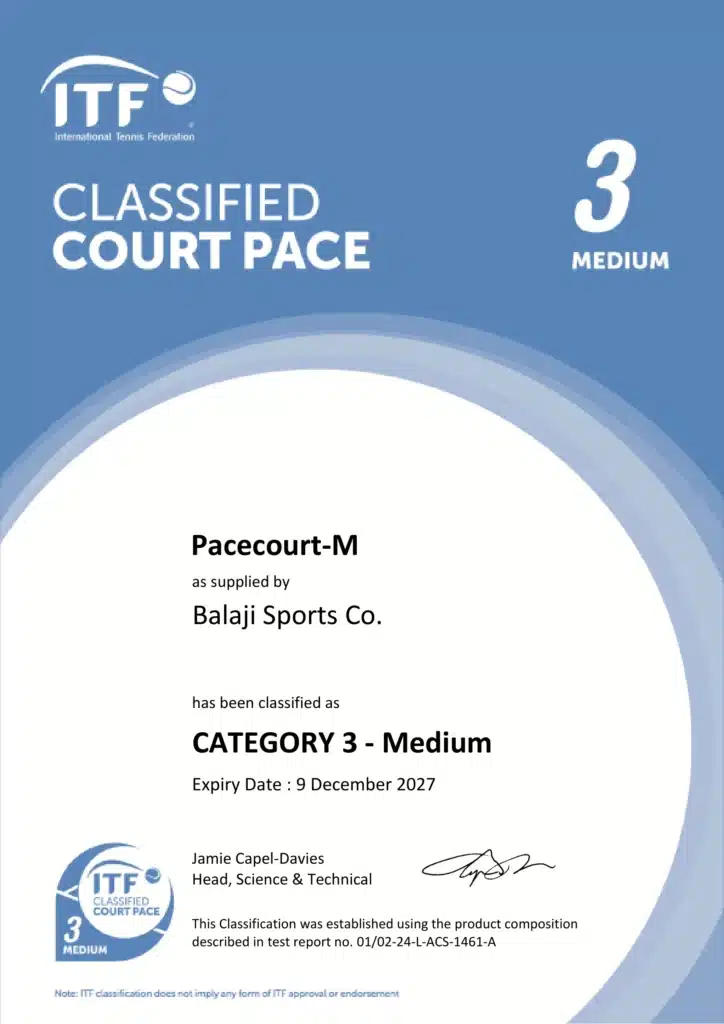
Scroll to Top
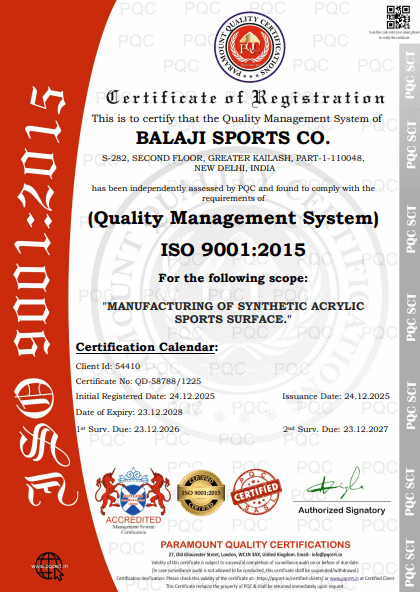
ISO-Certificate

Get 10% Off – Fill the Form Now

Hours
Minutes
Seconds