Basketball is one of the most popular sports in the world, played by millions of people across schools, professional leagues, and recreational courts. At first glance, the game may seem simple: two teams trying to score points by putting a ball into a hoop. Yet behind that simple idea lies a carefully designed set of Rules and Regulations of Basketball that keep the game fair, fast, and exciting. These Rules and Regulations of Basketball govern everything—from how players move with the ball to how long a team has to shoot. 🏀
Table of contents
Think of basketball rules as the invisible framework holding the sport together. Without them, the game would quickly turn chaotic. Players might run endlessly with the ball, block the basket physically, or stall the game indefinitely. Instead, structured rules ensure strategy, skill, teamwork, and athleticism are the deciding factors.
Modern basketball rules are standardized by organizations such as the National Basketball Association (NBA), the International Basketball Federation (FIBA), and the National Collegiate Athletic Association (NCAA). While minor variations exist between these organizations, the core principles remain remarkably consistent. Whether you’re watching an NBA finals game, a college tournament, or a pickup match at a neighborhood court, the essential rulebook is the same.
The regulations cover several critical aspects of the game: court dimensions, player positions, scoring methods, time restrictions, fouls, and referee authority. Each component plays a specific role in shaping how the game unfolds. For example, the shot clock forces teams to attack rather than stall, while foul limits discourage overly aggressive defense.
Basketball is often described as a game of rhythm. The rules act like the tempo of a song, guiding the pace and flow. Once players understand these rules, they can fully appreciate the beauty of the sport—quick passes, clever plays, and dramatic last-second shots.
Understanding the rules and regulations of basketball isn’t just important for referees or professional athletes. Fans, coaches, and casual players all benefit from knowing how the game truly works. It deepens appreciation for every play and decision on the court.
Introduction to Basketball Rules
If you’ve ever watched a basketball game and wondered why the referee suddenly blows the whistle, chances are a specific rule has been broken. The rules of basketball are designed to create balance between offense and defense while ensuring player safety and fair competition. They provide a clear framework that allows the game to move quickly while preventing unfair advantages.
Basketball is played between two teams of five players each on a rectangular court with a hoop at each end. The main objective is simple: score more points than the opposing team by shooting the ball through the opponent’s basket. However, achieving that objective requires players to follow numerous guidelines related to movement, time, contact, and gameplay structure.
For example, players cannot simply run across the court holding the ball. They must dribble, which means bouncing the ball continuously while moving. If they stop dribbling and start again, it results in a violation called double dribble. Similarly, players must avoid taking too many steps without dribbling, or they’ll be called for traveling.
Another important aspect of the rules involves time management. Basketball is a fast-paced sport, and rules such as the 24-second shot clock (NBA and FIBA) ensure teams attempt a shot within a limited time. Without this rule, a team could simply hold the ball and avoid scoring opportunities.
Safety is also a major focus. Basketball is a physical game, but excessive contact leads to personal fouls. If a player commits too many fouls in a game, they are disqualified. This discourages rough play and protects athletes from unnecessary injuries.
Beyond the technical aspects, the rules also shape the strategy of the game. Coaches design plays based on the rule structure—how long they have to shoot, how substitutions work, and how fouls accumulate.
Understanding these rules transforms basketball from a random flurry of movement into a structured, tactical sport where every action has meaning.
Origins of the Basketball Rulebook
The basketball rulebook has a fascinating history that dates back to 1891. The sport was invented by Dr. James Naismith, a Canadian physical education instructor working at the YMCA Training School in Springfield, Massachusetts. He was tasked with creating an indoor activity to keep students active during the winter months.
Naismith developed a simple concept: players would throw a soccer ball into peach baskets nailed to a gym balcony. To organize the game, he created the original 13 rules of basketball, which formed the foundation of the modern rulebook.
Upgrade Your Sports Court Today
Get premium synthetic acrylic flooring designed for durability, grip, and performance.
Get Free ConsultationThose early rules were surprisingly straightforward. Players were not allowed to run with the ball, physical contact was limited, and goals were scored by throwing the ball into the basket. However, the game was quite different from today’s version. For instance, after each score, someone had to climb a ladder to retrieve the ball from the peach basket.
As basketball spread across schools and athletic clubs in the United States, the rules gradually evolved. By the early 1900s, organizations began formalizing standardized regulations. Backboards were introduced to prevent spectators from interfering with shots, and dribbling became an essential part of gameplay.
Over time, governing bodies such as FIBA (founded in 1932) and the NBA (founded in 1946) introduced additional rules to improve the sport’s pace and fairness. One of the most revolutionary changes was the shot clock, introduced in the NBA in 1954. Before this rule, teams could stall the game by holding the ball indefinitely.
The introduction of the three-point line in 1979 also transformed basketball strategy. Suddenly, long-distance shooting became a powerful scoring weapon, forcing defenses to adapt.
Today’s basketball rulebook is far more detailed than Naismith’s original 13 rules. It includes guidelines covering everything from player conduct and replay reviews to equipment specifications and officiating mechanics.
Yet despite all these changes, the spirit of Naismith’s invention remains the same: a dynamic team sport built on skill, speed, and strategy.
Why Rules Matter in Basketball
Imagine a basketball game without rules. Players could shove opponents out of the way, run across the court without dribbling, or stand under the basket blocking every shot. The game would quickly lose its structure and excitement. This is why rules are the backbone of basketball.
Rules ensure that both teams compete under the same conditions. They define what is allowed and what isn’t, creating a fair environment where skill and teamwork determine the outcome. Without this structure, games would become unpredictable and potentially dangerous.
One major role of rules is maintaining game flow and pace. Basketball is known for its fast tempo, and several regulations help preserve that speed. The shot clock, 8-second backcourt rule, and 5-second inbound rule all prevent teams from slowing the game excessively. These time limits encourage constant movement and scoring attempts.
Rules also protect players from injury. Basketball involves jumping, sprinting, and physical contact, which naturally carries some risk. Regulations regarding charging, blocking, and illegal contact help minimize dangerous collisions. Referees monitor these actions closely to ensure player safety.
Another key purpose of basketball rules is promoting strategic depth. Coaches and players must constantly adapt their tactics within the boundaries of the rulebook. For example, understanding foul limits influences defensive strategy, while shot clock awareness affects offensive decision-making.
Even fans benefit from well-defined rules. When spectators understand the regulations, they can better appreciate the complexity of the sport. A blocked shot, a perfectly timed steal, or a buzzer-beater becomes even more exciting when you know the rules shaping those moments.
Upgrade Your Sports Court Today
Get premium synthetic acrylic flooring designed for durability, grip, and performance.
Get Free ConsultationProfessional basketball leagues constantly evaluate and update their regulations to improve the game. Changes are often introduced to enhance entertainment value, fairness, and player safety.
In essence, the rules of basketball act like the playbook of the entire sport—guiding every dribble, pass, and shot that happens on the court.
Court and Equipment Regulations
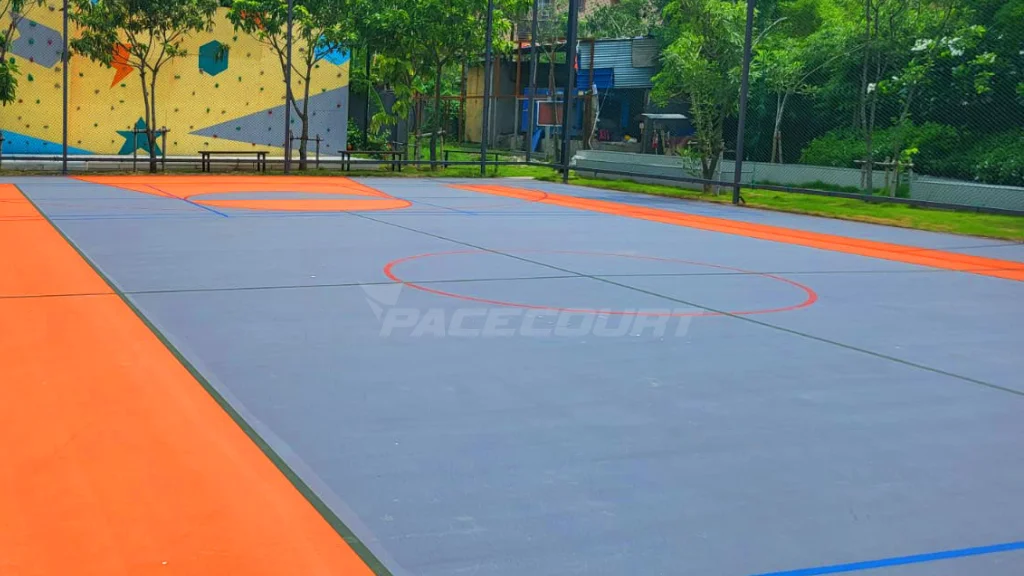
Basketball might look simple—just a ball, a hoop, and a group of players running around—but the court and equipment regulations are actually very precise. Every line on the court, every inch of the backboard, and even the air pressure of the basketball are governed by official standards. These rules exist to ensure fair play, consistency, and safety, whether the game is played in a high school gym or during the NBA Finals.
A standard basketball court is rectangular and divided into clearly marked areas that guide gameplay. These markings help determine where certain actions can occur, such as free throws, three-point shots, or inbound passes. Without these lines, referees would have a difficult time enforcing the rules, and players would struggle to position themselves strategically.
Equipment regulations are equally important. The basketball itself must meet specific size, weight, and bounce requirements to ensure a consistent playing experience. If the ball were too heavy, dribbling and shooting would become harder. If it were too light, shots could travel unpredictably. Standardization ensures that players develop skills that translate from one court to another.
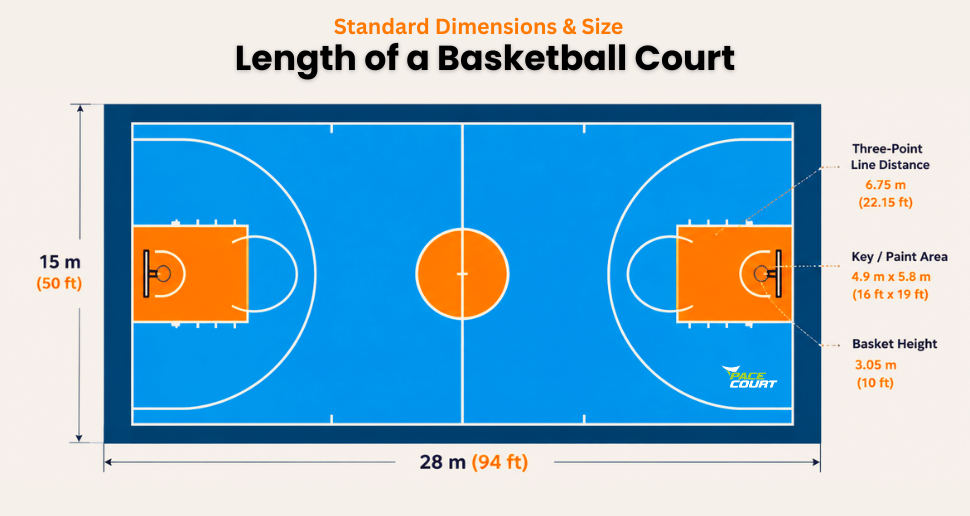
The basket and backboard are also regulated. The hoop must be mounted at a precise height—10 feet (3.05 meters) above the floor. This height has remained unchanged since the sport’s invention in 1891. It creates the perfect balance: high enough to challenge players but low enough to allow spectacular dunks and athletic plays.
Modern basketball courts also include additional features such as the three-point arc, restricted area, and free-throw lane, each serving a strategic purpose. These markings influence offensive spacing, defensive positioning, and scoring opportunities.
Professional leagues like the NBA and international organizations like FIBA have slightly different measurements for some court markings, but the fundamental layout remains similar worldwide. This consistency helps players transition between leagues and competitions without having to relearn the game’s spatial dynamics.
In essence, the basketball court is like a carefully designed battlefield, where every line and piece of equipment contributes to the rhythm and strategy of the sport.
Basketball Court Dimensions and Layout
The basketball court layout is a masterpiece of sports design, carefully structured to balance offense and defense. While minor variations exist between leagues, most courts follow similar dimensions and markings that guide gameplay.
A standard NBA court measures 94 feet long and 50 feet wide, while FIBA courts are slightly smaller at 91.9 feet by 49.2 feet. Despite this small difference, the overall structure remains the same: two baskets at opposite ends, a center circle for tip-offs, and several important zones marked across the surface.
At the center of the court lies the midcourt line, which divides the playing area into two halves. Once the offensive team moves the ball past this line, they cannot return it to the backcourt without committing a violation called backcourt violation.
Near each basket is the free-throw lane, often called “the paint.” This rectangular area is where players line up during free throws and where several defensive rules apply. For instance, the three-second rule prevents offensive players from standing inside the paint for more than three seconds while their team has possession.
Another crucial feature is the three-point arc. Shots made from beyond this curved line are worth three points instead of two. In the NBA, the three-point line is 23.75 feet from the basket at its furthest point. This line has dramatically changed the way modern basketball is played, encouraging teams to develop strong outside shooters.
Close to the hoop is the restricted area arc, which helps referees determine charging and blocking fouls. Defensive players must establish legal guarding position outside this arc to draw a charge.
Other markings include the sidelines, baselines, and team benches, all of which define boundaries and player positioning. If the ball or a player touches outside the boundary lines, the ball is considered out of bounds, and possession switches to the opposing team.
These lines may look simple, but they shape nearly every decision players make during a game—from where they shoot to how they defend.
The Ball, Hoop, and Backboard Specifications
Basketball equipment may appear straightforward, but official games require precise specifications for the ball, hoop, and backboard. These standards ensure that every game is played under consistent conditions, allowing players to perform at their best regardless of location.
The official basketball used in professional men’s leagues typically measures about 29.5 inches in circumference and weighs around 22 ounces (624 grams). Women’s leagues usually use a slightly smaller ball measuring 28.5 inches. The ball must also be inflated to a pressure between 7.5 and 8.5 PSI, ensuring the correct bounce and control during dribbling and shooting.
Basketballs are traditionally made from leather, composite leather, or rubber, depending on the level of play. Professional leagues prefer genuine leather because it provides better grip and performance after being broken in through gameplay.
The basket (hoop) itself is a circular metal rim with a diameter of 18 inches. Attached to the rim is a nylon net, which slows the ball slightly after a successful shot and helps referees confirm that a basket has been scored. The rim is mounted 10 feet above the playing surface, a height that has become iconic in the sport.
Behind the rim is the backboard, typically made from tempered glass in professional arenas. The backboard measures 6 feet wide and 3.5 feet tall and includes a small white rectangle known as the shooter’s square. Players often use this square as a visual guide when making bank shots.
Modern rims are also designed with breakaway mechanisms. These allow the rim to flex downward when a player dunks the ball, reducing stress on the backboard and preventing injuries.
Even the placement of the backboard matters. It must be positioned 4 feet inside the baseline, ensuring enough space for players to move behind the basket during gameplay.
These equipment standards might seem technical, but they play a huge role in maintaining consistency, safety, and fairness across all levels of basketball.
Team Composition and Player Positions

Basketball is often described as a game of teamwork, and the composition of a team plays a huge role in how the game unfolds. Each team puts five players on the court at a time, but behind those five athletes lies a larger roster filled with substitutes ready to step in when needed.
The five players on the court usually occupy specific positions, each with unique responsibilities. These roles help organize team strategy and ensure that all areas of the court are covered both offensively and defensively.
The traditional basketball lineup includes:
- Point Guard
- Shooting Guard
- Small Forward
- Power Forward
- Center
While modern basketball has become more flexible, these positions still provide a framework for team structure.
Substitutions are another important part of team composition. Coaches frequently rotate players in and out of the game to maintain energy levels, adjust tactics, or respond to foul trouble. Basketball is physically demanding, and having a deep bench often determines which team can sustain performance throughout the entire game.
Communication is also essential within a basketball team. Players must coordinate defensive switches, call out screens, and run offensive plays with precision. Even the most talented individual cannot dominate the game alone—success usually comes from synchronized teamwork.
Team composition also influences playing style. Some teams rely on tall players dominating the paint, while others focus on fast guards and long-range shooting. Coaches design strategies based on their roster’s strengths.
In essence, a basketball team functions like a well-coordinated machine, with each player contributing a specific skill set that supports the overall strategy.
Number of Players and Substitution Rules
In official basketball games, each team has five players on the court at a time. These players work together to score points while preventing the opposing team from doing the same. However, a team’s full roster usually contains 12 to 15 players, allowing coaches to make substitutions throughout the game.
Substitutions can occur during stoppages in play, such as after fouls, timeouts, or when the ball goes out of bounds. The incoming player must report to the scorer’s table and wait for the referee’s signal before entering the court.
Substitution rules allow teams to manage fatigue and adjust strategies. For instance, a coach might bring in a defensive specialist to protect a late lead or substitute a strong shooter when the team needs a three-point basket.
Players may be substituted multiple times during a game, meaning someone who leaves the court can later return. This flexibility helps coaches experiment with different lineups and respond to changing game situations.
However, substitutions are sometimes forced rather than strategic. A player who commits too many personal fouls must leave the game permanently. In the NBA, a player is disqualified after six fouls, while in FIBA competitions the limit is five fouls.
Injury substitutions are also common. Because basketball involves intense physical activity, players occasionally need to leave the court for medical evaluation or recovery.
The substitution system ensures that basketball remains a high-energy sport, with fresh players constantly entering the game to maintain pace and intensity.
Roles and Responsibilities of Each Position
Every basketball position comes with its own set of responsibilities, creating a balance between ball handling, scoring, rebounding, and defense. While modern basketball encourages versatility, the traditional roles still help define team structure.
The point guard is often called the “floor general.” This player directs the offense, brings the ball up the court, and decides which plays to run. Point guards must possess excellent ball-handling skills, vision, and decision-making ability.
The shooting guard is typically one of the team’s best scorers. These players excel at outside shooting and creating scoring opportunities. Many famous basketball legends—like Michael Jordan and Kobe Bryant—played this position.
Next comes the small forward, often considered the most versatile role on the court. Small forwards must be capable of scoring, defending, and rebounding. They frequently attack the basket and also shoot from long range.
The power forward plays closer to the basket and focuses on rebounding, screening, and inside scoring. These players are usually strong and physical, battling opponents for position in the paint.
Finally, the center is usually the tallest player on the team. Centers dominate the area near the basket, blocking shots, grabbing rebounds, and scoring from close range. Players like Shaquille O’Neal and Kareem Abdul-Jabbar defined this role.
Although these positions traditionally had strict roles, modern basketball often features positionless play, where players develop multiple skills and switch roles depending on the situation.
Game Structure and Duration

Basketball is widely recognized for its fast pace and constant action, but behind that excitement lies a carefully structured timeline that governs how long the game lasts and how play progresses. The structure and duration of a basketball game ensure fairness, maintain competitive balance, and keep the rhythm of the sport engaging for both players and spectators.
A typical professional basketball game is divided into four quarters, each lasting a specific amount of time depending on the league. In the NBA, each quarter lasts 12 minutes, resulting in 48 minutes of total playing time. In FIBA competitions, which include international tournaments and the Olympics, quarters are slightly shorter at 10 minutes each, totaling 40 minutes of regulation play. College basketball in the United States follows a different format, consisting of two halves of 20 minutes each.
However, the total time spent watching a basketball game is usually much longer than the official clock suggests. This is because the clock stops frequently during fouls, timeouts, out-of-bounds situations, and other interruptions. As a result, a professional game that officially lasts 48 minutes can easily extend beyond two hours of real time.
Another important feature of the game structure is the halftime break. After the second quarter (or the first half in college games), teams leave the court for a rest period that typically lasts 15 minutes. This break allows players to recover physically while coaches adjust strategies based on the first half’s performance.
Timeouts are also part of the game’s structure. Each team receives a limited number of timeouts that they can use strategically to stop the clock, discuss plays, or disrupt the opponent’s momentum. Coaches often treat timeouts like chess moves, carefully choosing when to pause the action.
The structured timing system in basketball keeps the game intense and unpredictable. Because the clock stops during key moments, teams always have a chance to mount a comeback—even in the final seconds.
In essence, the timing rules act as the heartbeat of basketball, controlling the tempo and ensuring the game unfolds in an organized and thrilling manner.
Quarters, Halves, and Overtime Rules
The division of a basketball game into quarters or halves helps organize gameplay and provides natural pauses for teams to regroup. Each segment of the game represents a fresh opportunity for strategy adjustments and momentum shifts.
In most professional leagues, including the NBA and FIBA, games are divided into four quarters. Each quarter begins with a jump ball or inbound pass, depending on possession rules. Teams switch baskets after halftime to ensure fairness, preventing any advantage from court conditions such as lighting or crowd influence.
In NCAA college basketball, the game structure differs slightly. Instead of four quarters, games are played in two halves of 20 minutes each. Despite this difference, the overall pace and strategic elements remain similar to professional basketball.
When the score is tied at the end of regulation time, the game proceeds into overtime. Overtime periods typically last five minutes, and teams continue playing additional overtime periods until a winner is determined. Unlike many other sports, basketball does not allow games to end in a draw in most competitive settings.
Overtime periods are often some of the most dramatic moments in basketball. Players are usually fatigued, tensions run high, and every possession becomes crucial. Coaches must carefully manage substitutions and timeouts to maintain performance under pressure.
Momentum shifts are particularly common during overtime because the stakes are so high. A single three-point shot, steal, or defensive stop can completely change the outcome of the game.
These overtime rules ensure that basketball games always produce a clear winner, adding an extra layer of excitement for fans and players alike.
Shot Clock and Game Clock Explained
One of the most important innovations in basketball history is the shot clock, a rule designed to keep the game moving quickly. Before the shot clock was introduced in 1954, teams could hold the ball indefinitely, leading to extremely slow and sometimes dull games. Today, the shot clock ensures that teams must attempt a shot within a limited time.
In the NBA and FIBA, the shot clock is set to 24 seconds. This means that once a team gains possession of the ball, they have 24 seconds to attempt a shot that touches the rim. If they fail to do so, the opposing team gains possession.
Certain situations reset or modify the shot clock. For example:
- After an offensive rebound, the shot clock may reset to 14 seconds.
- After a defensive foul or violation, the shot clock can reset depending on the circumstances.
The game clock, on the other hand, tracks the overall time remaining in each quarter or half. Unlike sports such as soccer, the basketball game clock stops whenever play is interrupted. This includes fouls, timeouts, free throws, and out-of-bounds situations.
These two clocks work together to shape basketball strategy. Teams must carefully balance speed and patience. Shoot too quickly, and you risk taking a poor shot. Wait too long, and the shot clock will expire.
In the final moments of a close game, clock management becomes a critical skill. Players may intentionally slow down the offense to run out the clock or speed up the pace to create more scoring opportunities.
The interaction between the shot clock and game clock creates one of basketball’s most thrilling elements: the buzzer-beater, where a player releases a shot just before time expires.
These timing rules transform basketball into a sport that is not only about physical ability but also about strategic awareness and precise timing.
Scoring System in Basketball

At its core, basketball revolves around a simple objective: score more points than the opposing team. However, the scoring system in basketball includes multiple ways to earn points, each carrying a different value depending on how the basket is made.
The most common way to score is through a field goal, which occurs when a player successfully shoots the ball through the opponent’s hoop during regular play. Field goals can be worth either two points or three points, depending on where the shot is taken from.
A shot taken inside the three-point arc is worth two points. These include layups, dunks, and mid-range jump shots. Two-point baskets make up the majority of scoring opportunities in most games.
Shots taken beyond the three-point line are worth three points. This rule rewards players for making longer, more difficult shots. Over the past decade, three-point shooting has become increasingly important, with many teams designing offenses around it.
Another way to score is through free throws, which are awarded after certain fouls. Free throws are taken from the free-throw line and are worth one point each.
Basketball’s scoring system creates a fascinating balance between risk and reward. Teams must decide whether to focus on high-percentage two-point shots near the basket or attempt riskier three-point shots that yield greater rewards.
The scoreboard in basketball can change rapidly. A team trailing by six points can tie the game with just two successful three-point shots. This dynamic scoring system keeps fans on the edge of their seats until the final buzzer.
Ultimately, scoring in basketball reflects a blend of skill, teamwork, and strategic decision-making.
Field Goals and Three-Point Shots
Field goals are the foundation of basketball scoring. Whenever a player successfully shoots the ball through the basket during normal play, the result is recorded as a field goal. Most field goals are worth two points, but shots taken from beyond the three-point line count for three points.
Two-point field goals typically occur close to the basket. These include layups, dunks, hook shots, and short jump shots. Because these shots are taken from shorter distances, they usually have a higher success rate. Players who specialize in scoring near the basket often dominate the paint area.
Three-point shots, however, have revolutionized modern basketball. The three-point line, introduced in professional basketball in 1979, rewards players who can make long-distance shots. In today’s game, teams frequently build strategies around players who excel at three-point shooting.
The mathematics behind three-point shooting has dramatically influenced basketball tactics. Even though three-point shots are harder to make, the extra point can make them more valuable over time. Many teams now attempt 30 to 40 three-point shots per game, compared to just a handful decades ago.
Players like Stephen Curry have transformed the perception of long-range shooting. Curry’s ability to score from well beyond the arc has forced defenses to extend much farther from the basket, creating new spacing and opportunities on the court.
Defensive strategies must constantly adapt to balance protecting the basket while also contesting outside shooters. This delicate balance is one of the reasons basketball remains such a strategic and evolving sport.
Field goals—whether two or three points—represent the primary offensive weapon in basketball, shaping how teams attack and defend throughout the game.
Free Throws and Bonus Rules
Free throws provide players with an opportunity to score uncontested points following certain types of fouls. These shots are taken from the free-throw line, which is located 15 feet from the basket.
Each successful free throw is worth one point. Depending on the situation, a player may receive one, two, or sometimes three free-throw attempts. For example:
- A player fouled while attempting a two-point shot receives two free throws.
- A player fouled during a three-point shot receives three free throws.
- If a player is fouled while making a basket, they receive one additional free throw, often called an “and-one.”
Free throws may appear simple, but they require concentration and consistency. Unlike other shots, free throws are taken without defensive pressure. Because of this, professional players often practice hundreds of free throws during training sessions.
Basketball also includes a system called the team foul bonus. When a team commits a certain number of fouls within a quarter or half, the opposing team automatically receives free throws for subsequent fouls, even if the fouled player was not shooting.
This rule discourages excessive fouling and prevents teams from using physical play to disrupt opponents unfairly. It also adds strategic considerations late in games when teams may intentionally foul to stop the clock.
Free throws frequently determine the outcome of close games. A single missed free throw in the final seconds can shift momentum dramatically, making these shots some of the most high-pressure moments in basketball.
Fouls and Violations

Basketball is a fast, physical sport, but it operates within a structured set of rules designed to keep the game fair, safe, and competitive. Two important components of these rules are fouls and violations. While both result in penalties, they differ in nature. Fouls involve illegal physical contact or unsportsmanlike behavior, whereas violations are rule infractions related to ball handling or court movement.
Understanding the difference between fouls and violations is essential for appreciating how basketball is officiated. Fouls typically involve contact between players that interferes with the opponent’s movement or scoring attempt. For example, pushing, holding, or hitting an opponent’s arm while they shoot can result in a foul. These actions disrupt fair play and may lead to free throws or possession changes.
Violations, on the other hand, do not involve physical contact but rather mistakes in how the game is played. Common examples include traveling, double dribbling, and stepping out of bounds. When a violation occurs, the referee immediately stops play and awards the ball to the opposing team.
The purpose of these rules is to maintain order and fairness on the court. Without them, players could use excessive physical force or manipulate gameplay in ways that undermine the sport’s integrity. By penalizing illegal actions, basketball encourages athletes to rely on skill, agility, and strategy instead of brute strength.
Referees play a crucial role in identifying and enforcing these fouls and violations. Their decisions help keep the game flowing smoothly while ensuring that players follow the rules.
In many ways, fouls and violations function like traffic laws for basketball. Just as road rules prevent chaos on highways, basketball regulations keep the sport organized and safe.
Because basketball is played at such a high speed, referees must make split-second decisions. Players and fans may sometimes disagree with those calls, but the enforcement of fouls and violations is essential for preserving the spirit of the game.
Personal Fouls and Team Fouls
A personal foul occurs when a player makes illegal physical contact with an opponent. Basketball allows some level of contact, especially when players compete for position, but excessive or unfair contact is penalized. Personal fouls are among the most common infractions in basketball.
Examples of personal fouls include:
- Blocking: When a defender obstructs an opponent’s movement without establishing a legal defensive position.
- Charging: When an offensive player runs into a stationary defender.
- Holding: Grabbing an opponent to prevent movement.
- Slapping or hitting: Striking an opponent’s arm while attempting to block a shot.
When a player commits a personal foul during a shooting attempt, the offensive player is usually awarded free throws. If the shot goes in despite the foul, the player receives one additional free throw, creating the famous “and-one” opportunity.
Each player is limited in the number of fouls they can commit before being disqualified from the game. In the NBA, a player is ejected after six personal fouls, while in FIBA and college basketball, the limit is five fouls.
In addition to individual fouls, basketball also tracks team fouls. These represent the total number of fouls committed by a team within a quarter or half. Once a team reaches a specific foul limit, the opposing team enters the bonus situation, where they receive free throws for additional fouls.
Team fouls significantly influence game strategy. Coaches may instruct players to defend more cautiously when approaching the foul limit to avoid giving opponents easy scoring opportunities.
In late-game scenarios, teams sometimes intentionally commit fouls to stop the clock and regain possession, a tactic known as the “foul game.” This strategy can create dramatic finishes where every free throw becomes crucial.
Personal and team foul rules ensure that basketball remains competitive without becoming overly physical, striking a balance between aggressive defense and fair play.
Common Violations in Basketball
Violations occur when players break specific rules related to ball handling, movement, or positioning on the court. Unlike fouls, violations do not involve illegal physical contact. Instead, they represent technical mistakes that give the opposing team an advantage if not penalized.
One of the most well-known violations is traveling. This occurs when a player takes too many steps without dribbling the ball. Basketball requires players to bounce the ball continuously while moving, so failing to do so results in a turnover.
Another common violation is double dribble. This happens when a player stops dribbling and then begins dribbling again, or when they dribble the ball with both hands simultaneously. Once a player ends their dribble, they must either pass or shoot the ball.
The three-second violation is another important rule. Offensive players are not allowed to remain inside the key (paint area) for more than three seconds while their team controls the ball. This rule prevents tall players from camping near the basket and gaining an unfair advantage.
There is also the eight-second rule, which requires the offensive team to move the ball from the backcourt to the frontcourt within eight seconds after gaining possession.
The shot clock violation occurs when a team fails to attempt a shot within the allotted time, usually 24 seconds. When this happens, the ball is awarded to the opposing team.
Another frequently seen violation is out of bounds. If a player steps on or beyond the boundary lines while holding the ball, possession switches to the other team.
Although violations might seem minor compared to fouls, they play a huge role in shaping the game. These rules ensure that basketball remains fast-paced and skill-oriented, forcing players to maintain control and awareness at all times.
Role of Officials and Referees

Basketball games rely heavily on the presence of trained officials and referees who enforce the rules and maintain fairness throughout the contest. Without referees, even the most organized teams would struggle to play within a consistent rule framework.
A typical professional basketball game is officiated by three referees. These officials move around the court constantly to maintain clear sightlines and observe player actions from different angles. Their primary responsibility is to enforce the rules, call fouls and violations, and ensure the game proceeds smoothly.
Referees also manage administrative aspects of the game. They signal when the clock should stop or start, oversee substitutions, and communicate with the scorer’s table. Each official uses standardized hand signals to indicate specific calls, such as traveling, fouls, or three-point attempts.
Decision-making in basketball officiating requires quick judgment and deep knowledge of the rules. Because the game moves so rapidly, referees must often make calls within fractions of a second. Positioning and experience play a huge role in ensuring accurate decisions.
Modern basketball also incorporates instant replay technology in certain situations. Referees can review video footage to determine whether a shot was released before the buzzer, whether a player stepped out of bounds, or which player last touched the ball. This technology helps improve accuracy in critical moments.
Beyond enforcing rules, referees also maintain sportsmanship and discipline. They can issue technical fouls for unsportsmanlike behavior, such as arguing excessively, using inappropriate language, or deliberately delaying the game.
Being a referee requires not only rule knowledge but also confidence and authority. Officials must remain calm under pressure, even when thousands of fans and players disagree with their decisions.
In many ways, referees serve as the guardians of basketball’s integrity. Their presence ensures that every game is played according to the same standards, allowing players’ skills and teamwork to determine the outcome.
Conclusion
Basketball has grown from a simple indoor activity invented in 1891 into one of the most popular sports in the world. Behind its thrilling dunks, fast breaks, and buzzer-beaters lies a detailed system of rules and regulations that guide every aspect of the game.
From the precise dimensions of the court to the timing rules that govern each possession, basketball’s rulebook creates the structure necessary for fair and exciting competition. Regulations regarding team composition, scoring, fouls, and violations ensure that players rely on skill, strategy, and teamwork rather than unfair advantages.
These rules also keep the game safe. By limiting excessive physical contact and enforcing sportsmanship, basketball protects athletes while maintaining a high level of intensity.
Another remarkable feature of basketball rules is their ability to evolve. Over the decades, innovations like the shot clock and three-point line have reshaped how the game is played, making it faster and more dynamic. Governing bodies continue to refine these regulations to improve the sport for both players and fans.
Understanding the rules allows spectators to appreciate basketball on a deeper level. Every play—from a perfectly timed steal to a dramatic three-point shot—is shaped by the guidelines that define the sport.
Basketball’s rules are not just restrictions; they are the framework that transforms a simple game into a global phenomenon. They ensure that whether the game is played on a neighborhood court or in a packed professional arena, the spirit of competition remains the same.
Stay Updated with Pacecourt
Discover expert insights, practical tips, and the latest industry updates from Pacecourt, covering sports flooring, tennis and multi-sport court construction, resurfacing, maintenance, court performance, and innovative sports infrastructure solutions.
Powered by Google's Preferred Sources feature