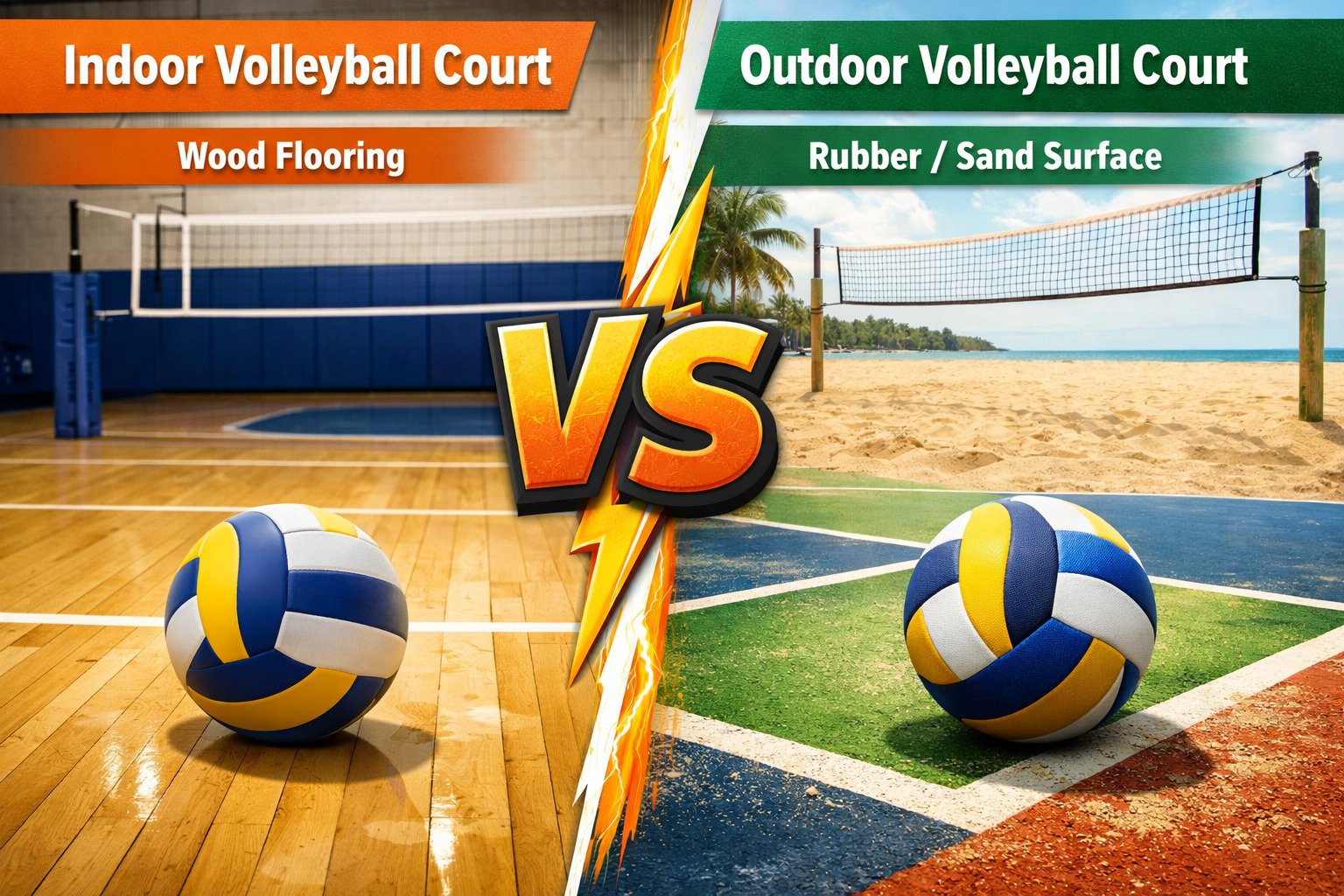
Volleyball may look simple—just a net, a ball, and players ready to spike—but the surface beneath your feet plays a massive role in how the game feels, performs, and even how safe it is. Choosing between indoor vs outdoor volleyball court flooring isn’t just about location; it affects athlete performance, maintenance costs, durability, and long-term usability. Whether you’re building a court for a school, sports facility, backyard, or professional club, the flooring decision will shape the entire playing experience.
Table of contents
Think about it for a moment. The way players jump, land, dive, and sprint all depends heavily on the surface they play on. A hardwood indoor floor offers shock absorption and smooth movement, while sand courts reduce impact and allow dramatic dives. Meanwhile, outdoor modular tiles or concrete courts can provide durability in all weather conditions. Each flooring type comes with its own strengths and limitations, and the right choice depends on how and where the court will be used.
Another factor that often surprises people is maintenance and longevity. Indoor courts may look pristine and professional, but they require climate control, cleaning routines, and refinishing over time. Outdoor courts, on the other hand, must handle rain, sunlight, and temperature changes. Some surfaces thrive in those conditions, while others degrade quickly if not designed for outdoor exposure.
Cost also enters the conversation quickly. A professional indoor hardwood volleyball court can cost significantly more than a sand court or modular outdoor tiles. But price alone doesn’t tell the whole story. Installation complexity, long-term repairs, and player safety should all influence your decision.
This guide breaks down everything you need to know about indoor vs outdoor volleyball court flooring. From surface types and performance characteristics to cost comparisons and real-world applications, you’ll learn exactly how to decide which option fits your needs. By the end, you’ll have a clear picture of which flooring system will give players the best experience—whether they’re competing in a gymnasium or under the open sky. 🏐
Understanding Volleyball Court Flooring Basics
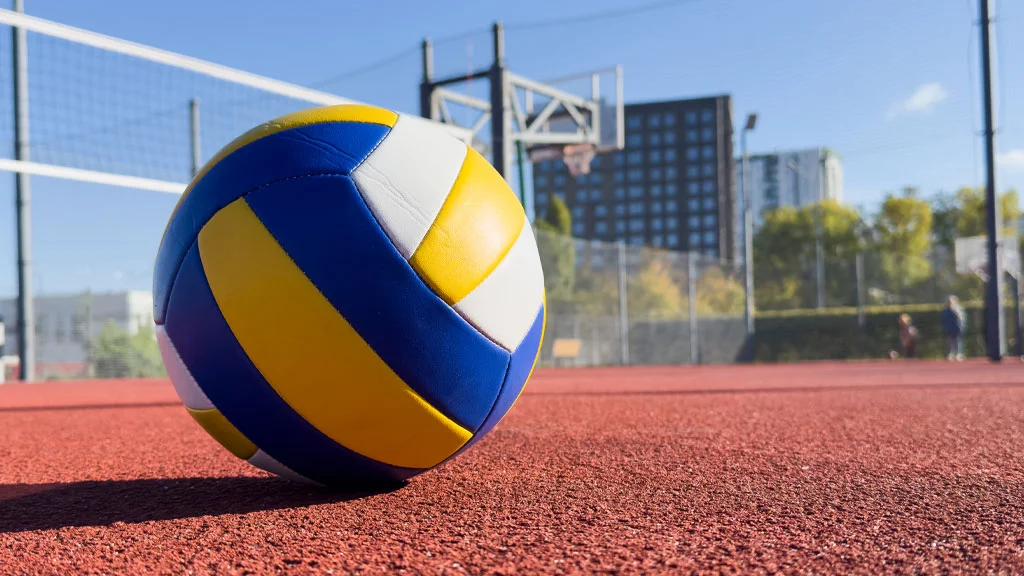
Before comparing indoor and outdoor volleyball courts directly, it helps to understand what sports flooring is actually designed to do. Volleyball flooring isn’t just about aesthetics or durability. It’s engineered to support movement mechanics, athlete safety, and consistent ball behavior. Without the right surface, even the best volleyball facility can feel uncomfortable or unsafe to play on.
At its core, a volleyball floor must balance three essential qualities: traction, shock absorption, and durability. Traction ensures players can change direction quickly without slipping. Shock absorption reduces the stress placed on joints during jumps and landings. Durability ensures the surface can withstand repeated impacts from players and equipment over many years of use.
Indoor and outdoor courts approach these requirements differently. Indoor flooring systems are engineered for controlled environments, meaning they don’t need to handle rain, extreme temperatures, or UV exposure. Because of this, manufacturers can focus heavily on performance features like bounce consistency and shock absorption. That’s why indoor volleyball courts often feel smoother and more responsive.
Outdoor courts face a completely different set of challenges. Surfaces must withstand sunlight, moisture, and seasonal weather changes. Materials used outdoors must resist cracking, fading, or warping. This is why outdoor volleyball surfaces often include sand, concrete, asphalt, or modular polypropylene tiles rather than traditional hardwood flooring.
Another important aspect of volleyball flooring is player interaction with the surface. Volleyball involves explosive movements—jumping for blocks, diving for saves, and quick lateral movements. If a surface is too hard, injuries become more likely. If it’s too soft, players may lose speed and stability. Finding the right balance is the entire goal of sports flooring engineering.
Modern volleyball courts also incorporate layered construction systems. Indoor courts often include subfloor cushioning layers beneath the hardwood, while outdoor modular courts may use interlocking panels that allow drainage and airflow. These hidden structural elements dramatically influence how the surface performs during gameplay.
Understanding these fundamentals makes it much easier to evaluate indoor and outdoor options. Once you recognize how flooring affects performance, comfort, and maintenance, the decision becomes less about preference and more about choosing the right surface for your specific environment and players.
Why Flooring Matters in Volleyball Performance and Safety
If you watch professional volleyball matches, one thing becomes clear almost immediately: the game is incredibly dynamic. Players constantly jump, land, sprint, slide, and dive. Every one of those movements transfers force directly through the flooring surface. That’s why volleyball flooring isn’t just a structural element—it’s an integral part of the sport itself.
One of the biggest performance factors influenced by flooring is energy return. High-quality indoor sports floors are designed to absorb impact and then return energy back to the athlete. This subtle rebound effect helps players jump higher and move faster without putting excessive strain on their knees and ankles. Without proper energy return, players may feel fatigue much more quickly during long matches.
Safety is another critical consideration. Studies in sports medicine have shown that poor flooring surfaces significantly increase injury risk, particularly for knee ligaments and ankle joints. A surface that’s too hard may cause stress fractures or joint pain over time. On the other hand, a surface with inconsistent traction can cause slips that lead to sprains or falls.
Upgrade Your Sports Court Today
Get premium synthetic acrylic flooring designed for durability, grip, and performance.
Get Free ConsultationIndoor volleyball courts, especially maple hardwood sports floors, are widely considered the gold standard for competitive play. These floors offer excellent traction and controlled friction, allowing athletes to stop quickly without sticking to the surface. This controlled sliding effect is important because it reduces the sudden force placed on joints.
Outdoor courts prioritize safety differently depending on the surface type. Sand volleyball courts, for example, reduce injury risk by providing a soft landing area for dives and jumps. Sand naturally disperses impact forces, which is why beach volleyball players can perform dramatic defensive plays without the same injury concerns seen on hard surfaces.
Weather resistance also affects safety. Outdoor surfaces must maintain traction even after rain or under intense sunlight. Slippery or overheated surfaces can quickly become dangerous for athletes. That’s why many modern outdoor courts use textured modular tiles with built-in drainage systems to maintain consistent grip.
Ultimately, flooring determines how comfortable, safe, and competitive a volleyball court feels. Players may not always think about the surface beneath them, but it silently influences every movement they make during the game. Choosing the right flooring means protecting athletes while also enhancing the overall playing experience.
Key Factors That Influence Flooring Selection
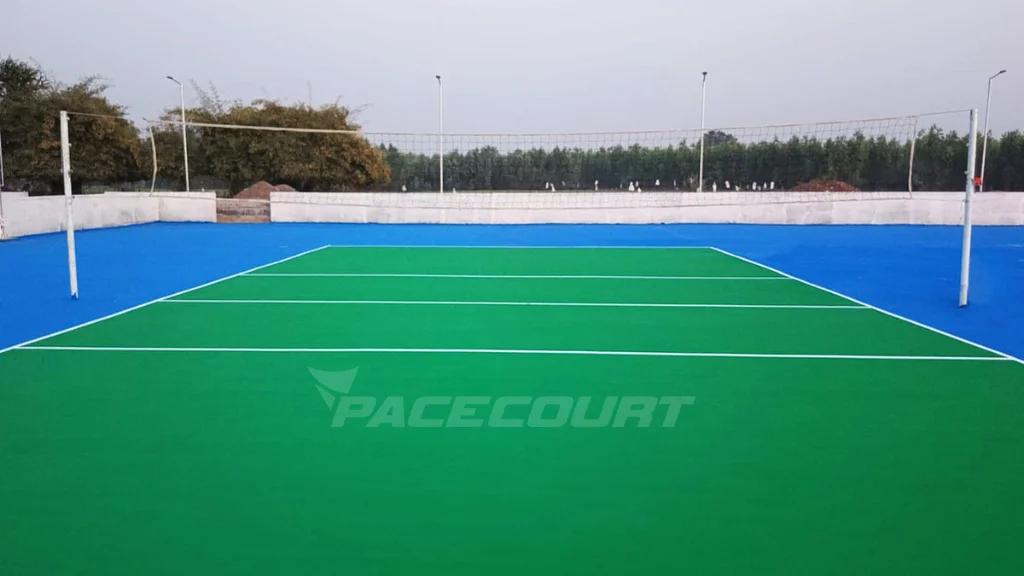
Choosing the right volleyball court flooring is a lot like choosing the foundation for a house. Everything that happens on the court—movement, comfort, safety, and durability—depends on the surface underneath. When deciding between indoor and outdoor volleyball flooring, several key factors should guide your decision. Ignoring even one of these factors can lead to higher maintenance costs, poor performance, or an unsatisfactory playing experience.
The first factor to consider is location and environment. Indoor courts exist in controlled environments where temperature, humidity, and weather are managed. This allows materials like hardwood sports flooring to perform at their best without worrying about moisture damage or UV exposure. Outdoor courts must survive everything nature throws at them, including rainstorms, heatwaves, freezing temperatures, and dust. Because of this, outdoor surfaces are built from materials designed for durability rather than delicate performance characteristics.
Another important factor is frequency of use. A professional sports facility that hosts tournaments every week requires a surface that can withstand heavy foot traffic while maintaining consistent playability. Schools, recreation centers, and training academies often prefer synthetic indoor flooring because it offers durability while still delivering excellent shock absorption. On the other hand, a casual backyard court may not require such high-performance materials.
Player level and competition standards also play a huge role. Professional volleyball leagues and college tournaments typically require certified sports flooring systems that meet strict performance criteria. Organizations like the International Volleyball Federation (FIVB) and the National Collegiate Athletic Association (NCAA) have standards for traction, shock absorption, and ball bounce. Recreational courts don’t always need these certifications, but understanding them can still help guide the decision.
Budget is another practical consideration that can’t be ignored. Building an indoor court with hardwood flooring, subfloor systems, and climate control can cost significantly more than constructing a sand volleyball court outdoors. But the long-term cost may balance out depending on maintenance and durability. Some surfaces are cheaper to install but require frequent repairs or replacements over time.
Maintenance requirements should also influence the flooring decision. Indoor hardwood courts must be cleaned regularly, polished, and refinished periodically to maintain their performance and appearance. Outdoor sand courts need frequent raking and sand replenishment. Modular outdoor tiles may require occasional cleaning and inspection for damaged pieces.
Accessibility and multipurpose use matter too. Many gyms use their courts for basketball, badminton, and other sports, making indoor sports flooring systems more versatile. Outdoor courts are usually dedicated spaces, although modular tile systems sometimes allow multiple sports to be played on the same surface.
When you step back and evaluate all these factors together—environment, usage level, safety, cost, and maintenance—you begin to see why there isn’t a single “best” flooring option. Instead, the goal is to find the best fit for your specific needs and environment.
Upgrade Your Sports Court Today
Get premium synthetic acrylic flooring designed for durability, grip, and performance.
Get Free ConsultationIndoor Volleyball Court Flooring
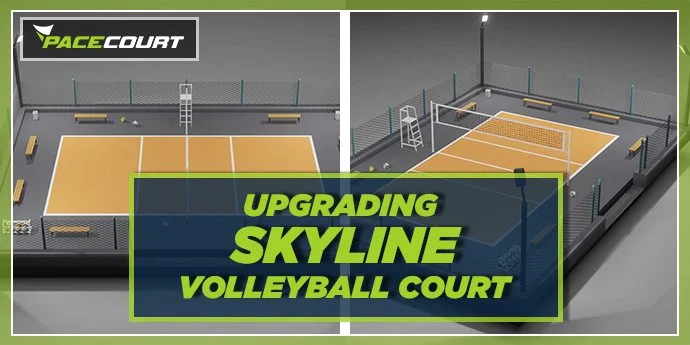
Indoor volleyball courts represent the classic image of competitive volleyball—bright gymnasium lights reflecting off polished wood floors, players sprinting and jumping with precision. Indoor flooring systems are engineered specifically for sports performance, which is why they are used in schools, universities, and professional arenas worldwide.
The most defining characteristic of indoor volleyball flooring is controlled performance conditions. Since these courts are located inside buildings, designers can focus entirely on athletic performance rather than weather resistance. This allows flooring systems to deliver excellent traction, shock absorption, and ball response.
Indoor sports floors usually consist of multiple layers, including the surface material, shock-absorbing subfloor, and structural base. These layers work together to create a surface that feels both firm and forgiving. When a player jumps and lands, the floor absorbs some of the impact while maintaining stability for quick directional changes.
Another advantage of indoor courts is consistent playing conditions. Outdoor courts may change depending on weather, sunlight, or moisture levels, but indoor courts remain stable throughout the year. This consistency is especially important for competitive athletes who rely on predictable surfaces for training and matches.
Indoor volleyball courts also support multi-sport environments. Many gymnasiums use the same flooring for volleyball, basketball, handball, and even indoor soccer. Sports flooring manufacturers design surfaces that provide the right balance of friction and cushioning for different athletic movements.
Despite their performance benefits, indoor courts require regular maintenance and proper climate control. Hardwood floors can expand or contract with humidity changes, which means facilities must monitor indoor climate carefully. Without proper care, even high-quality flooring can warp or crack over time.
Because of their precision design and maintenance needs, indoor courts are generally more expensive to build and maintain than outdoor alternatives. However, for competitive play and professional training environments, they remain the preferred option due to their unmatched performance characteristics.
Common Types of Indoor Volleyball Flooring
Indoor volleyball courts are not all built the same. Different facilities choose different flooring systems depending on budget, performance requirements, and maintenance capabilities. The two most common indoor flooring categories are hardwood sports flooring and synthetic sports flooring systems.
Each option offers unique advantages, and understanding their differences helps facility managers and builders make informed decisions. While hardwood courts are often considered the traditional standard, modern synthetic systems have gained popularity because they combine performance with durability and easier maintenance.
Indoor sports flooring systems are usually installed over shock-absorbing subfloors, which enhance comfort and reduce injury risk. These systems are carefully engineered to distribute force evenly across the surface. The result is a court that supports explosive athletic movements while protecting players’ joints.
Some facilities even use portable or modular indoor sports floors, especially in arenas that host multiple events. These floors can be installed and removed quickly while still maintaining professional performance standards.
Understanding the specific types of indoor volleyball flooring helps highlight why some courts feel faster, softer, or more responsive than others. The materials used directly influence the overall playing experience.
Hardwood Volleyball Courts
Hardwood volleyball courts are widely considered the gold standard for indoor sports flooring. If you’ve ever watched Olympic volleyball or major collegiate matches, chances are the game was played on a polished hardwood court—usually made from northern hard maple. This wood is chosen for its strength, durability, and uniform grain structure, which provides consistent ball bounce and traction.
The construction of a hardwood volleyball court is more complex than it might appear. Beneath the visible wooden planks lies a shock-absorbing subfloor system that helps reduce impact forces. When a player jumps to spike the ball and lands, the floor slightly flexes to absorb energy. This flexibility reduces stress on joints and helps prevent injuries over time.
Hardwood courts also provide excellent traction control. Players can stop quickly without slipping, yet still slide slightly when diving for the ball. This delicate balance between grip and glide is essential in volleyball, where sudden directional changes happen constantly during rallies.
From a visual standpoint, hardwood courts offer a professional and polished appearance. The glossy finish, painted boundary lines, and customizable logos make them a favorite for schools and sports arenas. A well-maintained hardwood court can last 30 to 50 years, making it a long-term investment for many institutions.
However, hardwood courts do require significant maintenance. Regular cleaning, resurfacing, and refinishing are necessary to keep the floor in top condition. Humidity control is also crucial because wood naturally expands and contracts with environmental changes.
Despite the upkeep requirements, hardwood volleyball courts remain the benchmark for professional indoor play. Their combination of performance, durability, and aesthetics continues to make them the preferred choice for high-level competitions.
Synthetic Sports Flooring Systems
While hardwood courts dominate professional arenas, synthetic sports flooring systems have become increasingly popular in modern facilities. These surfaces are typically made from materials like polyurethane, vinyl, or rubber composites, designed to mimic the performance characteristics of hardwood while offering greater durability and lower maintenance.
One of the biggest advantages of synthetic flooring is consistent shock absorption. Many systems incorporate multi-layer designs that provide cushioning throughout the entire surface. This can be especially beneficial in schools and training centers where athletes spend long hours practicing.
Synthetic courts are also easier to maintain compared to hardwood floors. They don’t require sanding or refinishing, and they are less sensitive to humidity changes. Simple cleaning routines are usually enough to keep the surface in good condition.
Another reason facilities choose synthetic floors is versatility. These surfaces can support multiple sports without requiring significant modifications. Volleyball, basketball, futsal, and badminton can all be played on the same court, making synthetic systems ideal for multipurpose gyms.
From a cost perspective, synthetic flooring can sometimes be more affordable over the long term because maintenance costs are lower. While installation prices vary depending on the system, many facilities appreciate the balance between performance and practicality.
Professional volleyball competitions still favor hardwood floors, but synthetic systems continue to grow in popularity, especially in schools, community centers, and recreational facilities. They provide a reliable playing surface while reducing the long-term maintenance burden.
Advantages of Indoor Volleyball Flooring
Indoor volleyball flooring offers several performance and safety advantages that make it the preferred choice for professional competitions, school gymnasiums, and high-level training facilities. When you step onto a well-designed indoor volleyball court, the first thing you notice is the smooth, controlled playing surface. Unlike outdoor environments, indoor courts are protected from weather, dust, and uneven terrain. This controlled setting allows athletes to focus entirely on their performance rather than adapting to changing surface conditions.
One of the most significant advantages is shock absorption. Indoor sports flooring systems—especially hardwood courts with subfloor cushioning—are engineered to reduce the impact force generated during jumps and landings. Volleyball players can jump hundreds of times during a match, and without a properly designed surface, this repetitive stress can lead to knee injuries, ankle problems, and long-term joint fatigue. A well-built indoor court helps distribute these forces evenly across the floor, protecting athletes while allowing them to perform explosive movements with confidence.
Another key benefit is consistent traction. Indoor courts provide a predictable level of grip that helps players change direction quickly without slipping. This traction is carefully balanced so athletes can still perform controlled slides when diving for the ball. The result is a surface that supports agility and quick reactions—two critical elements in volleyball gameplay.
Indoor courts also provide excellent ball response. Because the surface is firm and level, the volleyball bounces consistently during serves, passes, and drills. This consistency helps athletes develop better timing and precision in their movements. For coaches and training programs, this predictability is extremely valuable because it allows players to refine their skills without worrying about irregular ball behavior.
Another advantage that often goes overlooked is multi-sport compatibility. Many indoor sports floors are designed to accommodate volleyball, basketball, badminton, and other athletic activities. Schools and community centers benefit greatly from this versatility, as it allows a single facility to support multiple sports programs without needing different surfaces for each activity.
Indoor courts also have a professional aesthetic appeal. Polished hardwood floors, painted court lines, and custom logos create a visually appealing environment that enhances the overall atmosphere of the game. This polished look is one reason why indoor volleyball tournaments attract large audiences and media coverage.
Although indoor courts require proper maintenance and climate control, their performance benefits make them the top choice for competitive volleyball environments. Athletes experience better traction, safer landings, and more consistent gameplay, all of which contribute to a higher-quality sporting experience.
Limitations of Indoor Volleyball Flooring
While indoor volleyball flooring delivers exceptional performance, it isn’t without its limitations. Understanding these drawbacks is important for facility planners, schools, and sports organizations trying to decide whether an indoor court is the right investment. In many cases, the advantages outweigh the downsides, but ignoring these factors could lead to unexpected costs or logistical challenges.
The first limitation is high installation cost. Building an indoor volleyball court—especially one with professional-grade hardwood flooring—requires a significant financial investment. The process includes constructing the base structure, installing shock-absorbing subfloors, placing the hardwood surface, applying protective coatings, and painting regulation court markings. When combined with the cost of building or maintaining the indoor facility itself, the total price can be substantial.
Maintenance is another factor that facility owners must consider carefully. Hardwood courts require regular cleaning, resurfacing, and refinishing to maintain their performance and appearance. Over time, the protective finish on the floor wears down due to foot traffic and friction from players’ shoes. Periodic refinishing is necessary to restore traction and prevent damage to the wood surface.
Climate control also plays a critical role in maintaining indoor volleyball flooring. Wood is a natural material that reacts to humidity and temperature changes. Without proper environmental management, hardwood floors may expand, contract, or warp, leading to structural problems. Sports facilities often need specialized HVAC systems to maintain consistent conditions throughout the year.
Indoor courts also require dedicated space. Unlike outdoor courts that can be built in parks or open areas, indoor courts must be housed inside large buildings with adequate ceiling height, lighting, and ventilation. This means the overall project cost includes not only the flooring but also the construction and maintenance of the facility itself.
Another limitation is restricted accessibility. Indoor courts are typically available only during scheduled hours, especially in schools or community centers. Outdoor courts, on the other hand, can often be used freely throughout the day. This difference can affect recreational players who prefer spontaneous games rather than organized schedules.
Indoor courts may also lack the casual social atmosphere that outdoor volleyball environments provide. Beach volleyball courts, for example, attract players looking for a relaxed and recreational experience. Indoor courts tend to feel more structured and competitive.
Despite these limitations, indoor volleyball flooring remains the preferred option for professional and competitive play. The key is understanding that indoor courts require higher initial investment and ongoing maintenance, but in return they deliver superior performance and controlled playing conditions.
Outdoor Volleyball Court Flooring
Outdoor volleyball courts bring a completely different experience to the game. Instead of polished gym floors and controlled environments, outdoor courts embrace natural elements, open space, and fresh air. From beach volleyball arenas to backyard recreational courts, outdoor surfaces create a more relaxed and social version of the sport.
Outdoor volleyball flooring must be designed to withstand weather conditions, temperature fluctuations, and long-term exposure to sunlight. Unlike indoor courts, which are protected inside buildings, outdoor surfaces must resist rain, UV radiation, and even freezing temperatures in some regions. This requirement influences the materials used for outdoor court construction.
The most iconic outdoor volleyball surface is sand, commonly associated with beach volleyball. Sand courts provide soft landings that allow players to dive dramatically while reducing injury risk. Professional beach volleyball tournaments—including the Olympic Games—are played on specially prepared sand courts with carefully controlled sand depth and grain size.
However, sand is not the only option for outdoor volleyball. Many recreational facilities and schools install concrete, asphalt, or modular polypropylene tile courts. These surfaces offer greater durability and require less frequent maintenance than sand courts. Modular tile systems, in particular, have become increasingly popular because they provide better traction and drainage than traditional concrete surfaces.
Outdoor courts also allow for greater flexibility in location and design. They can be installed in parks, beaches, resorts, backyards, or school playgrounds. This accessibility encourages casual play and community engagement, making volleyball a more social and inclusive activity.
At the same time, outdoor courts must address challenges like surface drainage, heat retention, and debris accumulation. Leaves, dirt, and rainwater can affect gameplay if the surface isn’t properly designed. Modern outdoor court systems often incorporate drainage channels and textured surfaces to maintain safe traction.
Outdoor volleyball courts may not always offer the same level of performance precision as indoor courts, but they excel in accessibility, affordability, and recreational appeal. For many players, the combination of sunlight, open air, and the excitement of diving into sand creates a uniquely enjoyable volleyball experience.
Popular Outdoor Volleyball Court Surface Types
Outdoor volleyball courts come in several surface types, each designed for different playing environments and budgets. Choosing the right one depends on how the court will be used, how often it will host games, and how much maintenance the owner is willing to handle.
The two most common outdoor volleyball surfaces are sand courts and hard-surface courts, which include concrete or modular tiles. These surfaces provide very different playing experiences, so understanding their characteristics helps ensure the right choice is made for the intended players.
Sand Volleyball Courts
Sand volleyball courts are synonymous with beach volleyball culture. Whether located on an actual beach or built in a park or sports complex, these courts provide a soft, forgiving surface that allows players to dive, roll, and land safely. The sand absorbs much of the impact from jumps and falls, which significantly reduces the risk of joint injuries.
Professional beach volleyball courts typically require 10 to 12 inches of specialized sand. This sand is carefully selected to ensure the grains are rounded rather than sharp, preventing cuts or abrasions. Proper sand depth is crucial because it allows players to move comfortably without hitting the hard base layer underneath.
Another advantage of sand courts is their casual and social atmosphere. These courts attract recreational players who enjoy a relaxed version of volleyball played under the sun. Beach volleyball also uses slightly different rules, such as fewer players per team, which encourages more movement and athleticism.
However, sand courts do require maintenance. Sand must be raked regularly to keep the surface level and remove debris. Over time, additional sand may need to be added to maintain the correct depth. Proper drainage systems are also important to prevent water accumulation after heavy rain.
Despite these maintenance needs, sand volleyball courts remain one of the most popular outdoor volleyball surfaces worldwide, especially for recreational play and beach-style competitions.
Concrete and Modular Tile Courts
Hard-surface outdoor volleyball courts—such as concrete, asphalt, or modular tile courts—offer a durable alternative to sand. These courts are commonly found in schools, parks, and community sports facilities because they require less daily maintenance than sand courts.
Concrete and asphalt courts are extremely durable and weather-resistant, making them suitable for long-term outdoor installations. They can withstand heavy use and require minimal upkeep beyond occasional cleaning and repainting of court lines.
Modular tile courts represent a more modern approach to outdoor sports flooring. These systems use interlocking polypropylene tiles that create a slightly cushioned playing surface. The tiles include small gaps that allow rainwater to drain through the surface, preventing puddles from forming after storms.
Compared to concrete, modular tile systems offer better traction and shock absorption, which improves player comfort. Many sports complexes prefer modular systems because damaged tiles can be replaced individually without resurfacing the entire court.
However, hard-surface courts don’t provide the same soft landing as sand. Players may need protective gear such as knee pads when diving for the ball. Still, these surfaces remain highly practical for multipurpose sports areas where volleyball shares space with basketball or other activities.
Advantages of Outdoor Volleyball Flooring
Outdoor volleyball flooring brings a completely different dynamic to the sport, one that blends athletic competition with fresh air, open space, and a more relaxed atmosphere. For many players, the appeal of outdoor courts goes beyond performance metrics—it’s about the experience itself. Whether it’s a beach volleyball court filled with soft sand or a modular tile court in a community park, outdoor volleyball surfaces make the sport more accessible and social.
One of the most noticeable advantages of outdoor volleyball flooring is accessibility. Outdoor courts can be built in a wide range of locations, including parks, beaches, resorts, schoolyards, and even residential backyards. This flexibility means communities can create recreational spaces without constructing expensive indoor facilities. As a result, volleyball becomes easier for people to play casually, encouraging more participation among beginners and recreational athletes.
Another major advantage is lower construction costs compared to indoor courts. Building an indoor facility requires walls, roofing, lighting systems, climate control, and specialized flooring installation. Outdoor courts, on the other hand, require far fewer structural components. Sand courts, for instance, mainly involve excavation, base preparation, drainage installation, and sand filling. Even modular tile systems can often be installed over existing concrete surfaces, significantly reducing construction expenses.
Outdoor volleyball courts also create a unique playing environment that many athletes enjoy. Beach volleyball, in particular, emphasizes agility, endurance, and quick reflexes. Moving through sand requires more effort than playing on hardwood, which helps strengthen muscles and improve overall fitness. Players often describe sand volleyball as a full-body workout because every step requires additional energy.
Weather exposure can actually be an advantage in certain climates. Playing outdoors allows athletes to train in natural conditions, building resilience and adaptability. Sunshine, fresh air, and open surroundings can also make recreational games more enjoyable, turning volleyball into a social activity rather than just a competitive sport.
Outdoor courts also tend to have simpler maintenance routines depending on the surface type. Sand courts require occasional raking and sand replacement, while modular tile courts typically need periodic cleaning to remove dust and debris. Compared to the refinishing and climate control requirements of indoor hardwood floors, these maintenance tasks can be easier and less expensive.
Another benefit is versatility for recreational use. Outdoor courts can double as spaces for other activities, including casual gatherings, training drills, and community events. In many parks and resorts, volleyball courts become central gathering spots where people socialize while playing.
Because of their affordability, accessibility, and relaxed atmosphere, outdoor volleyball courts play an important role in expanding the sport’s popularity. They make volleyball available to a broader audience while still providing a fun and competitive playing experience.
Limitations of Outdoor Volleyball Flooring
Despite their many benefits, outdoor volleyball courts come with several limitations that can affect gameplay, safety, and long-term durability. These limitations are primarily related to environmental exposure, which introduces variables that indoor courts do not face. Understanding these challenges helps facility planners and players set realistic expectations for outdoor volleyball surfaces.
One of the biggest limitations is weather dependency. Outdoor courts are directly affected by rain, wind, temperature changes, and sunlight. A sudden rainstorm can make a hard-surface court slippery or compact sand unevenly. Strong winds can disrupt gameplay, particularly during serves and high passes. Unlike indoor courts where conditions remain stable, outdoor volleyball requires players to constantly adapt to changing environments.
Surface temperature can also become an issue, especially for hard outdoor courts made of concrete or asphalt. During hot summer days, these surfaces can absorb and retain heat, making them uncomfortable—or even unsafe—for barefoot players. Modular tile courts reduce heat retention slightly, but they can still become warm in direct sunlight.
Sand courts, while softer and safer for dives, come with their own challenges. Sand can shift and become uneven over time, requiring regular raking and leveling. Debris such as leaves, twigs, or small stones may accumulate on the surface if the court is located in a park or open area. Additionally, sand may gradually wash away during heavy rainfall, requiring periodic replenishment to maintain proper depth.
Another limitation is inconsistent playing conditions. Even with proper maintenance, outdoor surfaces rarely offer the same level of uniformity as indoor courts. Sand moisture levels, wind direction, and surface wear can all influence ball movement and player traction. For professional training environments where precision matters, these inconsistencies can make practice less predictable.
Durability can also be a concern depending on the surface material. Concrete courts may develop cracks due to temperature expansion and contraction, while modular tile systems can occasionally shift or require replacement of damaged tiles. Sand courts must also maintain proper drainage to prevent water accumulation and compaction.
Lighting is another factor that can limit outdoor volleyball use. Unless the court is equipped with professional lighting systems, gameplay may be restricted to daylight hours. Indoor courts, in contrast, can host matches and training sessions at any time of the day.
Security and supervision can also be challenges for public outdoor courts. Because they are often open to the public, they may experience higher wear and tear, vandalism, or misuse. Regular inspections and maintenance help address these issues but still require attention from facility managers.
Even with these limitations, outdoor volleyball courts remain extremely popular because they offer freedom, affordability, and recreational enjoyment. Many players accept the environmental challenges as part of the outdoor sports experience, adding an element of unpredictability that keeps games exciting.
Indoor vs Outdoor Volleyball Flooring Comparison
Choosing between indoor and outdoor volleyball flooring often comes down to understanding the key differences in performance, safety, maintenance, and cost. While both types of courts support the same sport, they deliver very different playing experiences. Comparing these elements side by side helps clarify which option best fits a particular facility or project.
One of the most important distinctions is playing consistency. Indoor courts offer controlled environments where lighting, temperature, and humidity remain stable. This allows athletes to rely on predictable ball bounce and traction. Outdoor courts, by contrast, must adapt to weather conditions that can influence gameplay in real time.
Safety also varies depending on the surface type. Indoor hardwood courts provide shock absorption and controlled traction, while sand courts reduce impact forces during dives. Hard outdoor surfaces like concrete offer durability but require protective gear such as knee pads for aggressive defensive plays.
Maintenance and installation costs also differ significantly between indoor and outdoor volleyball courts. Indoor courts require specialized flooring systems and climate-controlled facilities, making them more expensive to build and maintain. Outdoor courts are generally more affordable but require regular inspection to address environmental wear.
The following comparison table highlights some of the major differences between indoor and outdoor volleyball court flooring.
| Feature | Indoor Volleyball Flooring | Outdoor Volleyball Flooring |
|---|---|---|
| Environment | Climate-controlled gymnasium | Exposed to weather and sunlight |
| Common Materials | Hardwood, synthetic sports flooring | Sand, concrete, modular tiles |
| Shock Absorption | High (especially with subfloors) | Moderate to high depending on surface |
| Maintenance | Regular cleaning and refinishing | Raking sand or cleaning surface |
| Installation Cost | Higher | Lower to moderate |
| Playing Consistency | Very consistent | Variable due to weather |
| Accessibility | Limited to facility hours | Often open for public use |
| Professional Use | Preferred for competitive leagues | Used for beach volleyball competitions |
This comparison clearly shows that each flooring type excels in different areas. Indoor courts prioritize precision and performance, while outdoor courts emphasize accessibility and recreational enjoyment.
Performance, Safety, and Maintenance Differences
When evaluating volleyball court flooring, three factors consistently stand out: performance, safety, and maintenance. These elements determine how comfortable the court feels to play on, how well it protects athletes, and how much effort is required to keep it in good condition.
Indoor courts typically deliver the highest performance standards. Hardwood sports floors provide excellent traction, consistent ball bounce, and reliable energy return. These characteristics allow players to perform explosive movements like spikes, blocks, and dives with confidence. Indoor courts also maintain these qualities year-round because they are protected from environmental changes.
Outdoor courts approach performance differently. Sand courts prioritize soft landings and reduced injury risk, while modular tile courts focus on durability and drainage. Although these surfaces may not provide the same level of precision as hardwood floors, they still offer enjoyable gameplay for recreational athletes.
Safety considerations also differ between the two environments. Indoor courts rely on shock-absorbing subfloors and controlled traction to protect athletes’ joints. Outdoor sand courts reduce impact forces naturally, but hard-surface outdoor courts may require additional safety measures like protective gear.
Maintenance is where the contrast becomes particularly noticeable. Indoor hardwood floors require scheduled refinishing, polishing, and climate monitoring to maintain their quality. Outdoor courts generally involve simpler tasks such as cleaning debris, checking drainage systems, or leveling sand.
Facilities that host professional competitions often choose indoor courts because they deliver the most consistent and reliable playing conditions. Recreational communities, however, frequently prefer outdoor courts because they are easier to build and encourage casual participation.
Cost Comparison and Installation Considerations
Cost is often one of the deciding factors when choosing between indoor and outdoor volleyball flooring. While performance and safety remain crucial, budget constraints frequently influence which type of court becomes practical for a particular project.
Indoor volleyball courts generally require larger investments because they involve both flooring installation and building construction. A professional-grade hardwood sports floor can cost significantly more than outdoor surfaces, especially when combined with subfloor systems, lighting, and ventilation infrastructure. Schools and sports complexes often justify this expense because indoor courts support multiple sports and year-round use.
Outdoor courts, in contrast, tend to have lower initial construction costs. Sand volleyball courts require excavation, drainage layers, boundary systems, and specialized sand. Modular tile courts may be installed directly over existing concrete slabs, which further reduces costs.
Installation complexity also varies. Indoor courts require precise leveling, moisture control layers, and professional installation teams. Outdoor courts typically involve simpler preparation processes, though proper drainage and base construction remain essential for long-term durability.
Long-term costs should also be considered. Indoor hardwood floors require periodic refinishing, while sand courts need occasional sand replacement. Modular tile courts allow damaged sections to be replaced individually, which can reduce long-term repair expenses.
Ultimately, the best flooring choice depends on balancing budget, intended usage, and maintenance capacity. Facilities designed for professional competition usually favor indoor courts, while parks, schools, and recreational spaces often benefit more from outdoor installations.
How to Choose the Right Volleyball Court Flooring
Selecting the right volleyball court flooring isn’t just about choosing between indoor or outdoor options—it’s about matching the court to the specific needs of players, facilities, and budgets. A court that works perfectly for a professional sports complex might not be ideal for a school playground or backyard recreation area.
The first step is evaluating the primary purpose of the court. Will it host professional competitions, school tournaments, or casual weekend games? Competitive environments demand precise playing conditions, which usually means indoor hardwood or high-performance synthetic flooring. Recreational courts prioritize accessibility and affordability, making outdoor surfaces more practical.
Another important factor is available space and infrastructure. Indoor courts require large buildings with adequate ceiling height, lighting, and ventilation systems. Outdoor courts can be installed in parks, beaches, and open fields, making them easier to integrate into community spaces.
Budget planning should include both initial installation costs and long-term maintenance expenses. While indoor courts may offer superior performance, they require consistent maintenance and facility management. Outdoor courts are typically cheaper to build but still need regular care to remain safe and playable.
Player demographics also matter. Younger athletes and recreational players may benefit from softer surfaces like sand courts, while competitive athletes prefer the predictability and responsiveness of indoor sports flooring.
By carefully analyzing these factors—purpose, space, budget, and player needs—facility planners can choose a volleyball court flooring system that delivers both performance and long-term value.
Conclusion
Choosing between indoor and outdoor volleyball court flooring ultimately depends on the goals of the facility, the level of competition, and the available resources. Indoor courts provide unmatched consistency, professional performance, and year-round usability. Outdoor courts, on the other hand, offer accessibility, affordability, and a fun recreational atmosphere that attracts a wide range of players.
Hardwood and synthetic indoor flooring systems remain the gold standard for competitive volleyball environments because they provide controlled traction, shock absorption, and predictable gameplay. Outdoor surfaces like sand courts and modular tiles deliver their own advantages, particularly for community spaces and beach volleyball competitions.
The key is not simply deciding which flooring type is “better,” but rather identifying which one fits the intended purpose of the court. A university training center may require a professional indoor sports floor, while a community park might benefit more from an outdoor sand court that encourages social play.
By carefully evaluating performance requirements, safety considerations, maintenance needs, and budget constraints, you can confidently select a volleyball court flooring system that enhances the playing experience for athletes at every level.
Stay Updated with Pacecourt
Discover expert insights, practical tips, and the latest industry updates from Pacecourt, covering sports flooring, tennis and multi-sport court construction, resurfacing, maintenance, court performance, and innovative sports infrastructure solutions.
Powered by Google's Preferred Sources feature