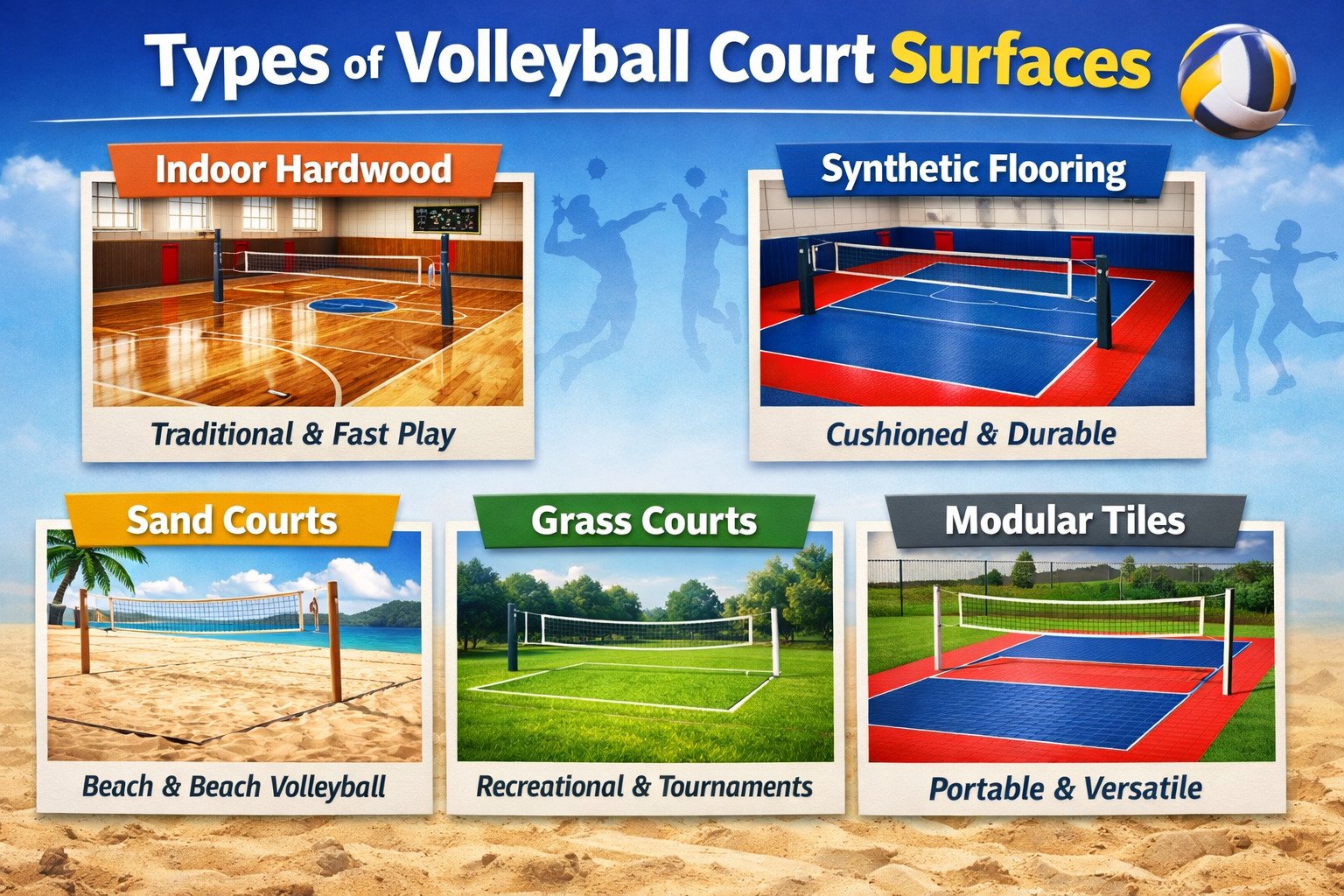
Volleyball might look like a simple game of hitting a ball over a net, but when you start exploring the Types of Volleyball Court Surfaces, you realize the surface you play on quietly shapes everything—from how high you jump to how safely you land. If you’ve ever switched from beach volleyball to an indoor court, you already know it feels like playing two entirely different sports. That’s not your imagination; it’s physics, traction, and shock absorption all working behind the scenes.
Table of contents
Court surfaces are more than just a foundation—they influence speed, agility, endurance, and even injury risk. Professional organizations like the FIVB (Fédération Internationale de Volleyball) have strict standards for surfaces used in competitions, highlighting just how critical the ground beneath your feet really is. Whether it’s soft sand, unforgiving concrete, or engineered synthetic flooring, each surface comes with its own personality.
Think of it like driving different cars on different terrains. A sports car thrives on smooth asphalt but struggles on gravel. Similarly, volleyball players adapt their movements based on the surface. On sand, every step sinks slightly, demanding more energy. On concrete, the bounce is predictable but harsh on joints. Synthetic courts aim to strike a balance, offering consistency with some level of cushioning.
Choosing the right surface isn’t just about preference—it’s about purpose. Are you playing recreationally at the beach, practicing at school, or competing at a professional indoor arena? Each scenario demands a different type of court. Understanding these surfaces in depth helps players, coaches, and facility owners make smarter decisions that enhance both performance and safety.
Why Surface Type Matters in Volleyball
The type of surface you play on doesn’t just change how the game feels—it directly affects how the game is played. Imagine trying to sprint on loose sand versus a polished indoor court. Your muscles, balance, and timing all adjust automatically, often without you realizing it. That adjustment is exactly why surface type matters so much in volleyball.
Different surfaces influence ball behavior, which can completely alter gameplay. On a synthetic indoor court, the ball rebounds quickly and predictably, allowing for fast-paced rallies and precise sets. On sand, however, the ball slows down slightly due to environmental factors like wind and softer footing, leading to longer, more strategic rallies. This is why beach volleyball often emphasizes endurance and tactical placement over sheer power.
Another critical factor is player movement and energy expenditure. Studies suggest that moving on sand can require up to 1.6 times more energy compared to hard surfaces. That means players fatigue faster, which changes substitution strategies and pacing during matches. On concrete, movement is faster and more efficient, but the trade-off is increased stress on joints like knees and ankles.
Safety is where surface choice becomes even more important. Hard surfaces like concrete offer little to no shock absorption, increasing the risk of injuries such as stress fractures or ligament damage. In contrast, sand provides a natural cushion that reduces impact but introduces instability, which can lead to sprains if players aren’t careful. Synthetic surfaces attempt to balance these factors by offering controlled cushioning and grip.
Ultimately, the surface defines the rhythm of the game. Fast or slow, explosive or endurance-based, safe or risky—it all starts from the ground up. Once you understand this, you start to see volleyball not just as a sport, but as an interaction between athlete and environment.
How Surface Impacts Player Performance and Safety
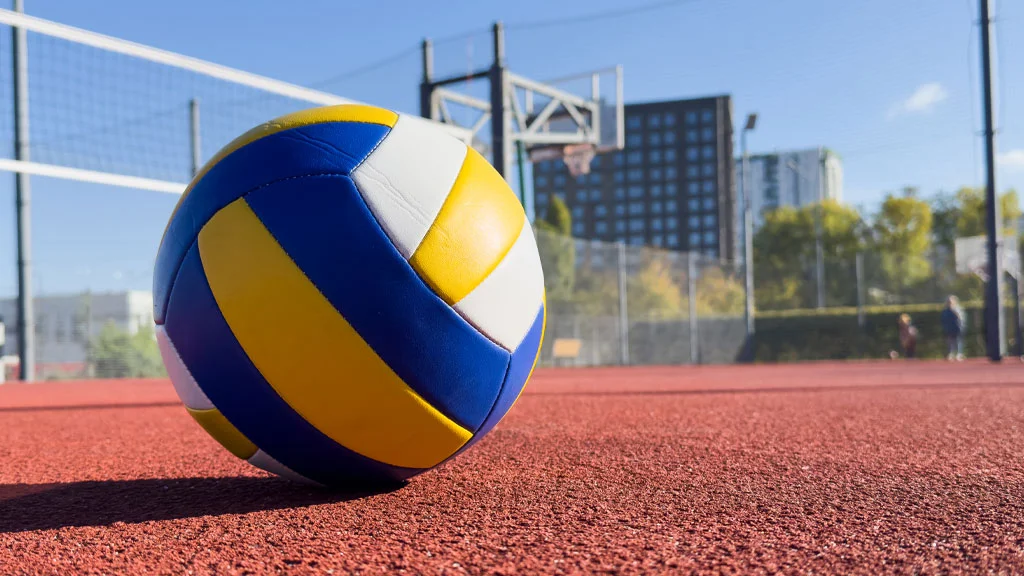
If you’ve ever wondered why some players dominate indoors but struggle on the beach, the answer often lies beneath their feet. The surface plays a huge role in determining how efficiently a player can perform basic actions like jumping, diving, and changing direction. It’s almost like the surface becomes an invisible opponent—or ally—depending on how well you adapt to it.
On sand courts, performance is heavily tied to strength and endurance. Because the surface shifts with every step, players must engage stabilizing muscles constantly. This leads to improved lower-body strength over time but also reduces jump height compared to harder surfaces. A spike that would normally be explosive indoors may feel slightly muted on sand. However, this same softness significantly reduces impact forces, making it easier on the joints during dives and falls.
Concrete courts tell a completely different story. They offer maximum stability and allow for quick, explosive movements. Players can jump higher and move faster because there’s no energy loss from surface deformation. But here’s the catch: the lack of shock absorption means your body absorbs nearly all the impact. Over time, this can lead to chronic injuries, especially if proper footwear and conditioning are ignored.
Synthetic courts aim to combine the best of both worlds. With engineered layers designed for shock absorption and grip, these surfaces support high-performance play while minimizing injury risks. Many indoor professional leagues use synthetic flooring because it provides consistent bounce and traction, which are essential for competitive gameplay. According to sports flooring experts, high-quality synthetic courts can reduce injury risk by up to 30% compared to hard concrete surfaces.
Safety also depends on how predictable the surface is. Uneven sand or poorly maintained concrete can increase accident risks. Synthetic courts, on the other hand, are designed for uniformity, ensuring players can trust every step they take.
At the end of the day, performance and safety are two sides of the same coin. The better the surface supports your movement, the more confidently—and safely—you can play.
Upgrade Your Sports Court Today
Get premium synthetic acrylic flooring designed for durability, grip, and performance.
Get Free ConsultationSand Volleyball Courts
Characteristics of Sand Courts
Sand volleyball courts are probably the most iconic version of the game, instantly bringing to mind sunny beaches, diving saves, and long rallies under open skies. But beyond the aesthetics, sand courts have very specific physical characteristics that define how the game is played. Unlike hard surfaces, sand is loose, granular, and constantly shifting, which makes movement both challenging and dynamic at the same time.
A standard beach volleyball court uses sand that is carefully selected and maintained. It’s not just any sand you find on a random beach. Professional courts use washed, rounded sand particles that are free of debris, shells, and sharp objects. This ensures player safety while also maintaining consistency in how the surface behaves. The depth of the sand layer is also critical—typically around 40 cm (16 inches)—to provide adequate cushioning during dives and jumps.
What makes sand unique is its ability to absorb impact. When you land after a jump, the sand disperses the force, reducing stress on your joints. However, that same feature also absorbs energy when you push off, meaning you have to work harder for every movement. It’s like running on a soft mattress instead of a firm track—every step requires extra effort.
Weather conditions also play a huge role in how sand courts perform. Wet sand can become compact and slightly firmer, while dry sand remains loose and more difficult to move on. Wind can affect both the surface and the ball, adding another layer of unpredictability to the game. This constant variability is part of what makes sand volleyball both exciting and physically demanding.
Ultimately, sand courts create a slower, more strategic version of volleyball. Players rely less on raw power and more on placement, control, and stamina. It’s a surface that rewards patience and adaptability, turning every rally into a test of endurance and skill.
Types of Sand Used in Volleyball
Not all sand is created equal, and in volleyball, the type of sand used can make or break the playing experience. Professional and recreational courts alike pay close attention to sand quality because it directly affects safety, performance, and even injury risk.
The most commonly used sand types include:
- Silica Sand: This is the gold standard for volleyball courts. It consists of fine, rounded grains that are soft on the skin and provide excellent drainage. Its uniform texture ensures consistent footing, which is crucial for competitive play.
- River Sand: Naturally smooth and rounded, river sand is another popular choice. It’s slightly coarser than silica sand but still safe and comfortable for players.
- Manufactured Sand: Created by crushing rocks, this type of sand can be more angular. While it’s cost-effective, it’s generally less preferred because sharp edges can cause discomfort or minor injuries.
The key factor here is particle shape. Rounded grains allow the sand to shift smoothly, reducing abrasions during dives. Angular grains, on the other hand, can lock together, making the surface harder and less forgiving. This might sound subtle, but after a few dives, players can definitely feel the difference.
Another important consideration is cleanliness. High-quality volleyball sand is washed and screened to remove dust and fine particles. This prevents compaction and ensures proper drainage, especially after rain. Poor-quality sand can become muddy or overly compacted, turning the court into an inconsistent and potentially hazardous surface.
Temperature is another overlooked factor. Some types of sand retain heat more than others, which can make playing barefoot uncomfortable in hot climates. Premium sand options are often chosen for their ability to stay relatively cool under sunlight.
Choosing the right sand isn’t just a technical decision—it’s about creating an environment where players can perform confidently and safely. The right texture, depth, and composition all come together to define the true beach volleyball experience.
Advantages of Sand Courts
Playing on sand comes with a unique set of advantages that go beyond just aesthetics. It’s not just about enjoying a beach vibe—there are real physical and strategic benefits that make sand courts highly appealing for both recreational and professional players.
Upgrade Your Sports Court Today
Get premium synthetic acrylic flooring designed for durability, grip, and performance.
Get Free ConsultationOne of the biggest advantages is injury reduction. Sand naturally absorbs impact, which significantly lowers the stress on joints like knees, ankles, and hips. This makes it an excellent surface for players who want to minimize long-term wear and tear. Diving for the ball? Landing from a jump? Sand cushions it all, making aggressive plays feel safer and more forgiving.
Another major benefit is the intense physical workout it provides. Because sand shifts under your feet, your muscles have to work harder to stabilize your body. This leads to improved strength, especially in the lower body and core. Many athletes even train on sand specifically to build endurance and power. It’s like resistance training built directly into the game.
Sand courts also promote longer rallies and strategic gameplay. The slower movement and reduced jump height mean players rely more on technique, ball placement, and teamwork. This creates a more tactical style of play that emphasizes skill over brute force. It’s a refreshing change from the high-speed intensity of indoor volleyball.
There’s also a psychological advantage. Playing outdoors, often in scenic environments, can boost mood and reduce stress. The combination of fresh air, sunlight, and physical activity creates a more enjoyable and relaxed atmosphere compared to indoor settings.
From a maintenance perspective, sand courts are relatively simple to manage. While they require regular raking and cleaning, they don’t need the same level of structural upkeep as synthetic or concrete surfaces.
All things considered, sand courts offer a blend of safety, fitness benefits, and enjoyable gameplay that’s hard to match. They may demand more effort, but they give back just as much in terms of experience and physical development.
Disadvantages of Sand Courts
As appealing as sand courts are, they’re not without their drawbacks. In fact, some of the very features that make sand unique can also become limitations, especially depending on the context in which the court is used.
The most obvious disadvantage is the increased physical demand. Moving on sand requires significantly more energy, which can lead to quicker fatigue. While this is great for training, it can be a challenge for beginners or players who aren’t in peak physical condition. What feels like a fun game can quickly turn exhausting, especially under the sun.
Another issue is reduced mobility and jump performance. Because the surface absorbs energy, players can’t generate the same explosive movements as they would on harder courts. This affects everything from spiking power to defensive coverage. For players who rely on speed and vertical leap, sand can feel limiting.
Weather dependency is another major concern. Rain can compact the sand, while strong winds can disrupt gameplay and even reshape the court surface. Extreme heat can make the sand uncomfortable to walk on, especially for barefoot players. Unlike indoor courts, sand courts are at the mercy of environmental conditions.
Maintenance, while simpler in some ways, still requires consistency. Sand needs to be regularly leveled, cleaned, and occasionally replenished. Over time, debris can accumulate, and the sand can become uneven, affecting gameplay and safety.
There’s also the issue of accessibility and space requirements. Sand courts require a significant amount of space and proper drainage systems. They’re not as easy to install in urban environments compared to concrete or synthetic courts.
In short, sand courts offer a unique and rewarding experience, but they come with trade-offs. They demand more from the player, rely heavily on environmental conditions, and may not be suitable for every setting or skill level.
Concrete Volleyball Courts
Features of Concrete Surfaces
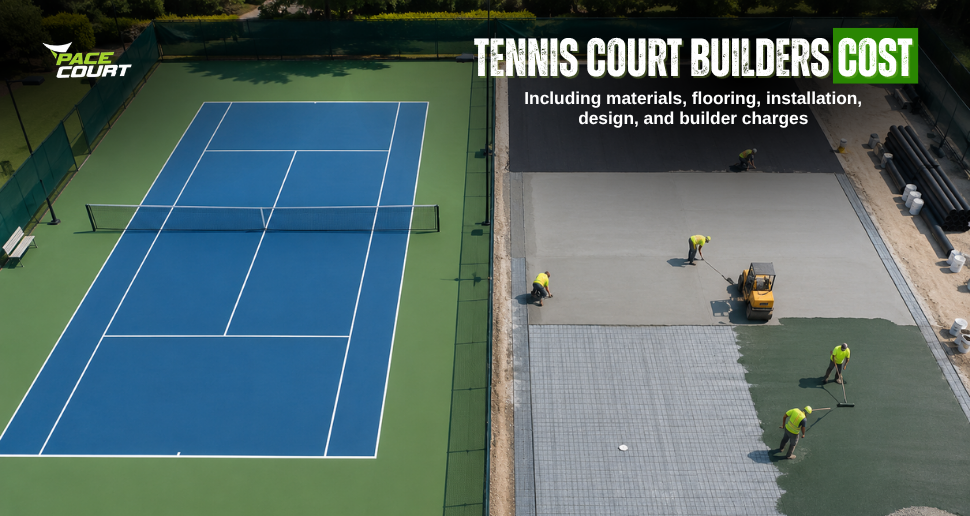
Concrete volleyball courts are often the most accessible and widely available option, especially in urban environments, schools, and public parks. At first glance, they may seem like a simple, no-frills choice—but there’s more to them than just a hard slab of cement. Their defining characteristic is rigidity, which creates a completely different playing experience compared to sand or synthetic surfaces.
Concrete courts are typically constructed using reinforced cement with a smooth or slightly textured finish. Some are coated with acrylic layers to improve grip and reduce slipperiness, especially in outdoor settings where moisture can be an issue. These coatings can also add a bit of cushioning, though it’s minimal compared to synthetic flooring. The court lines are usually painted directly onto the surface, making them durable but occasionally prone to fading over time.
One of the biggest advantages of concrete is its consistency. Unlike sand, which shifts, or synthetic surfaces that may wear unevenly, concrete provides a stable and predictable base. Every step, pivot, and jump feels solid, allowing players to rely on precise footwork and timing. This makes it particularly suitable for fast-paced games where reaction speed is crucial.
However, that same firmness means there’s virtually no shock absorption. When you land from a jump or dive for the ball, the impact travels straight through your body. This is why proper footwear becomes essential on concrete courts. Shoes with good cushioning and support can help mitigate some of the stress, but they can’t fully replicate the softness of other surfaces.
Concrete courts are also highly durable and weather-resistant. They can withstand years of use with minimal structural damage, making them a cost-effective option for communities and institutions. However, cracks can develop over time due to temperature changes or ground movement, which can affect both safety and gameplay.
In essence, concrete courts are all about practicality and performance. They offer a reliable playing surface that supports quick movements and consistent ball behavior, but they demand more from the player’s body in return.
Benefits of Playing on Concrete
Concrete courts might not have the glamour of beach volleyball or the sophistication of indoor arenas, but they bring a set of practical benefits that make them a popular choice for many खिलाड़ियों and communities. One of the standout advantages is speed and responsiveness. Because the surface is hard and unyielding, players can move quickly, change direction instantly, and generate powerful jumps without losing energy to surface absorption.
This efficiency translates into a faster-paced game. Rallies tend to be quicker, and the ball moves more predictably compared to sand courts. For players who thrive on agility and precision, concrete provides an environment where skills like quick reflexes and sharp footwork can truly shine. It’s a surface that rewards technical ability and split-second decision-making.
Another major benefit is low maintenance. Unlike sand courts that require регуляр leveling and cleaning, or synthetic courts that may need specialized care, concrete is relatively easy to maintain. Occasional cleaning and minor repairs are usually enough to keep the court in playable condition. This makes it an ideal choice for public spaces where resources for maintenance might be limited.
Cost-effectiveness is another strong point. Building a concrete court is generally less expensive than installing a high-quality synthetic surface. Once constructed, it can last for many years without significant investment. This durability makes it a practical option for schools, community centers, and recreational facilities.
Concrete courts are also highly versatile. They can be used for multiple sports, such as basketball or tennis, making them a multifunctional asset in shared spaces. This adaptability increases their value, especially in areas where space is limited.
While concrete may not offer the comfort of softer surfaces, its advantages in terms of speed, durability, and affordability make it a reliable and widely used option for volleyball enthusiasts.
Drawbacks of Concrete Courts
Despite their practicality, concrete volleyball courts come with some significant downsides that can’t be ignored. In fact, many of these drawbacks stem directly from the same qualities that make concrete appealing in the first place—its hardness and durability.
The most notable issue is the high risk of injury. Because concrete provides little to no shock absorption, the impact from jumping, landing, or diving is transferred directly to the اللاعب’s body. Over time, this can lead to joint pain, stress fractures, and other overuse injuries. Acute injuries, such as bruises or abrasions, are also more common, especially during falls.
Another concern is player comfort. Playing on concrete can be physically demanding, not because of resistance like sand, but because of the constant impact stress. Matches on hard surfaces can feel more taxing on the body, particularly for beginners or older players who may not have the same level of conditioning as competitive athletes.
Weather conditions can also affect concrete courts, especially outdoor ones. Rain can make the surface slippery, increasing the risk of falls. Extreme heat can cause the surface to become uncomfortably hot, while cold temperatures may lead to cracks or surface damage. These environmental factors can limit usability and require additional precautions.
Surface wear and tear is another issue. Over time, cracks, uneven patches, and faded lines can develop, affecting both gameplay and safety. While repairs are possible, they can be costly and time-consuming if the damage is extensive.
Finally, concrete courts lack the professional feel of synthetic indoor surfaces. For players aiming to compete at higher levels, practicing exclusively on concrete may not fully prepare them for the conditions they’ll face in official matches.
In summary, while concrete courts are durable and accessible, they come with trade-offs in terms of safety, comfort, and long-term player health. These factors make them better suited for casual play rather than high-level competition.
Synthetic Volleyball Courts
Types of Synthetic Surfaces
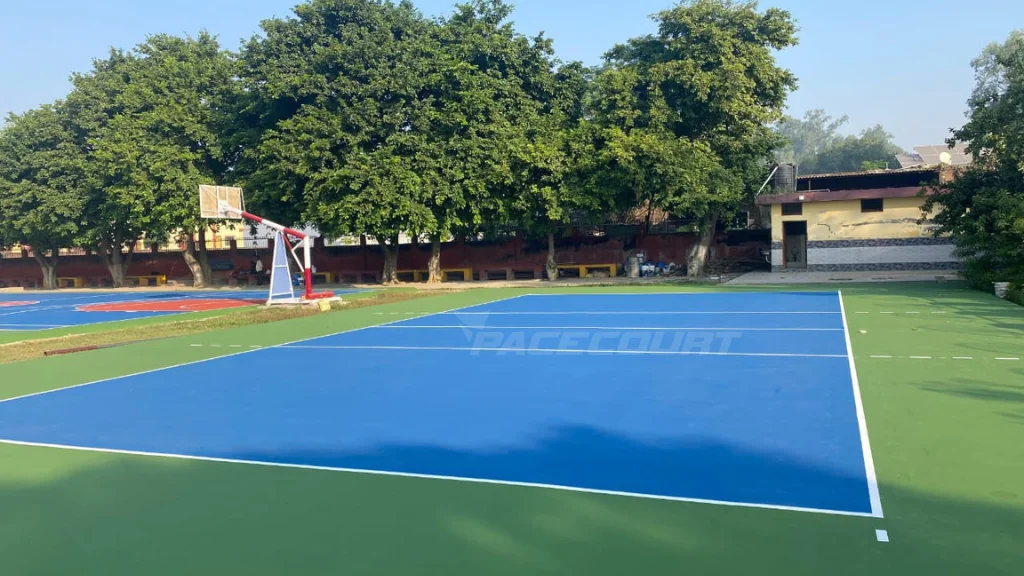
Synthetic volleyball courts represent the modern evolution of sports flooring, designed to combine performance, safety, and durability into a single solution. Unlike natural surfaces like sand or basic materials like concrete, synthetic courts are engineered using advanced materials to meet specific performance standards. This makes them the preferred choice for indoor arenas, professional competitions, and high-level training facilities.
There are several types of synthetic surfaces used in volleyball, each with its own unique properties. The most common ones include PVC (polyvinyl chloride), rubber, and polyurethane flooring systems. These materials are often layered to create a surface that offers both stability and cushioning. For example, a typical indoor court might have a foam or elastic underlayer for shock absorption, topped with a durable vinyl surface for traction and ball response.
PVC flooring is widely used in professional settings due to its consistent texture and excellent grip. It provides a smooth yet slightly cushioned surface that allows players to move بسرعة and confidently. Rubber flooring, on the other hand, is known for its durability and resilience. It offers good shock absorption, making it a safer option for खिलाड़ियों who engage in frequent jumping and diving.
Polyurethane surfaces are often used in multipurpose სპორტ facilities. They provide a seamless finish and can be customized for different levels of cushioning and friction. These surfaces are also مقاوم to wear and tear, making them suitable for heavy الاستخدام.
One of the key advantages of synthetic courts is their customizability. Facility owners can choose specific materials, thickness levels, and մակ finishing options based on their needs and budget. This flexibility allows for the creation of courts that cater to different مستويات of play, from recreational to professional.
In essence, synthetic surfaces are designed to deliver the best possible playing experience. They offer a balance of speed, safety, and consistency that’s difficult to achieve with natural or traditional materials.
PVC, Rubber, and Polyurethane Options
When diving deeper into synthetic volleyball courts, it becomes clear that not all materials perform the same. Each option—PVC, rubber, and polyurethane—brings a unique blend of characteristics that can significantly influence gameplay, comfort, and long-term usability. Choosing between them isn’t just a technical decision; it’s about matching the surface to the needs of the players and the purpose of the court.
PVC flooring is arguably the most popular choice for professional indoor volleyball. It’s designed with multiple layers, including a wear-resistant top layer and a cushioned backing. This structure allows for excellent shock absorption and energy return, meaning players can jump and land efficiently without excessive strain on their joints. The surface also provides consistent traction, reducing the risk of slipping أثناء quick directional changes. This is why many միջազգային competitions rely on PVC-based courts.
Rubber flooring, on the other hand, is known for its toughness and երկար lifespan. It can handle heavy usage without significant degradation, making it ideal for المدارس and التدريب facilities. Rubber surfaces tend to offer slightly more grip, which can be beneficial for stability but may feel less سريع compared to PVC. They also provide solid shock absorption, helping to reduce injury risks during intense play.
Polyurethane surfaces stand out for their seamless design and versatility. Unlike modular flooring systems, polyurethane is poured and finished on-site, creating a smooth, continuous surface. This eliminates joints or seams that could affect ball bounce or player movement. These courts can be tailored to different մակարդակ of cushioning, making them suitable for both volleyball and other indoor sports.
Here’s a quick comparison to clarify their differences:
| Material | Cushioning | Durability | Speed of Play | Best Use Case |
|---|---|---|---|---|
| PVC | High | Medium | Fast | Professional indoor courts |
| Rubber | Medium | High | Moderate | Schools & training centers |
| Polyurethane | Adjustable | High | Balanced | Multi-sport facilities |
Each material has its strengths, and the best choice depends on priorities like budget, usage frequency, and performance expectations. Understanding these options helps in creating a court that not only looks good but also enhances the overall playing experience.
Advantages of Synthetic Courts
Synthetic volleyball courts have become the gold standard in modern sports infrastructure, and once you step onto one, it’s easy to understand why. These surfaces are engineered with precision, aiming to deliver the perfect balance between performance and safety. Unlike sand or concrete, which come with natural limitations, synthetic courts are designed to minimize compromises and maximize player experience.
One of the most significant advantages is consistent performance. Whether you’re playing your first match of the day or your fifth, the surface behaves the same way. The ball bounce is predictable, the grip remains stable, and there are no unexpected variations like uneven sand or cracked concrete. This consistency is crucial for competitive play, where even small irregularities can affect outcomes. It allows players to focus entirely on their skills rather than adjusting to the surface.
Another key benefit is enhanced player safety. Synthetic courts are built with shock-absorbing layers that reduce the impact on joints during jumps and landings. According to sports flooring research, high-quality indoor courts can reduce impact forces by up to 25–30% compared to hard surfaces. This makes a huge difference over time, especially for athletes who train ежедневно. The reduced strain helps prevent chronic injuries, allowing players to perform at their best for longer periods.
Comfort is another area where synthetic courts shine. The surface provides just enough cushioning to make movements feel natural without sacrificing responsiveness. It’s like wearing a perfectly fitted pair of running shoes—supportive, reliable, and designed to enhance performance. Players can dive, slide, and pivot with confidence, knowing the surface will support their movements.
Maintenance is also relatively straightforward. Unlike sand courts that require постоян leveling or concrete courts that may crack, synthetic surfaces are designed for durability. नियमित cleaning and occasional निरीक्षण are usually enough to keep them in top condition. This makes them a practical choice for indoor facilities with high usage.
Finally, synthetic courts offer professional appeal. From المدارس to միջազգային arenas, these surfaces are associated with high-level competition. They not only improve gameplay but also elevate the overall environment, making them a preferred choice for serious players and आयोजक alike.
Limitations of Synthetic Surfaces
While synthetic volleyball courts offer a wide range of benefits, they are not without their limitations. In fact, some of the very features that make them advanced and high-performing also introduce certain challenges, particularly when it comes to cost and accessibility.
The most noticeable drawback is the high initial investment. Installing a quality synthetic court can be significantly more expensive than building a concrete court or setting up a sand कोर्ट. The materials themselves—PVC, rubber, or polyurethane—are engineered products that require specialized manufacturing and installation processes. On top of that, professional installation is often necessary to ensure the surface performs as intended, adding to the overall cost.
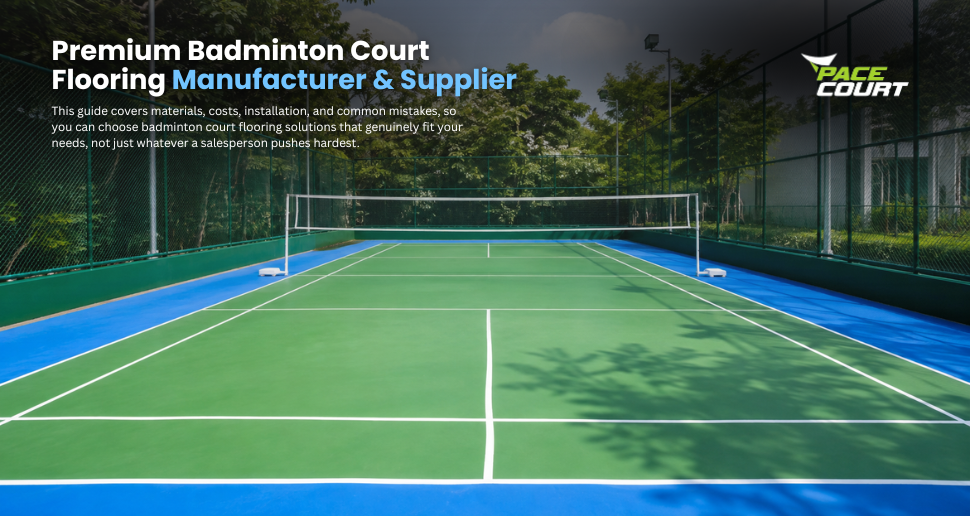
Another limitation is the need for controlled environments. Most synthetic courts are designed for indoor use, where factors like temperature, humidity, and lighting can be regulated. While outdoor synthetic options do exist, they may not offer the same level of durability or performance due to exposure to weather conditions. This makes them less versatile compared to concrete courts, which can be used almost anywhere.
Maintenance, while generally आसान, still requires attention. Synthetic surfaces need to be cleaned regularly to maintain grip and appearance. Dust, dirt, and moisture can affect traction, potentially increasing the risk of slips. Over time, the ზედ layer may wear down and require replacement, especially in high-traffic facilities. While this doesn’t happen frequently, it’s an important consideration for long-term planning.
There’s also the issue of surface sensitivity. Unlike concrete, which can تحمل heavy الاستخدام without much impact, synthetic courts can be damaged by improper use. For example, dragging heavy equipment across the surface or using inappropriate footwear can cause scratches or पहनना. Սա means users need to follow specific guidelines to preserve the court’s quality.
Finally, synthetic courts may not replicate the unique अनुभव of sand volleyball. For players who enjoy the चुनौती and outdoor atmosphere of beach खेल, indoor synthetic surfaces can feel less dynamic or engaging.
In summary, synthetic courts deliver exceptional performance and safety, but they come at a cost—both financially and in terms of environmental requirements. They are best suited for organized खेल settings where consistency and الجودة are top priorities.
Comparing Sand, Concrete, and Synthetic Courts
Performance Comparison Table
When it comes to choosing the right volleyball surface, seeing everything side by side makes a huge difference. Each surface—sand, concrete, and synthetic—offers a distinct playing experience, and understanding their differences can help players and facility owners make informed decisions.
Here’s a detailed comparison based on key performance factors:
| Feature | Sand कोर्ट | Concrete Court | Synthetic Court |
|---|---|---|---|
| Shock Absorption | Excellent | Very Low | High |
| Player Speed | Slow | Fast | Moderate to Fast |
| Jump Performance | Reduced | High | Optimized |
| Injury Risk | Low (soft landings) | High | Low to Moderate |
| Ball Behavior | Slower, less bounce | Fast, consistent | Highly consistent |
| Maintenance | Moderate | Low | Low to Moderate |
| Weather Dependency | High | Moderate | Low (indoor) |
| Cost (Initial) | Medium | Low | High |
This table highlights how each surface caters to different priorities. Sand courts excel in safety and endurance training, concrete courts offer speed and affordability, while synthetic courts provide a balanced, professional-grade experience.
The key takeaway here is that no single surface is “best” in all aspects. Instead, each one is optimized for a specific type of play. Sand is ideal for recreational and beach volleyball, concrete suits casual and community use, and synthetic courts dominate in competitive indoor settings.
Maintenance and Cost Analysis
Beyond performance, maintenance and cost are often the deciding factors when choosing a volleyball court surface. After all, building a court is one thing—keeping it in good condition over time is another.
Sand courts fall somewhere in the middle when it comes to cost. The initial setup requires quality sand, proper drainage, and boundary systems. Maintenance involves regular raking, cleaning, and occasional sand replacement. While this isn’t अत्यधिक expensive, it does require consistent effort to maintain खेलने conditions.
Concrete courts are the most budget-friendly option upfront. Construction costs are relatively low, and maintenance is minimal. However, repair costs can add up over time if cracks or surface damage occur. Despite this, concrete remains the most economical choice for long-term use, especially in public spaces.
Synthetic courts, on the other hand, require the highest initial investment. նյութ costs, installation, and facility setup can be significant. However, their durability and low maintenance requirements can offset these costs over time, especially in high-usage environments. Cleaning and occasional resurfacing are typically enough to keep them in excellent condition.
From a long-term perspective, the choice often comes down to usage frequency and purpose. High-traffic facilities may benefit more from synthetic surfaces, while community spaces might lean toward concrete for affordability. Sand courts, meanwhile, offer a balance between cost and experience, particularly in recreational settings.
Understanding these factors helps ensure that the выбран surface not only meets performance needs but also aligns with budget and maintenance capabilities.
Choosing the Right Volleyball Surface
Factors to Consider Before Installation
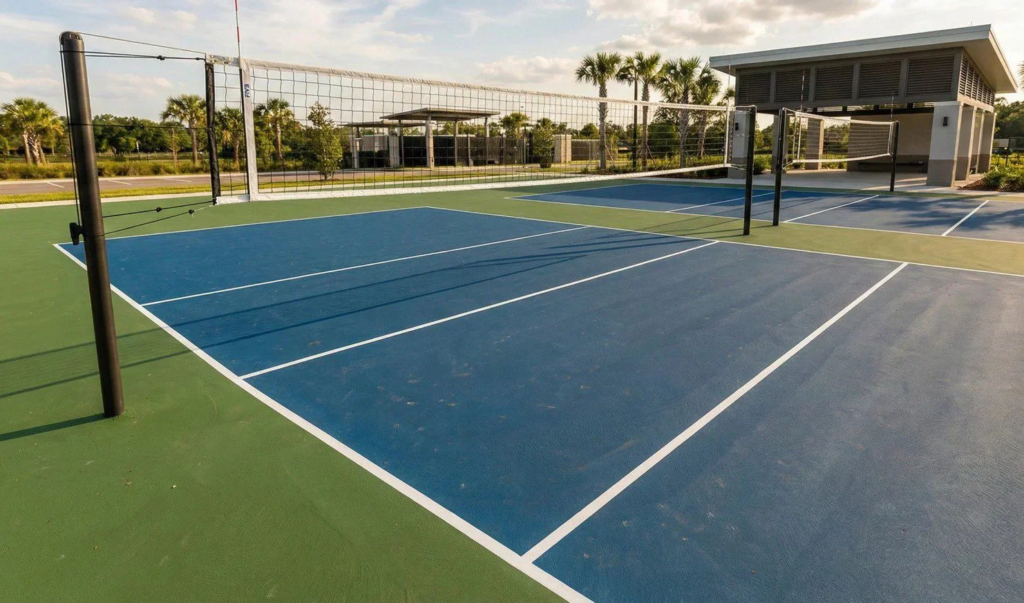
Selecting the right volleyball court surface isn’t just about preference—it’s a strategic decision that depends on multiple factors. Whether you’re building a court for personal use, a school, or a professional facility, understanding these considerations can save time, money, and potential frustration down the line.
One of the first things to think about is intended use. Is the court for casual recreation, नियमित training, or competitive matches? For example, a स्कूल might prioritize durability and low maintenance, making concrete or rubber surfaces a practical choice. On the other hand, a professional training facility would likely invest in synthetic flooring to ensure optimal performance and safety.
Budget is another critical factor. While it’s tempting to go for the most advanced option, it’s important to balance initial costs with long-term expenses. Synthetic courts may offer superior performance, but their installation costs can be high. Concrete courts are more affordable upfront but may come with higher injury risks, which could lead to indirect costs over time.
Location and environment also play a major role. Outdoor courts must withstand weather conditions, making sand and concrete more suitable. Indoor facilities, however, can take full advantage of synthetic surfaces. Climate, space availability, and drainage systems all influence the final decision.
Player safety should never be overlooked. Surfaces with better shock absorption reduce injury risks and improve overall comfort. This is especially important for younger players or those who train frequently.
Finally, consider maintenance requirements. Some surfaces demand регуляр upkeep, while others are more forgiving. Choosing a surface that aligns with available resources ensures the court remains in good condition over time.
Best Surface for Different Skill Levels
Not all volleyball players have the same needs, and the ideal surface often depends on skill level and playing goals. What works for a beginner might not be suitable for an advanced athlete, and vice versa.
For beginners, sand courts can be a great starting point. The мягкий surface reduces injury risk, making it safer for those still learning basic movements. It also helps build strength and endurance, which are essential for long-term development. However, the физикалық demand can be challenging, so shorter sessions are often more effective.
Intermediate players may benefit from a mix of surfaces. Practicing on sand can improve القوة and stability, while playing on concrete or synthetic courts helps develop speed and technical skills. This combination creates a well-rounded खिलाड़ी capable of adapting to different environments.
For advanced and professional players, synthetic courts are usually the best choice. They provide the consistency, الأداء, and safety required for high-level competition. These surfaces allow players to refine their техники without worrying about unpredictable պայմաններ.
Concrete courts, while widely available, are generally better suited for casual or recreational play rather than skill development. Their lack of cushioning makes them less ideal for интенсив training sessions.
In the end, the best surface is the one that aligns with the player’s goals, skill level, and environment. By choosing wisely, players can enhance their performance while minimizing risks.
Conclusion
Volleyball is a sport deeply influenced by the surface it’s played on, and understanding the differences between sand, concrete, and synthetic courts opens up a new perspective on the game. Each surface brings its own rhythm, challenges, and advantages, shaping how players move, react, and perform.
Sand courts offer a мягкий, бяспечный environment that emphasizes endurance and strategy, making them perfect for recreational play and strength building. Concrete courts provide speed and accessibility, but they come with increased physical demands and injury risks. Synthetic courts, with their engineered design, strike a balance between performance and safety, making them the preferred choice for professional and competitive settings.
Choosing the right surface isn’t about finding a universal winner—it’s about matching the surface to the purpose. Whether it’s a casual თამაში at the beach, a community court in a городской park, or a high-stakes indoor match, the surface plays a defining role in the overall experience.
By considering factors like cost, maintenance, safety, and skill level, players and facility owners can make informed decisions that enhance both enjoyment and performance. In the end, the court beneath your feet isn’t just a playing field—it’s a fundamental part of the game itself.
Stay Updated with Pacecourt
Discover expert insights, practical tips, and the latest industry updates from Pacecourt, covering sports flooring, tennis and multi-sport court construction, resurfacing, maintenance, court performance, and innovative sports infrastructure solutions.
Powered by Google's Preferred Sources feature