Author name: Rahul

Rahul is a sports flooring expert and a key contributor at Pacecourt, a leading brand in acrylic and synthetic sports court solutions. Passionate about creating world-class playing surfaces, Rahul shares insights on tennis courts, basketball courts, and multi-purpose sports flooring. His goal is to help facility owners and sports enthusiasts choose durable, high-performance solutions that enhance the game experience.

badminton court size​
Badminton Court Area

Calculating Badminton Court Area: Rules and Measurements 

The badminton court size plays a crucial role in ensuring fair and competitive gameplay. A standard badminton court area measures 20 feet (6.1 meters) wide and 44 feet (13.4 meters) long, creating a total playing area of 880 square feet. For doubles matches, the full width is used, while singles games utilize a narrower court width of 17 feet (5.18 meters), reducing the playing area to 748 square feet. These precise dimensions are essential because they determine the boundaries for legal shots, influence player positioning strategies, and ensure consistency across all levels of play from recreational games to international tournaments. The court’s rectangular shape, combined with its specific measurements, creates the perfect balance between providing enough space for dynamic rallies while maintaining the sport’s characteristic fast-paced, precision-based gameplay that badminton enthusiasts love. Badminton Court Dimensions: The Basics Understanding badminton court dimensions is essential for players, coaches, and facility managers alike. A regulation badminton court measures 44 feet (13.4 meters) in length and 20 feet (6.1 meters) in width for doubles play, creating a total area of 880 square feet. However, singles matches use a narrower playing area, with the court width reduced to 17 feet (5.18 meters) while maintaining the same 44-foot length, resulting in a 748 square foot playing surface. These specific measurements aren’t arbitrary – they’ve been carefully designed to balance athletic challenge with playability. The full-width doubles court accommodates four players and encourages strategic positioning and teamwork, while the narrower singles court intensifies the game by requiring greater precision and coverage from individual players. The consistent 44-foot length ensures that powerful smashes and delicate drop shots have the same flight characteristics across all match formats, making these standardized dimensions crucial for fair competition from local clubs to Olympic venues. Calculating the Badminton Court Area Calculating the area of a badminton court requires knowing the standard dimensions set by the Badminton World Federation. For doubles play, multiply the court’s length of 44 feet by its width of 20 feet to get 880 square feet (or 81.7 square meters when using metric measurements of 13.4m × 6.1m). Singles courts use the same length but a narrower width of 17 feet, resulting in an area of 748 square feet (68.6 square meters). These calculations are more than just numbers – they represent carefully tested dimensions that ensure optimal gameplay. The larger doubles area accommodates four players while maintaining enough space for strategic shot placement and court coverage, while the smaller singles area creates a more intense, precision-focused game for individual players. Understanding these area calculations helps facility planners design proper spacing between courts, ensures tournament organizers can accurately plan venue layouts, and gives players insight into the physical demands of covering their designated playing space during matches. Advantages of Using Pacecourt’s Synthetic Acrylic Sports Flooring Pacecourt‘s synthetic acrylic sports flooring offers exceptional advantages for badminton courts, making it a preferred choice for both professional and recreational facilities. The durable acrylic surface withstands heavy foot traffic and constant shuttlecock impacts while maintaining its structural integrity for years, reducing long-term replacement costs. Player safety is significantly enhanced through the flooring’s superior shock absorption and slip-resistant properties, which minimize injury risks during quick lateral movements and sudden stops that are common in badminton. Maintenance becomes effortless with this non-porous surface that resists stains, moisture, and bacterial growth, requiring only simple cleaning routines to maintain peak condition. Most importantly, the consistent ball bounce and optimal traction provided by Pacecourt’s flooring creates an enhanced gameplay experience, allowing players to execute precise shots and swift movements with confidence, ultimately elevating the overall quality of matches and training sessions. Setting the Standard: Pacecourt’s Contribution Pacecourt has established itself as a pioneering force in sports flooring technology, consistently setting industry benchmarks that elevate the standard for badminton court surfaces worldwide. Through their innovative synthetic acrylic formulations, Pacecourt has revolutionized how courts perform under demanding conditions, developing materials that offer superior durability while maintaining the precise ball bounce characteristics essential for competitive play. The company’s unwavering commitment to quality is evident in their rigorous testing protocols and adherence to international sports surface standards, ensuring every installation meets the exacting requirements of professional tournaments and recreational facilities alike. Most significantly, Pacecourt’s contributions have directly enhanced player performance and safety by creating surfaces that provide optimal grip during explosive movements while reducing joint stress through advanced shock absorption technology. This dedication to excellence has made Pacecourt flooring the trusted choice for elite badminton venues globally, fundamentally transforming how athletes experience the game. Slide, Bounce, Win! All on Our Acrylic Sports Surface. Tennis Court Flooring Basketball Court Flooring Volleyball Court Flooring Badminton Court Flooring Skating Rink Walking track Conclusion Pacecourt has fundamentally transformed the badminton court flooring industry through their pioneering synthetic acrylic technology and unwavering commitment to excellence. Their innovative materials deliver the perfect balance of durability, safety, and performance enhancement, creating surfaces that meet the demanding requirements of both professional tournaments and recreational facilities. The superior shock absorption, slip resistance, and consistent playing characteristics of Pacecourt flooring not only protect players from injury but also elevate their gameplay experience to new heights. As facilities worldwide continue to choose Pacecourt for their badminton courts, the company’s dedication to quality and innovation remains the gold standard, ensuring that players can perform at their best while facility managers enjoy long-lasting, low-maintenance flooring solutions.




Right Badminton Court Floor

Choosing the Right Badminton Court Floor: A Comprehensive Guide

Introduction: The game of badminton, celebrated globally, demands not only athletic skill but also the perfect playing surface. “Choosing the Right Badminton Court Floor” is crucial, as the game and the athletes’ performance are significantly influenced by the court’s flooring. With a myriad of options available, making the right choice can be daunting. However, guidance is at hand with Pacecourt, a trailblazer in the realm of synthetic acrylic sports flooring, offering an in-depth guide on “Choosing the Right Badminton Court Floor” for optimal gameplay. 1. Recognising the Value of the Correct Floor: The flooring of a badminton court affects the game’s tempo, the players’ comfort, and the likelihood of injuries. It affects foot traction, shock absorption, and shuttlecock bounce, directly altering players’ motions and strokes. Furthermore, the importance of the floor in reducing injuries cannot be emphasized given the high-speed nature of badminton. 2. Different kinds of badminton court flooring Understanding the different badminton court flooring options is crucial before exploring synthetic acrylic flooring Wooden floors:  Historically common and comfortable, they provide good bounce. They require a lot of maintenance and are vulnerable to moisture damage. PVC floors:  These are synthetic, inexpensive, and provide a respectable level of comfort and durability. However, they are less durable than other solutions. Concrete or Cement Floors:  These are frequently found in outdoor, informal courts. Despite being sturdy, they provide little stress absorption, which raises the risk of damage. Synthetic acrylic flooring  It is a ground-breaking material that blends dependability, performance, and ease of upkeep. It offers excellent shock absorption for a comfortable playing experience as well as the best surface friction to prevent players from slipping and falling. 3. The Development of Synthetic Acrylic Flooring Because of the many advantages synthetic acrylic flooring provides over conventional materials, Pacecourt has been at the forefront of innovation in this area. Durability, UV resistance, low maintenance requirements, and player-friendliness of the floor make it an ever-more-favorite option. 4. Pacecourt’s Evaluation of the Benefits of Synthetic Acrylic Floors Durability & Weather Resistance:  Unlike conventional wooden flooring, Pacecourt’s synthetic acrylic floors are made to withstand a variety of weather conditions, including UV rays, wetness, and temperature variations. Player Safety:  The floor’s surface roughness is designed to minimize the danger of damage by preventing sliding and offering sufficient cushioning. Care Cost Savings:  Compared to wooden options, these courts require less care, saving money over the long haul. Performance: The level surface and ideal friction improve players’ performance by enabling improved footwork and stroke play without having to worry about erratic bounces. Versatility:  These multi purpose flooring are suitable for various sports outside badminton, offering affordable options for multipurpose facilities. Customization  It is possible with Pacecourt, to open up branding opportunities and improve the aesthetics. 5. Things to Think About When Selecting Badminton Court Flooring: While synthetic acrylic flooring provides many benefits, there are a number of things to take into account when choosing the best badminton court floor: Player Level:  Compared to casual games, professional play may have different flooring requirements. Budget:  Though initial investment should be taken into account, synthetic floors frequently prove to be cost-effective in the long run. Venue:  Compared to outdoor courts, indoor courts have distinct requirements. The flooring options from Pacecourt cover both bases. Assess your capacity for floor maintenance  Low-maintenance synthetic acrylic floors are frequently appropriate for a variety of settings. 6. The Pacecourt Benefit: The synthetic acrylic floors from Pacecourt come with guarantees of quality, innovation, and customer service. Their flooring options are approved and fulfill high standards for athletic performance. Their dedication to sustainability is also demonstrated by the environmentally friendly production methods they use. 7. Installing and maintaining: The performance of the floor can be maximized with proper installation. To assure the lifespan and top-notch functioning of the flooring, Pacecourt provides thorough installation guidance. Their easy-to-follow maintenance instructions help to increase the floor’s toughness. 8. Future Flooring Trends for Badminton: Technology for athletic flooring is always evolving. In order to improve player experience and safety, Pacecourt is at the cutting edge of research and development. Future developments include breakthroughs in sustainability, technology integration (such as impact sensors and interactive surfaces), and material science. Slide, Bounce, Win! All on Our Acrylic Sports Surface. Tennis Court Flooring Basketball Court Flooring Volleyball Court Flooring Badminton Court Flooring Skating Rink Walking track Conclusion: The dynamics of the game of badminton are greatly influenced by the court’s flooring. Choosing the Right Badminton Court Floor is crucial for both amateur and professional players. The synthetic acrylic flooring from Pacecourt emerges as the premier choice. It seamlessly merges safety, performance enhancement, and longevity, ensuring players experience the best of badminton on a top-notch surface.

Synthetic Courts

Exploring the World of Synthetic Courts

In the vast landscape of sports infrastructure, there’s one name that stands tall when discussing synthetic acrylic sports flooring: pacecourt. As the pioneering company to manufacture this groundbreaking material, pacecourt has not only revolutionized the world of sports flooring but also set a benchmark for quality, innovation, and performance. Let’s delve deep into the universe of synthetic court and explore how pacecourt has been at the helm of this transformation. 1. The Rise of Synthetic Courts For decades, sports courts predominantly comprised natural materials like clay, grass, and hardwood. While these materials had their advantages, they also came with limitations—maintenance costs, susceptibility to environmental factors, and limited durability. The introduction of synthetic courts marked a paradigm shift, offering a more durable, cost-effective, and versatile alternative. 2. Pacecourt: A Pioneer in the Industry In the midst of this transition, pacecourt emerged as a visionary. Recognizing the potential and need for high-quality synthetic sports flooring, the company embarked on a journey of research and development. Their efforts culminated in the creation of a premium synthetic acrylic sports flooring material—a game-changer in the industry. 3. Benefits of Pacecourt’s Synthetic Acrylic Flooring Durability: Unlike traditional materials that wear out over time, pacecourt’s acrylic flooring boasts remarkable resilience against daily wear and tear, ensuring a long lifespan. Safety First: With its non-slip surface, the pacecourt ensures enhanced safety for athletes, reducing the risk of injuries. Economical: In the long run, investing in Pacecourt’s synthetic courts translates to significant cost savings. Their low maintenance requirements eliminate the frequent and expensive upkeep needed for traditional courts. Environmentally Conscious: pacecourt’s synthetic material reduces the reliance on wood and other natural resources, emphasizing sustainability and eco-friendliness. 4. Beyond Basketball: The Versatility of Pacecourt’s Offerings While basketball court flooring might be a primary sport associated with synthetic courts, pacecourt’s flooring material is versatile enough to cater to a myriad of sports, from tennis to volleyball and even badminton. This adaptability has made it a favourite choice for multi-sport arenas and educational institutions. 5. The Aesthetics and Customizability A distinct advantage of Pacecourt’s synthetic courts is their aesthetic appeal. The vibrant colours, combined with the option to customize designs (like emblems or logos), offer a visual treat while ensuring brand or team representation. 6. Global Recognition and Adoption Over the years, pacecourt’s synthetic acrylic flooring has gained global recognition. Numerous international sports federations, elite training facilities, and sports academies have adopted pacecourt as their preferred flooring solution, a testament to its unmatched quality. 7. Continuous Innovation at pacecourt Being the first does not mean being complacent. pacecourt continuously invests in research and development, ensuring that they remain at the forefront of technological advancements in the synthetic flooring industry. Their commitment to improvement guarantees that clients always receive the best product available. 8. Customer Testimonials: Evidence of Excellence The global sports community’s trust in pacecourt is evident in the glowing testimonials from athletes, coaches, and facility managers. They often cite the flooring’s performance, longevity, and safety features as its standout attributes. 9. The Future of Synthetic Courts with pacecourt As the world of sports continues to evolve, so do the requirements for infrastructure. With its finger on the pulse of industry needs and trends, pacecourt is well poised to lead the way, offering cutting-edge solutions for the sports community. Slide, Bounce, Win! All on Our Acrylic Sports Surface. Tennis Court Flooring Basketball Court Flooring Volleyball Court Flooring Badminton Court Flooring Skating Rink Walking track Conclusion The world of synthetic sports flooring is vast and evolving, but with pioneers like pacecourt leading the way, the future looks promising. Their commitment to quality, innovation, and customer satisfaction ensures that athletes and sports enthusiasts worldwide have access to the best possible playing surfaces. As we look ahead, one thing is certain: with pacecourt at the forefront, the synthetic court industry is in safe and capable hands.

Tennis Court Size in Square Feet

Tennis Court Size in Square Feet: Dimensions and Layout

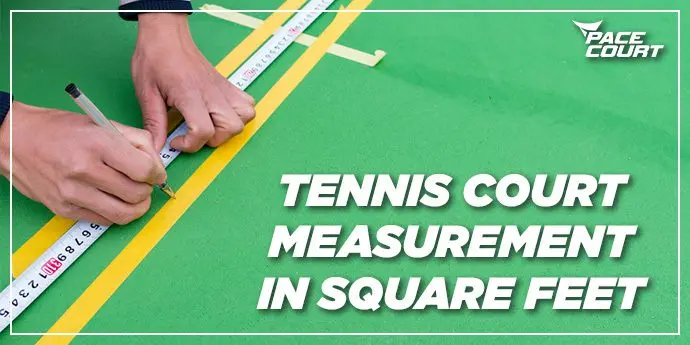
Tennis, tracing its origins back to the 12th century, has witnessed tremendous evolution over the years. Not only have the court surfaces evolved but so have their dimensions. The Tennis Court Size in Square Feet, influenced by technological advancements, has standardized to optimize the player’s experience. One monumental shift in court construction has been the adoption of synthetic acrylic sports flooring, with leading companies like Pacecourt at the forefront. This article delves into the specific dimensions and design of a standard tennis court, shedding light on the Tennis Court Size in Square Feet, and underscores the myriad benefits brought about by synthetic acrylic sports flooring. 1. Dimensions of a standard tennis court According to International Tennis Federation (ITF) regulations, a typical tennis court has the following tennis court measurements: A tennis court’s overall dimensions for doubles matches are 78 feet (23.77 meters) in length and 36 feet (10.97 meters) in width. The width is lowered to 27 feet (8.23 meters) for singles bouts. Service Boxes: The service boxes are 21 feet (6.4 meters) deep and are situated on either side of the court. Net: The net, which divides the court in half, is 3 feet (0.914 meters) tall in the centre and 3.5 feet (1.07 meters) high at the posts. Taking into account the aforementioned measurements, a typical tennis court requires 2,808 square feet for singles and 3,504 square feet for doubles. 2. Further Area Considerations The dimensions of the playing field are conventional, however, more room advised surrounding the court to allow for movement by players, and spectators, and to ensure safety. Run-off Space:  For competitive or professional matches, it is generally recommended to leave a minimum of 12 feet (3.66 meters) behind the baseline and 6 feet (1.83 meters) on the sides. The entire area of a typical tennis court (including the surrounding region) would be about 6,480 square feet after accounting for the extra run-off space. 3. The Future of Tennis Courts: Synthetic Acrylic Sports Flooring Tennis courts are now built very differently because of Pacecourt’s invention of synthetic acrylic sports flooring material. Advantages of synthetic acrylic flooring Durability:  Sports flooring made of acrylic is renowned for its durability. Acrylic courts offer longevity in contrast to traditional grass or clay courts, which can deteriorate and need regular care. Consistent Bounce:  A fair game environment is created by the uniform surface, which guarantees that the ball bounces consistently. Environmental Resistance:  Acrylic flooring is a popular option for both indoor and outdoor courts since it is resistant to a variety of environmental factors, including UV rays and wetness. Low Maintenance:  Acrylic courts are generally low maintenance, requiring only occasional cleaning, in contrast to clay courts which require frequent watering and rolling, or grass courts that require mowing. Customizability:  These courts can made in a variety of colours, allowing establishments or individuals to design their courts to suit their tastes. 4. Pacecourt’s Effect on the Industry As the first business to produce synthetic acrylic sports flooring material, Pacecourt has established standards for the sector. Their inventions have changed not just the way tennis courts are built but also how the sport is played. Pacecourt has improved tennis play for both beginners and professionals by offering a surface that is consistent, robust, and player-friendly. Slide, Bounce, Win! All on Our Acrylic Sports Surface. Tennis Court Flooring Basketball Court Flooring Volleyball Court Flooring Badminton Court Flooring Skating Rink Walking track 5. Conclusion The tennis court, while preserving its regular proportions, has seen advancements in the materials used for its surface. The Tennis Court Size in Square Feet remains standard, but there’s a notable shift towards innovative flooring options. Synthetic acrylic sports flooring, championed by companies like Pacecourt, offers several advantages over traditional surfaces. As tennis continues to be a beloved sport globally, ensuring the game’s integrity and enhancing the player experience through optimal court surfaces remains paramount.

Tennis Courts in Delhi

Tennis Courts in Delhi: Where to Play and Compete

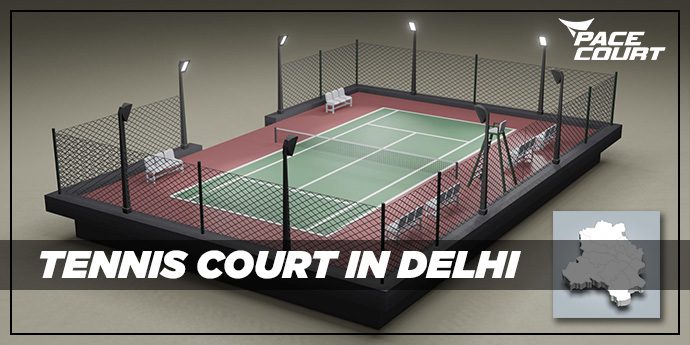
Delhi, the energetic centre of India, is well-known for more than simply its important historical sites, hopping markets, and mouthwatering cuisine. It has established itself over time in the world of sports, particularly tennis. Tennis Court in Delhi have something to offer, whether you’re an amateur searching for a friendly match or a professional looking to compete at the highest levels. Delhi’s tennis scene has undergone a transformation thanks to pacecourt, a leader in the provision of synthetic acrylic sports surface material. Here is a list of the best places to play and compete in the city’s capital. 1. The Rise of Synthetic Courts in Delhi In the past, Delhi’s tennis scene was dominated by grass and clay courts. However, pacecourt has been at the fore in Delhi with the global shift towards hard courts, introducing premium synthetic flooring, thanks to their durability and constant bounce. The number of these courts in the city has increased as a result of their industrial prowess. 2. Why Choose Synthetic Acrylic Courts From Pacecourt? Longevity:  Unlike conventional surfaces, which degrade quickly, pacecourt’s synthetic flooring materials guarantees longevity, making them a long-term cost-effective option. Performance: By providing a consistent bounce and strong traction, these courts enable a game in which skill dominates, minimizing outside irregularities. Maintenance: These courts require less effort to maintain than clay or grass, making them simpler and more affordable. 3. Top Tennis Facilities in Delhi with Pacecourt Courts Delhi Lawn Tennis Association Located in the centre of the city, DLTA offers a top-notch playing experience  thanks to recent modifications to its Pacecourt synthetic courts. Siri Fort Sports Complex:  A centre for many sports, Siri Fort is home to numerous pacecourt tennis courts that are suitable for both amateurs and experts. The R.K. Khanna Tennis Stadium The site of numerous national and international competitions has only benefited from the installation of pacecourt flooring. 4. Tennis Schools Adopt Pacecourt To give their students the finest training possible, many tennis academies in Delhi have switched to Pacecourt’s synthetic acrylic courts. Pacecourt courts are a feature of organizations like the TenX Tennis Academy and Malviya Nagar Tennis Academy, guaranteeing that pupils train on surfaces that meet worldwide standards. 5. Playing in competitions Delhi hosts a wide variety of competitions all year long, ranging from regional championships to ITF events. Players may experience what it’s like to compete at grand slams because many of these tournaments are now played on pacecourt surfaces. 6. Recreational Games and Rentals A novice? Not to worry. In Delhi, there are numerous clubs, groups, and sports facilities that rent out courts by the hour. Pacecourt courts are accessible at locations like the Modern Tennis Academy and Vasant Kunj Sports Complex for fans merely looking to have fun. 7. Engagement with the Community Beyond offering first-rate court surfaces, pacecourt has played a crucial role in community involvement. Emphasizing the value of sports in fostering a sense of community, they have sponsored events, hosted lectures, and even provided free clinics. 8. Tennis in Delhi: What the Future Holds The future of tennis in Delhi appears bright because of organizations like pacecourt that are advancing court technology. It is expected that the city will continue to attract tennis enthusiasts and create more tennis champions. Slide, Bounce, Win! All on Our Acrylic Sports Surface. Tennis Court Flooring Basketball Court Flooring Volleyball Court Flooring Badminton Court Flooring Skating Rink Walking track Conclusion Delhi’s tennis scene has changed significantly, and pacecourt has been a key factor in this change. Their top-notch synthetic acrylic sports flooring has not only improved the playing environment but also played a crucial role in lowering the barrier to entry for the activity. The Delhi tennis scene, supported by pacecourt’s innovations, offers to deliver whether you’re looking to play recreationally, train rigorously, or compete professionally.

Acrylic Flooring vs Vinyl Flooring

Acrylic Flooring vs Vinyl Flooring: A Comprehensive Comparison 

Technology and innovation in the flooring industry have led to the evolution of various options tailored to diverse tastes, functionality, and budgets. Among these, Acrylic Flooring vs Vinyl Flooring stands out as a topic of significant interest. Both acrylic and vinyl flooring, although they might seem similar to the novice, possess unique characteristics, benefits, and drawbacks. In this discourse, we delve deep into both acrylic and vinyl flooring, emphasizing their contrasts, resemblances, and ideal use cases. As a reflection of Indian ingenuity, Pacecourt has become the pioneer in India to produce synthetic acrylic flooring, adding a novel dimension to this global flooring narrative. Origin and Material Composition Acrylic Flooring:  Acrylic flooring was invented in India by Pacecourt and is made of a synthetic resin generated from acrylic acid. To form a strong and resilient surface, this substance is blended with other substances. The outcome is a surface that is impressively shock-absorbing in addition to being smooth. Vinyl Flooring: Vinyl Flooring: Polyvinyl chloride (PVC), a multipurpose material, is the source of vinyl flooring. It normally has four layers: a backing layer, a core layer, a design layer, and a top layer that serves as protection. Vinyl flooring’s versatility and durability are a result of its multi-layered composition. Aesthetic Appeal Acrylic Flooring: Sports courts frequently have acrylic flooring because of its vivid colours and capacity to produce crisp, legible line marking. Acrylic flooring, however, has spread beyond sports venues and into modern residences and workplaces, providing a sleek, glossy appearance that is both fashionable and practical. Vinyl Flooring:  Vinyl flooring is renowned for offering a wide range of design options. Virtually any natural substance can be imitated by the design layer of vinyl flooring, from the warmth of hardwood to the chilly elegance of stone. Vinyl is appropriate for a variety of décor types thanks to its chameleon-like qualities. Durability and Maintenance Acrylic Flooring:  The endurance of acrylic flooring is one of its best qualities. The synthetic resin is tough and resistant to abrasions, weather changes, and heavy foot traffic. Although it does need some upkeep, particularly in high-traffic areas, such as periodic cleaning and re-coating, its longevity is noteworthy. Additionally, because it is UV-resistant, the vivid colours will not fade over time. Vinyl Flooring:  Regarding durability, vinyl is also commendable. It is moisture-resistant, which makes it a great option for damp-prone places like bathrooms and kitchens. Regular cleaning and mopping are usually sufficient for maintenance. However, as they can dent or harm the surface, it’s imperative to avoid using sharp things or pulling heavy furniture. Installation and Cost Acrylic Flooring:  Installation of acrylic floors must be more thorough, typically requiring many applications and drying times. Although it may appear labour-intensive, doing it this way ensures a flawless finish. The cost of acrylic flooring can be higher than other options, mainly because of the high quality of the materials used and the specialized installation required. Vinyl Flooring:  With choices like glue-down, click-lock, and loose lay, vinyl floors provide a more simple installation procedure. Their adaptability may result in lower labour expenses. Vinyl is typically less expensive than acrylic in terms of material prices, especially when looking at the entry-level possibilities. Environmental Considerations Acrylic Flooring:  Acrylic floor painting production can be environmentally sustainable, especially when it is managed by ethical businesses like Pacecourt. The production method generates fewer volatile organic compounds (VOCs) than that of many other flooring kinds, and the raw ingredients are frequently supplied sustainably. Vinyl Flooring:  The environmental impact of vinyl is in dispute. Older vinyl flooring has come under fire for phthalates and VOC emissions, even if newer vinyl materials are made to be more environmentally friendly. However many contemporary producers are working hard to create vinyl in a way that has a smaller negative impact on the environment. Slide, Bounce, Win! All on Our Acrylic Sports Surface. Tennis Court Flooring Basketball Court Flooring Volleyball Court Flooring Badminton Court Flooring Skating Rink Walking track Conclusion Both acrylic and vinyl flooring offer distinct advantages to cater to a variety of needs. Acrylic Flooring vs Vinyl Flooring is a debate that many court owners find themselves in, and if you’re keen on understanding the depth of this discussion, read this blog to learn about Acrylic Paint Flooring vs. Traditional Flooring Materials. While vinyl flooring stands out with its design adaptability and cost-effectiveness, acrylic flooring, especially those championed by industry leaders like Pacecourt, provides a luxurious, enduring finish ideal for sports courts and modern interiors. Your individual needs, design tastes, and budget will guide your choice between these two. Whether you’re leaning towards vinyl for its design versatility or acrylic for its sleek appearance, both options ensure durability and practicality.

Acrylic Skating Rink
Guide to Acrylic Skating Rink Flooring

Comprehensive Guide to Acrylic Skating Rink Flooring

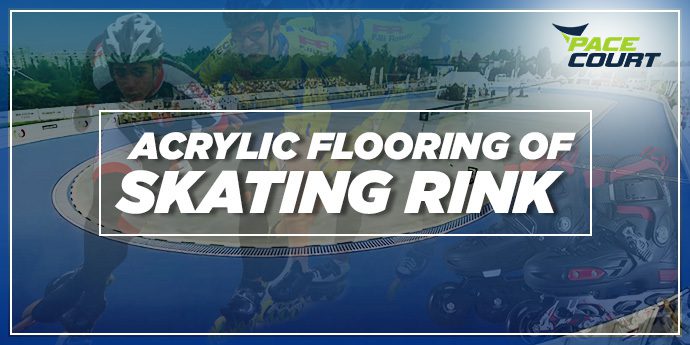
To gain a deep comprehension of the pervasive appeal of acrylic as the best material for rink owners and administrators, one must delve into the complications of maintaining an acrylic rink floor. The Guide to Acrylic Skating Rink Flooring provides insights into these nuances. The preference for acrylic is not a temporary trend; rather, it stems from tangible advantages that go beyond simple appeal. Advantages of Acrylic Rink Flooring Evident among the merits of selecting acrylic for your rink’s flooring is its remarkable durability. Acrylic flooring show resistance to cracks and other structural imperfections, fortified to endure the weight of numerous skaters, resiliently withstanding the effects of normal usage and the test of time also, offering a steadfast skating surface for long periods. Climate Adaptability: Separating from conventional ice rinks, weak to the chill of winter, acrylic rinks maintain their resilience throughout the seasons. This versatility makes them a preferred choice for sites catering to skating enthusiasts year-round, whether installed outdoors or sheltered within a structure. Streamlined Maintenance: In contrast to the demands placed on all rinks, acrylic flooring necessitates a lesser degree of upkeep than their icy counterparts. With the correct maintenance regimen, these floors can admirably serve skaters for an extended duration. Procedures for Nurturing and Maintaining Acrylic Skating Rink Flooring Routine Cleansing Protocols: Cleaning Regimens: A daily requirement entails the removal of outside objects from the rink. Use a soft-bristle broom to meticulously remove any debris or dirt from the surface, also preventing potential harm to the acrylic finish by preemptively destroying minuscule particulates. Mopping Control: Sometimes, especially after intense skating sessions, mopping becomes imperative, also achieve this, blend neutral water with a mild, pH-neutral detergent, eschewing abrasive cleaning agents or potent chemicals that could threaten the structural integrity of the acrylic floor. Eliminating Stubborn Stains: Though stains may be unavoidable, they need not become a permanent fixture of your rink. For stubborn blemishes, employ a soft fabric or sponge soaked in warm, soapy water, employing circular motions as a productive technique. Thoroughly rinse to leave a pristine surface in their wake. Seasonal Maintenance Activities: Thorough Assessment: In anticipation of each new skating season’s start, allocate time for a comprehensive floor inspection. This proactive measure aids in the early detection of potential issues, such as cracks or chips, averting their escalation into significant difficulties. Reapplication of Acrylic Coating: Acrylic rinks may lose their lustre over time. Periodic touch-ups are requisite. Depending on usage frequency and manufacturer recommendations, consider reapplying an acrylic coating to restore the floor’s sheen while affording an additional layer of protection. Specialized Caring for Outdoor Acrylic Skating Rinks Sun Protection: Over the years, solar UV radiation may impact the quality of acrylic. This influence can be mitigated by administering a UV-resistant coating, acting aiso, protective barrier to safeguard the floor’s longevity. Winter Preparations: In regions exposed to winter snowfall or subfreezing temperatures, also it is prudent to shield the roller rink flooring with a protective tarp. This proactive measure minimizes the potential harm posed by ice and snow accumulation. Guidelines for Ensuring Safety at Acrylic Skating Rinks: Routine Safety Inspections: Uncompromising safety is paramount. Regular scrutiny extends beyond the floor to encompass the surrounding infrastructure, including boards, obstacles, and associated machinery. This diligent approach ensures a hazard-free environment for skaters. Ensuring Fair Illumination: Appropriate lighting is indispensable, particularly for sessions conducted during twilight or evening hours. It assures optimal visibility for skaters, diminishing the likelihood of errors and accidents. Closing Reflections So, acrylic-based skating rinks epitomize excellence in both form and function. The Guide to Acrylic Skating Rink Flooring highlights the importance of this unique material in the construction of top-notch skating environments, also adherence to the meticulous maintenance and safety regimen outlined above enables rink administrators to furnish customers with an impeccable skating experience, a well-maintained rink beckons not only to skating enthusiasts but also serves as a testament to your unwavering commitment to the sport, quality, and safety, setting you apart in this fiercely competitive industry.

Acrylic vs traditional flooring
Acrylic Paint Flooring

Acrylic Paint Flooring vs. Traditional Flooring Materials 

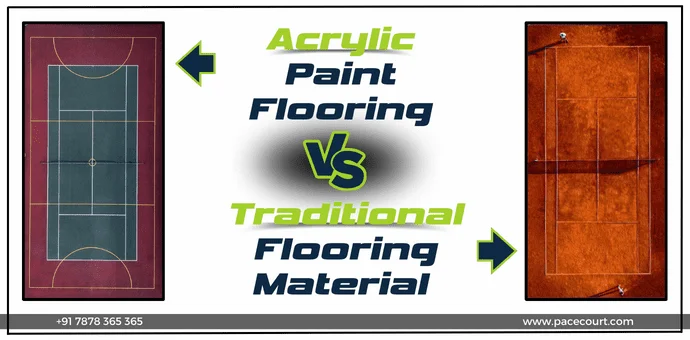
The importance of flooring in sporting arenas cannot be overstated. A decent sports floor influences performance, safety, and appearance. Acrylic Floor painting has recently emerged as a tempting alternative, providing various benefits that few materials can match. This essay will discuss the various characteristics of Acrylic Paint Flooring and compare it to other traditional sports flooring materials. 1. Introduction to Acrylic Paint Flooring Acrylic Paint Flooring is a robust surface made of a mixture of acrylic resins, pigments, and other components to create a surface that is long-lasting, aesthetically pleasing, and performance-enhancing. This sort of flooring, which is frequently used in outdoor sports courts like tennis, basketball, and volleyball court flooring, has a smooth finish to give athletes the best grip and lower the chance of accidents. 2. Why Choose Acrylic Paint Flooring? Durability:  Acrylic surfaces are renowned for being enduring. Even after lengthy exposure to sunlight, the UV-resistant coating guarantees that the colors will remain brilliant. Weather Resistance:  Unlike certain flooring materials, acrylic floors are resistant to a variety of weather elements, including sweltering sun and torrential rain. It is therefore perfect for outdoor synthetic court. Customizability:  One can choose from a variety of colors and even directly add game lines and logos when using acrylic paint flooring. Maintenance:  Acrylic surfaces require little cleaning and little upkeep. The court will remain in top shape with the occasional sweeping and washing. 3. Other Traditional Sports Flooring Materials: An Overview Wooden Flooring:  Wooden floors have a classic appearance and are frequently utilized in indoor sports like basketball. They can harmed by dampness and require routine maintenance despite having strong shock absorption. Rubber Flooring: Rubber flooring is common in fitness centers and indoor sporting venues because it is supple and provides superior shock absorption. It might, however, be more prone to damage. Concrete and asphalt:Concrete and asphalt are both common hard surfaces for outdoor courts. Although they are sturdy, they provide nothing in the way of stress absorption, which raises the possibility of damage. Synthetic and Polyurethane: Synthetic and polyurethane floors are multi-layered, cushioned surfaces that are great for indoor sports. Although they have good grip and absorb shock, they can be more expensive. 4. Acrylic vs. Traditional Materials: The Comparison Performance:  Acrylic offers an excellent compromise between grip and smoothness. Unlike on asphalt or concrete, players can glide safely without the risk of abrasions. Unlike wood, acrylic does not expand or contract as a result of dampness. Cost:  Although the initial cost of installing acrylic may more than that of placing asphalt or concrete, in the long run, this is balanced out by the material’s durability and low maintenance needs. Safety:  Injury hazards are reduced because acrylic is non-slip and has a smooth finish. Wood floors may become slick in humid conditions, and slamming into concrete or other hard surfaces may result in significant harm. Acrylic paint: Acrylic paint on the flooring has a favorable effect on the environment. The materials used have less environmental impact compared to the harvesting and processing of wood or the manufacture of plastic. Impact on the Environment: Acrylic paint flooring is environmentally friendly. The materials utilized have a lower environmental impact than the extraction and processing of wood or the manufacture of synthetic floors. 5. The Future of Sports Flooring: Why Acrylic Stands Out Flooring materials must adapt to the growth of sports and the increased emphasis on player safety and performance. Acrylic Paint Flooring, with its numerous advantages, appears to be the preferred choice for many sports venues. Its versatility, along with its durability and safety features, makes it an appealing alternative for both players and venue owners. While history has its place in the world of sports flooring, innovation cannot overlooked. Pacecourt’s Acrylic Paint Flooring embodies this spirit of innovation, demonstrating that the new kid on the block can sometimes outperform the experienced. Conclusion The correct flooring material for a sports arena may make or break performance, safety, and aesthetics. Acrylic Paint Flooring is a tempting alternative to standard materials, with numerous advantages that are difficult to overlook. As the world of sports evolves, so should the playing surfaces. Acrylic, with its distinct set of benefits, appears more than prepared to meet this challenge.

Cushioning in Volleyball Court

The Intricacies of Flooring Cushioning in Volleyball Court 

Volleyball is not only a game of skill, agility, and strategy, but also a sport that demands an optimal playing surface. The flooring of a synthetic volleyball court plays a pivotal role in the performance and safety of players. Over the years, advancements in technology have significantly improved the standards of flooring cushioning. In this article, we delve into the intricacies of flooring cushioning in volleyball court. 1. Understanding the Importance Safety: Volleyball involves high jumps, sudden stops, and rapid directional changes. Appropriate flooring cushioning can reduce the risk of injuries like sprains, fractures, and impact-related trauma. Performance: The right surface can enhance a player’s performance by providing a consistent bounce, ensuring a firm grip, and reducing fatigue. Comfort: Adequate cushioning ensures that players can give their best without worrying about hard impacts on their joints and muscles. 2. Types of Volleyball Court Flooring There are primarily three types of volleyball court flooring: a) Wood Flooring: Traditional and widely preferred for its natural bounce and aesthetic appeal. However, it requires regular maintenance. b) Synthetic Flooring: Made from polyurethane or vinyl, these are durable and require less maintenance. The cushioning can be adjusted based on requirements. c) Portable Courts: These are interlocking tiles made of high-quality plastics. Ideal for temporary setups or locations where a permanent court isn’t feasible. 3. Key Components of Flooring Cushioning a) Shock Absorption: This is the floor’s ability to absorb the energy from a player’s impact, reducing the force returned to the player. This minimizes injury risks and player fatigue. b) Vertical Deformation: Refers to the slight depression that the floor undergoes upon impact. Too much or too little can negatively affect performance. c) Surface Friction: It’s essential for preventing slips and falls. However, excessive friction can cause injuries, like ankle sprains. 4. Advancements in Cushioning Technology Companies like Pacecourt have been at the forefront of technological advancements in flooring cushioning: a) Multi-layer Systems: Modern courts often use a multi-layer system, combining the best of synthetic flooring materials and natural materials. This ensures optimal shock absorption and surface friction. b) Nano-tech Surface Layers: These increase the durability and resistance of the floor, ensuring a longer lifespan and consistent performance. c) Environmentally Adaptive Courts: Some advanced courts can adapt to environmental changes, ensuring consistent playing conditions irrespective of humidity and temperature. 5. Maintenance and Upkeep An ideal volleyball court is not just about initial installation but also about regular maintenance. Proper cleaning, timely repairs, and periodic resurfacing are essential. Newer cushioning technologies have also incorporated anti-microbial layers, keeping the court hygienic and safe. 6. Customization and Personalization The modern era allows for customization based on player needs, court location, and budget constraints. Whether it’s adjusting the cushioning level, opting for eco-friendly materials, or incorporating team logos and colors, the possibilities are vast. 7. Environmental Considerations Sustainability is a growing concern. The industry has seen a shift towards materials that are eco-friendly, recyclable, and sourced sustainably. It’s not just about playing well, but also about playing responsibly. 8. Future Directions The future of volleyball court flooring is bright with possibilities: a) Smart Courts: Incorporating sensors and AI to provide real-time feedback on player movements and game analytics. b) Self-healing Materials: Materials that can repair minor damages themselves, prolonging court life and reducing maintenance costs. c) Advanced Customization: With the rise of 3D printing and other technologies, courts of the future might be tailor-made to individual player specifications. Slide, Bounce, Win! All on Our Acrylic Sports Surface. Tennis Court Flooring Basketball Court Flooring Volleyball Court Flooring Badminton Court Flooring Skating Rink Walking track Conclusion The intricate world of Cushioning in Volleyball Court flooring goes beyond mere aesthetics. It’s a blend of science, technology, and sport, ensuring that every spike, serve, and save is executed on a surface that’s safe, high-performing, and responsive. As we spike our way into the future, it’s exciting to envision how innovations in flooring cushioning will further revolutionize the beloved game of volleyball.

Right acrylic floor
Choosing the Right Acrylic Flooring Company

How do I choose the right acrylic flooring company?

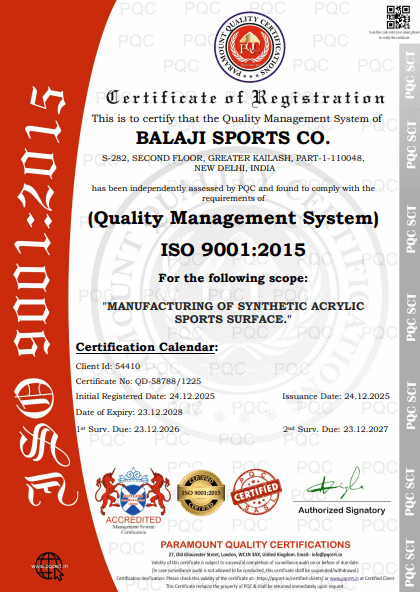
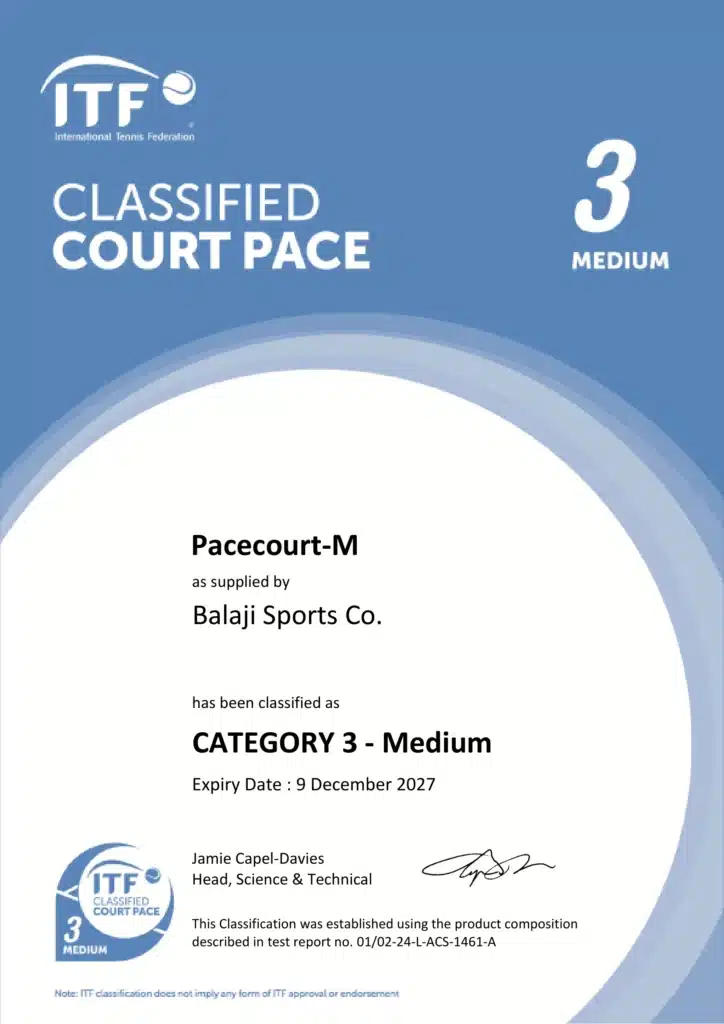
In the vast realm of flooring, acrylic flooring has stood out, blending aesthetics with durability. For many, “Choosing the Right Acrylic Flooring Company” is more than just a decision—it’s an assurance of quality and longevity. It’s an attractive proposition for homeowners and businesses alike. However, as with any significant investment, the challenge lies in identifying the best manufacturer to trust. With myriad options available, how does one navigate the journey of choosing the right acrylic flooring company? The solution may well lie with brands that not only provide superior products but also possess globally recognized certifications and prioritize customer service. A prime example in this domain is Pacecourt. In this article, we delve into the reasons why opting for Pacecourt for your sports flooring projects might just be the ideal choice. The Assurance of Global Certifications ITF Classification Certificate One of the standout features of Pacecourt is its ITF (International Tennis Federation) classification certificate. This certification underscores the quality of Pacecourt’s flooring solutions, ensuring they meet the global standards set for tennis court surfaces. The ITF classification is a testament to the surface’s playability, durability, and safety. ISO Certification:  ISO (International Organization for Standardization) certification is a globally recognized standard for quality. Pacecourt’s ISO certification emphasizes its commitment to quality, consistency, and customer satisfaction. Unparalleled Product Benefits 30% More Coverage: With Pacecourt’s acrylic flooring solutions, customers can expect more bang for their buck. Their flooring offers 30% more coverage compared to many competitors, ensuring you get a more expansive area covered without compromising on quality. Easy Transportation:  Logistical challenges can often deter potential buyers. However, with Pacecourt, transportation is seamless. Their product design and packaging are optimized for hassle-free transportation, ensuring timely and safe delivery. Minimal Wastage:  An often overlooked aspect of flooring is the wastage that occurs on-site during installation. Pacecourt’s precise design and manufacturing processes ensure minimal wastage, making it both cost-effective and environmentally responsible. Customer-Centric Offerings Instant Availability: In the fast-paced world, waiting can be frustrating. Recognizing this, Pacecourt ensures instant availability of its products, catering to urgent requirements and tight project timelines. Buy Back Facility: A unique feature offered by Pacecourt is their buy-back facility. This provision means that if, for some reason, you have excess material after your project, Pacecourt offers to buy it back, ensuring that you only pay for what you use. No Minimum Order Restriction: Whether you have a small project or a large one, Pacecourt is ready to serve. They impose no minimum order restrictions, ensuring flexibility for all scales of projects. Slide, Bounce, Win! All on Our Acrylic Sports Surface. Tennis Court Flooring Basketball Court Flooring Volleyball Court Flooring Badminton Court Flooring Skating Rink Walking track Conclusion Choosing the right acrylic flooring company is more than just about the product; it’s about the entire experience. From the quality assurances provided by global certifications to product benefits and customer-centric services, Pacecourt offers an all-encompassing solution for those in search of premium acrylic flooring. Their offerings, such as the ITF classification, ISO certification, and a slew of other benefits like more coverage, easy transportation, and instant availability, position Pacecourt as a frontrunner in the acrylic flooring industry. So, when pondering over which company to choose for your next sports flooring project, considering Pacecourt might just be the game-changer you’re looking for.

Scroll to Top
HOMEOWNERS
BUSINESS OWNERS
ARCHITECTS
MUNICIPALITIES

Acrylic Flooring

Get 10% off on sports flooring materials

ITF-certified acrylic flooring for Tennis, Basketball, Badminton, Pickleball & more shipped worldwide.

    ISO-Certificate