Author name: Rahul

Rahul is a sports flooring expert and a key contributor at Pacecourt, a leading brand in acrylic and synthetic sports court solutions. Passionate about creating world-class playing surfaces, Rahul shares insights on tennis courts, basketball courts, and multi-purpose sports flooring. His goal is to help facility owners and sports enthusiasts choose durable, high-performance solutions that enhance the game experience.

Floor Resurfacing

Why Do You Need Floor Resurfacing?

Introduction There is hardly anything more important than having a sports court well maintained and having its surface in tip-top shape. Performance, safety, and aesthetics are directly tied to the state of the surface area, be it a tennis court or basketball court and/or multi-use area. This is where we come in as floor resurfacing experts. At Pacecourt, we specialize in making your outdoor sports courts come alive again by using acrylic flooring solutions that make them safe for play, long-lasting, and more beautiful than ever before. Our synthetic acrylic floor materials are revolutionary, serving all playgrounds right from basketball pitches to tennis courts, and running tracks. By being committed to excellence and addressing particular facility requirements, Pacecourt guarantees that athletes only compete in top-notch facilities where quality is reliable. Let’s dig into it as we unfold what floor resurfacing can do and why there is no better partner than Pacecourt when it comes to enhancing sports flooring. The Importance of Floor Resurfacing Enhanced Performance Athletes depend on a well-maintained surface for optimal performance. Over time, wear and tear can lead to cracks, uneven spots, and other imperfections that hinder play. Resurfacing restores the smoothness and uniformity essential for consistent ball bounce and player movement. Safety First Sport is paramount in terms of safety. The risk of slips, falls, and trips rises as a result of a decaying court. Regular resurfacing helps mitigate these dangers through the repair of damages and provision of slip resistant surfaces, thus enabling players to compete with safety. Aesthetic Appeal First impressions are important. A court that well maintained looks professional and boosts the morale of players and spectators as well. Resurfacing to its original state makes your court appear new and inviting again. Longevity and Cost-Effectiveness Long-term savings from resurfacing investments are possible. Fixing small issues sooner rather than later helps prevent bigger problems that could shorten the lifespan of your tennis court, thus eliminating the need for expensive complete replacements. Why Choose Acrylic Flooring? Acrylic flooring has become the gold standard for outdoor sports courts. Here’s why: Durability Exceptional durability is the most distinctive feature of acrylic surfaces. Without damaging their structure, they can endure all sorts of weather—from blazing sunlight to torrential downpours. Versatility Different kinds of courts like tennis courts, basketball courts, and multi-purpose courts can painted using acrylic. Its versatility is therefore the reason why it is common in places where different sports take place. Low Maintenance Minimal care is required once acrylic surfaces have been installed. You save on time and energy by performing routine cleaning and infrequent resurfacing to keep your court in good condition. Customization Acrylic flooring features different colors and textures, enabling you to personalize your court according to your brand or visual tastes. The Resurfacing Process: Step by Step Inspection and Assessment Our team members from Pacecourt carry out complete examinations as the first step in resurfacing. They judge the current situation of your court, spotting those parts that need to be restored and telling you how to go about it. Cleaning and Preparation In order for the new surface to be placed, the court has to be properly cleaned before that happens. Here comes the need for removing any dirt, leaves, and other forms of debris, as well as any previous layers, which may have negative consequences on affixation. Crack Repair and Patching All surface cracks and holes filled and patched up. This guarantees a flat and level foundation for the newly applied coat of acrylic. Application of Acrylic Coating As soon as the surface is ready for court, we will apply multiple coats of acrylic. This involves putting down a base coat layer first, followed by one or more colored layers, and finishing off with the top coat, which adds slide resistance and texture. Line Marking Once the surface is made to dry completely, we add accurate line markings until the specific sport(s) of the court are identified. This guarantees conformity with practice standards and additionally improves the efficacy of the court. Final Inspection The resurfacing process concludes with a final inspection to ensure the surface is flawless and ready for use. Case Studies: Real-World Success with Pacecourt Case Study 1: Revitalizing a Community Tennis Court Challenge: Until now, the tennis court at the community center hasn’t been maintained for quite some time. The defects of the court as a place for playing tennis include cracked surfaces, less vivid colors, and unbalanced ground. Solution: Pacecourt conducted an in-depth evaluation and recommended an acrylic-based coating for the total overlay. Before applying additional coatings, the worn-out pavement was scrubbed and patched, transforming it into a modern sports field similar to an Olympic venue. Outcome: The transformed court drew more people from the community, registered more participants in the tennis program, and commended for enhanced playing conditions and better looks. Case Study 2: Enhancing a School’s Multi-Use Sports Area Challenge: The multi-purpose sports court at the school was in a very bad state with worn-out places and faded lines, which affected various sports activities in the area. Solution: The team evaluated the level of destruction and suggested an acrylic resurfacing option for varied sports facilities and courts to meet their needs. We fixed the existing surface, put on a hard-wearing acrylic cover, and drew the boundaries for different sports such as basketball, volleyball, and tennis. Outcome:The upgraded court ensured that students had a safe yet flexible playing surface, which encouraged them to take part in more sporting activities and hence heightened the general atmosphere of the school. Case Study 3: Transforming a Private Residence Basketball Court Challenge: The owner’s backyard basketball court had become an eyesore: paint was peeling and the ground cracked, thus diminishing the beauty of the property in general. Solution: The experts from Pacecourt proposed a solution for acrylic resurfacing that would improve durability and appearance. After the surface preparation stage was completed, we then applied a bright and non-slip acrylic layer. Outcome: Sweep or blow off dirt and leaves regularly to
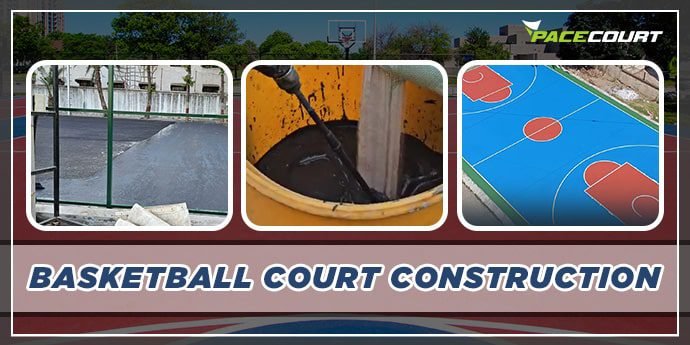
Basketball Court Construction

Basketball Court Construction- Best Practices to Follow

Introduction Building a basketball court is a thrilling and transformative project that calls for meticulous planning, meticulous execution, and a commitment to quality. Whether it’s for a calm private residence, a vibrant community center, or a bustling schoolyard, adding a basketball court can transform any space into a hub for sports, leisure, and interaction. The appearance of the court in question has a big impact on creating a play area that is durable, entertaining, and safe. Acrylic flooring is one of the various materials that may be used for outdoor courts; it is quite popular because of its amazing strength, high efficiency, and stunning beauty. Acrylic flooring is perfect for basketball courts since it provides a special set of advantages. It is a sensible and effective option because of its resistance to weather, capacity to offer superior traction, and low maintenance needs. Furthermore, a vast array of colors and finishes are available for acrylic surfaces, enabling the creation of striking and imaginative court designs that improve the atmosphere of any sports complex. We will go into great detail about the best techniques for building a basketball court with acrylic flooring in this article. Our goal is to provide a thorough manual that covers every facet of the building process, from site selection and preparation to line marking and quality control measures at the very end. From a conceptual standpoint, we will concentrate on how to erect a sturdy base, paint it with acrylic, and ensure that it lasts long enough through appropriate upkeep. Why Choose Acrylic Flooring? Acrylic flooring has become a preferred choice for outdoor basketball courts due to its numerous benefits: Step-by-Step Guide to Basketball Court Construction Site Selection and Preparation The very first thing required while building a basketball court is selecting the appropriate area. It should be level, drained efficiently, and devoid of impediments. Consider these factors: Once the site is selected, clear the area of vegetation, debris, and rocks. Mark the boundaries of the court and prepare the ground for construction. Foundation and Base Layer The base is an essential part of a basketball court. A strong base guarantees longevity and good function on the surface. These are the ordinary layers that make up the base: Acrylic Coating Application The final layer of an acrylic coating forms the playing surface of the court. The steps involved in this process are many: Quality Assurance and Testing Upon completion of the building, it would be requisite that a comprehensive examination be carried out. Look out for any discrepancies on the surface, make sure that the lines are well-defined, and check whether or not there is adequate drainage in the pitch. For its utilization, the court would need to undergo a final clean-up. Maintenance and Care To maintain the quality of the acrylic surface, follow these maintenance practices: Case Studies: Successful Basketball Court Projects by Pacecourt Case Study 1: Community Center Court  In the month of January, Pacecourt was hired to construct an outdoor basketball court for a community center in Delhi. The project involved constructing a full-sized court with vibrant blue and orange acrylic surfaces. Due to excessive rainfall in the area, drainage issues had to be addressed. Solution: An effective drainage system was installed by our crew, including sloping bottom and wall drains. An additional cushioned layer was applied to the surface in order to improve player safety. This court has since been lauded by the neighborhood for its functionality and beauty. Case Study 2: School Playground Court  A school located in Delhi demanded a sturdy and secure basketball court for its students. The previously existing surface, which was made of concrete, had cracks on it as well as unevenness, making it not safe at all, which would lead to harm. Solution: Pacecourt resurfaced the area using an asphalt base and then installed a multi-layer acrylic coating. The school went with a bold color scheme and included a cushioned layer to decrease the impact on the joints of young athletes. The hearts of instructors and children alike have been won over by this new court. Case Study 3: Private Residence in Los Angeles, California A half-court basketball set-up was desired by a private client in Chennai who needed it for their backyard. They requested a surface that was fashionable and required little maintenance, complementing their outdoor space. Solution: With a personalized shade scheme, we fabricated half-courts that complemented the land surrounding the client’s home. For security purposes, the acrylic surface had a high-slip resistance texture. Our prospects were very delighted by how seamlessly their court blended in aesthetic terms with their estate. Basketball Court Construction Material At Reasonable Price Conclusion Building a basketball court with acrylic flooring is a crucial contribution for any organization. It is lovely, secure, and long-lasting. By keeping these best practices in mind, you can guarantee a top-notch basketball court that satisfies all requirements and provides an unmatched playing experience. Pacecourt is an authority in providing high-end sports surfaces solutions. We pride ourselves on our dedication to quality service and ensuring that our customers are satisfied with how their needs have been taken care of. No matter if it’s a community court, school playgrounds, or private installations you want built, we have what it takes to turn your dream into reality. Frequently Asking Question

Pacecourt Deep Patch

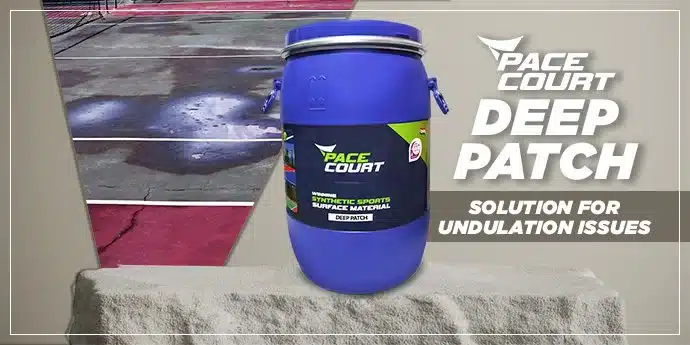
Pacecourt Deep Patch: Essential for Sports Surface Cracks

Introduction While cracks on a sports surface may not seem like a big issue, they can actually be quite dangerous and affect how you play. Because of this, at Pacecourt, we take proper care of our surfaces to maintain them in good condition and, even better, to help your players use them longer. In this guide, we will look into the merits of using Pacecourt Deep Patch to fill cracks in acrylic floors for sport activities, a step-by-step application procedure, tips on maintaining it, as well as practical case studies showing its efficacy. We at Pacecourt appreciate the importance of sports surfaces in the sports arena. Hence, we have come up with a synthetic acrylic repair material known as Pacecourt Deep Patch, designed uniquely to handle cracks and imperfections in sports surfaces in an unmatched way when it comes to accuracy and durability factors. Our Deep Patch solution possesses exceptional toughness, full integration, easy application that works fast, and undying attention to safety concerns. It has therefore become the best option available so far when it comes to preserving the quality of sporting venues. Understanding the Problem: Why Do Sports Surfaces Crack? Before solving the issue, it is important to know what causes cracks in sports surfaces. Outdoor sports courts face different physical and environmental stresses regardless of their type, whether made using asphalt or concrete materials. Some of the frequent causes include: Weather Extremes But they will be muted by the outflows from the rapid expansion of the materials given them. This phenomenon is especially true in areas with freezing and thawing cycles. Heavy Use Cracks can be caused by lots of players, equipment moving around, and maintenance vehicles each day. Poor Installation When there is improper installation of the materials or if substandard materials are used, it could lead to a surface that will not last for a long time, making it easier to crack. Ground Movement Shifts under the courtroom floor can create structural pressure that causes cracks. It is common in places where there are occurrences of seismic movements or when the soil is unstable. Why Choose Pacecourt Deep Patch? In order to fix these problems, Pacecourt Deep Patch was developed to withstand heavy use over time and give results for a long time. This is why it is the most effective option: Superior Adhesion The glue of Pacecourt Deep Patch molds into lines seen everywhere in asphalt and concrete. With this kind of bond, it becomes impossible to recognize physical failure points or locations needing repair compared to other types of materials, which are often exposed to cracks or crevices that collect more dirt than anything else. Flexibility The Pacecourt deep patch formulation has been designed expressly to enable it to keep pace with the movements of the earth’s surface beneath. This adaptability helps it endure severe weather conditions as well as constant usage; hence, this is very appropriate in outdoor sport fields. Fast Curing Quick healing happens due to our profound patching system, which enables just a little bit of break. Facilities require this, particularly when they want to keep their courts in operation. Aesthetic Match Pacecourt Deep Patch is especially designed to be color matched so that it will blend perfectly into the existing surface, leaving the aesthetic appeal of your court intact. Application Process Applying Pacecourt Deep Patch is straightforward, but following the correct procedure is crucial for optimal results. Here’s a step-by-step guide: Surface Preparation Make sure that the area around the cracking is thoroughly cleaned. Get rid of any loose debris, dirt, or old patch material in it. A sharp-edged wire brush should be used to clean deeper areas, while a pressure washer will do a better job than it if you want to apply water. Before proceeding, let the surface dry up completely. Crack Evaluation and Preparation Assess the size and depth of your crack. On larger cracks, you may need to widen it a little so that the deep patch materials fill up well. Use a chisel or grinder and open it uniformly for this purpose. Mixing the Deep Patch Material In accordance with the directions provided by its producer, mix together a deep-patch substance. It needs to have a smooth and easy-to-apply consistency. Best results come from using a mechanical mixer for this purpose, as it makes sure that everything is homogeneous. Application Apply deep patch material with a trowel or other tool, working one end of the crack along its length, making sure it’s full. Smooth the surface to blend with the surrounding area. Curing As per the recommendations mentioned above, let the material cure for a specified amount of time. The curing periods may differ depending on weather conditions such as temperature and rainfall levels. Do not use the ground during this time so that you do not interfere with them. Finishing Touches For aesthetic harmony, this step is optional but suggested. Once the patch has healed, applying a finish coat or paint that blends in with the rest of the court is a natural solution. Maintenance Tips To avoid manufacturing cracks in the future and ensure that your Pacecourt Deep Patch repairs last longer, it is important to keep your sports court well maintained. Below are a few tips: Regular Inspection Regularly inspect your court for signs of fresh cracks and other damages. Early detection makes it possible to make timely repairs, thus stopping little concerns from developing into major challenges. Routine Cleaning Eliminate rubbish, foliage, and soil from the court to ensure its cleanliness. This stops these materials from getting into the cracks and making them worse. When needed, a broom, leaf blower, or even a pressure washer can be used. Proper Use Make sure that players and maintenance staff employ the court correctly. The court should never be used for any activities that could cause damage to its surface, including the use of the wrong equipment or driving cars on it. Seasonal Care When it’s really hot or freezing outside, exercise





Sports Courts

How To Add Durability to Sports Court Material?

Introduction In outdoor sporting activities, the kind and quality of ground surface can greatly influence the outcomes of the game as well as the athletes’ efficiency. In Pacecourt, we are interested in providing quality surfaces for playing courts, especially those made of acrylic substances. This blog will discuss how important it is for sports court materials to be durable, especially when considering acrylic flooring and ways through which they help to prolong life spans and improve performances of external pitches. Furthermore, there will be case studies indicating their success. Understanding Acrylic Flooring The reliability, aesthetics, and versatility of the material make it an ideal choice for outdoor sporting venues. This is achieved through several layers, of which the main one is made from an acrylic resin followed by color coats and any kind of top coat; thus, this gives a flat surface that does not slip irrespective of the direction taken, making it perfect for sports such as tennis, basketball, and volleyball. Key Benefits of Acrylic Flooring Factors Affecting Durability of Sports Courts Endurance towards time is an important consideration for sports court performance in the long term. Some of these factors that influence how long acrylic floors last include: 1. Quality of Materials One of the most important factors that contribute to the longevity of a court is the materials selected for its development. A better and longer-lasting surface capable of coping with intense utilization as well as severe climates is achieved through other choices made. Such as acrylic resins of superior quality, aggregates, and topcoats. 2. Proper Installation Correct installation is important for the lasting nature of acrylic sports courts. A well-prepared sub-base, accurate application of individual layers, and sufficient curing time are all part of that. If there are any shortcuts during installation, this may affect the surface integrity, leading to cracks, peeling, or unevenness. 3. Regular Maintenance Even the strongest materials need routine care to live longer, or else they cannot be maintained over time. For instance, acrylic courts need cleaning to get rid of any debris or dirt, monitoring signs of wear and tear, plus reapplication of paint when necessary. 4. Usage Frequency and Intensity In addition, how often and how hard the courts are used could influence their longevity. Consequently, public parks and sports complexes have higher traffic volumes such that they would need more routine servicing together with re-surfacing when contrasted with ones built for personal use. Enhancing Durability Through Advanced Acrylic Systems We keep on improving our sports court materials every day at Pacecourt. Our modernized acrylic systems include features that make them unique: 1. Multi-Layered Coating Systems Our system of multiple coatings offers additional security from everyday use. The cushioning layer takes in pressure, thereby easing stress on athletes’ knees and extending the surface’s lifetime. 2. UV-Resistant Topcoats Over a period of time, any number of materials can be harmed by UV rays; however, our UV-proof finishes preserve the hue and balance of the playground even when it is subjected to blazing sun rays. 3. Anti-Slip Properties The most important thing is safety on a sports surface. But our acrylic systems possess anti-slip attributes so that you can play safely even when it’s humid. 4. Customizable Texture The desired level of grip and ball bounce on the court can also be customized based on the grinding sport and level being played. Case Studies To illustrate the effectiveness of our durable acrylic systems, let’s explore some case studies from our clients: Case Study 1: Community Park Basketball Court The existing concrete basketball court within a coastal community park was suffering from potential cracking and discoloration due to salt-laden air and high humidity. This prompted members of the community to contact Pacecourt for the installation of an acrylic flooring system capable of meeting their needs in this area. Solution and Results: We did apply a multi-layered acrylic coating along with a UV-resistant topcoat, and cushion layer for comfort and durability. It was a vivid, long-lasting court that not only enhanced playability but also decreased the frequency of maintenance. The court is still in great condition after three years except for some little signs of wear. Case Study 2: Private Tennis Academy In October 2023, you will have been educated about everything. A private tennis facility needed a surface that could withstand high levels of utilization and intensive training as well as tournaments. The currently existing asphalt court displayed some cracks and deformities, which impacted the quality of the game. Solution and Results:Pacecourt created a customized type of acrylic system that has an uneven surface to enhance both ball rebound and hold. It was stated by the academy that they saw better performance among the players. Their contentment with it, while the ground needed nothing other than normal upkeeps despite two years of intense usage. Case Study 3: Multi-Sport Facility A versatile surface was desired for a multi-sport facility catering to basketball and volleyball that would keep going long and be safe while accommodating various sports. The old floor of the facility was showing signs of wear and tear because it was exposed to different uses without going through regular maintenance. Solution and Results:It was recommended that there be an acrylic floor system with a moderate abrasive finish. Appropriate for a range of games. Its ability not to slip and its softness make it abundantly safe for sportsmen. The injury rates have decreased, and at the same time, players’ level of satisfaction has increased, although it does well under heavy usage. Tips for Maintaining Acrylic Sports Courts To maximize the lifespan of your acrylic sports court, consider these maintenance tips: Enhance Durability Of Your Sports Court With Expert Guidance Conclusion The performance and lifespan of athletic courts depend highly on durability. Advanced acrylic flooring systems that provide extreme durability, weather resistance. Optimal playability for various outdoor sports are manufactured at Pacecourt. To extend your sports court’s life significantly and ensure athletes enjoy themselves safely, choose high-quality materials, install them correctly, and maintain them

Silica Sand

Exploring the Versatility of Silica Sand on Sport Court Surface

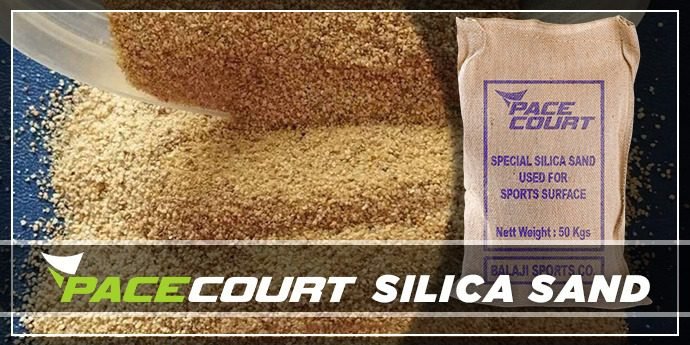
Introduction For athletes, the court surface is an important aspect of outdoor sports because it determines their safety and enjoyment. At Pacecourt, we focus on acrylic floor systems for sports courts, with a major enhancement being silica sand. This blog will discuss the numerous uses of silica sand in acrylic flooring for sports facilities, its benefits, and how it helps improve both performance as well as longevity. Furthermore, we will provide some case studies showing successful implementations of silica sand in different projects. The Role of Silica Sand in Acrylic Flooring Renowned for its durability and versatility, silica sand is a natural mineral that occurs in nature. In the case of sports courts, it has many roles to play, which enhance the functionality as well as prolong the lifespan of the playing surface. Texture and Grip In acrylic flooring, a major application for silica sand is to add texture and enhance traction. By adding silica to the outermost coatings, a rougher finish is obtained that makes it possible for people not to slide. This is important in sports like basketball and tennis where quick stoppages, starts, or sudden turns are usual occurrences. Better grip means less chance of slipping and falling, thus keeping players safe at all times. Durability and Wear Resistance Even more importantly, silica sand can therefore increase the life of the surface of the court. The durability of the playing surface is achieved by hard-wearing materials like silica sands. By doing so, it makes it possible for the court to withstand too much usage as well as extreme weather conditions, thereby increasing its lifespan and cutting down on expenditure by sport facility managers in maintaining these courts. Ball Control and Playability To meet particular demands for different sports, silica sand can be added to the top coat in varying amounts that will produce desired bounce effects and control. For example, a court with a slightly rough surface may offer tennis players improved bounce control, while basketball is better played on a smooth, finished one. In this regard; there are numerous uses for silica that can be adjusted to suit the demands of various disciplines. Aesthetic Appeal Silica sand improves appearance on sports fields, besides how it works. It can be blended with colored coatings to give lively colors that do not fade for a long time. This brightens up the facility and also helps promote a specific brand or identify with teams or schools’ colors. Advantages of Using Silica Sand in Sports Courts The use of silica sand in acrylic flooring systems offers several benefits. Making it a popular choice for sports courts worldwide. Enhanced Safety In sports facilities, the top priority is safety. The extra slip resistance from silica sand can help prevent injuries caused by falling and slipping down. This is especially vital in outdoor environments where the terrain may become wet or slippery. Long-Term Cost Savings Silica sand comes in handy by raising the strength and scratches defectiveness of the court floor, making it such that one would not need to spend frequently on maintenance or purchase new ones. The managers will enjoy an extended lifespan concerning their courts while at the same time avoiding expensive resurfacing costs. Versatility for Multiple Sports Because it creates different textured surfaces, silica sand has better usage for diverse sports such as tennis, basketball, and volleyball. Such flexibility is important in the case of multi-sport venues. Environmental Sustainability Sports courts can be made more environmentally friendly by utilizing natural and plentiful materials such as silica sand. Also, it has a long lifespan, which leads to less frequent resurfacing; this minimizes the environmental implications linked to maintenance and repair work. Case Studies: Successful Implementations of Silica Sand To showcase the practical applications and benefits of silica sand in sports courts, let’s delve into a few case studies from Pacecourt’s projects. Case Study 1: University Tennis Courts reactive to the demands of players and their safety with the use of the best technical methods so that they can attain higher performances. The ground was already worn-out, with rough areas and remaining grooves. Solution and Results:For better traction and ball control, Pacecourt has installed an acrylic flooring system with silica sand in its top layers. This was an excellent grip surface with a consistent texture meant to give precise ball bounces and better player movements. The university reported that they had greatly improved student satisfaction in terms of their sports facilities and lower maintenance costs during the coming years. Case Study 2: Community Basketball Courts In order for them to achieve higher performance levels while ensuring their safety and responding swiftly to player requirements, the best techniques were employed by the professionals. The ground was already worn out and had rough patches, including shy grooves. Solution and Results: To make it more textured and non-slippery, we have applied an acrylic coating on the surface that has silica sand in it. This shall not only enhance grip levels, but also give such a coating added resistance towards harsh weather conditions. Furthermore, less accidents were filed with regard to injuries sustained while using these courts; another thing is that people could utilize them even during rainy seasons. Case Study 3: Multi-Sport Complex Versatile court surfaces for various sports like basketball and volleyball were required for a multi-sport complex. A long-lasting and affordable solution was necessary to maintain exceptional playability for all games. Solution and Results: Pacecourt custom designed an acrylic flooring system with varying levels of silica sand integration for every court that fit the specific sport played. The basketball court was configured with medium texture for best grip, whereas the volleyball court had little smoothness for ball control purposes. A consistent professional look and decreased maintenance costs were achieved by this complex; thus, after years of hard use, these courts remained in a perfect state all through. Best Practices for Applying Silica Sand in Acrylic Flooring To maximize the benefits of silica in sports court surfaces, it’s essential to follow best

Tennis court construction

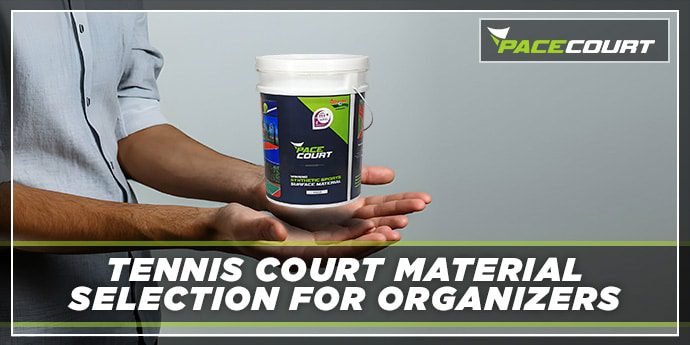
Essential Considerations for Tennis Court Selection by Organizers

Introduction In essence, organizing a tennis competition requires one to get a suitable court that can work for both the participants and the entire event. Sounds around it have vital slots in playing, protection, and the full experience. This is why Pacecourt understands why people should choose the right types of tennis court surfaces, synthetic being among them. Thus, this blog post will give you important things you need to think about when choosing a tennis court, with an emphasis on acrylic surfaces for outdoor courts in particular. Moreover, we will provide real-life examples of how synthetic materials have been used effectively. Understanding Tennis Court Surfaces Tennis courts, as we know them today, come on a variety of surfaces that all have unique features. They range from grass to clay to hard courts to synthetic systems. Different playing surfaces can cause differing responses in both the physical and gameplay arenas. One such example is synthetic flooring, especially the use of acrylic material for outside play, which is highly regarded for its strength over time, adaptability in use, and cleanliness, among other benefits observed by players and ground handlers alike. Benefits of Acrylic Flooring Factors to Consider When Choosing Acrylic Flooring Player Experience Tennis courts are precisely defined by their playability. Players need a surface that offers good grip, suitable ball bounce, and is pleasant to walk on. The acrylic flooring provides a surface which is medium-fast in the sense that it balances between speed and control, hence making it appropriate for many kinds of playing styles. Safety Giving priority to player safety is the primary consideration. Consistent and even playing surfaces are provided by acrylic, which reduces susceptibility to injuries. These materials also have good grip, thus minimizing the chances that players may slip or fall. Weather Resistance Outdoor courts battle through fluctuating meteorological conditions. UV protection, rain resistance, and temperature fluctuations are the whole idea in creating acrylic surfaces that guarantee durability and uniformity in performances. Maintenance For organizers, maintenance is always a top priority. Maintaining an acrylic court takes less work than maintaining grass or clay. Therefore, keeping your court clean and looking great and younger without sparing a lot of time spent on repairs is possible with routine clean-ups and periodic resurfacing. Cost Budget constraints usually have an effect on the choice of courts. Though initially expensive compared with other options, acrylic flooring’s durability and ease of maintenance make it more economical in the long run. Installation Process The installation of acrylic flooring involves several steps to ensure a high-quality, durable surface. At Pacecourt, we follow a meticulous process: Case Studies Case Study 1: Community Tennis Center Location: Chennai Community Center Challenge: The existing courts were outdated and unsafe, with cracks and uneven surfaces. Solution: Pacecourt installed new acrylic surfaces, providing a safe, durable, and visually appealing court. The community center saw increased usage and positive feedback from players of all ages. Outcome: The new courts attracted more visitors, boosting community engagement and revenue. Case Study 2: University Tennis Facility Location: University of Delhi Challenge: The university needed a versatile court that could withstand heavy usage and varying weather conditions. Solution: Acrylic flooring with customized branding was installed by Pacecourt so that it would match the colors of the university. This type of surface presented a good deal of playability and asked for very little maintenance. Outcome: Many tournaments and training sessions were hosted by the facility, contributing to the elevation of this university’s status in college tennis. Case Study 3: Private Tennis Club Location: Gujrat Tennis Club Challenge: The club wanted to upgrade its courts to attract new members and improve the playing experience. Solution: Pacecourt resurfaced the old courts with acrylic flooring, guaranteeing a visually stunning sports surface that is more enticing to elite players while still being appropriate for beginners. Outcome: Membership increased, and the club received high praise for its top-quality courts. Sustainability and Environmental Impact We take sustainability seriously at Pacecourt. Acrylic surfaces are environmentally friendly with waterborne finishes that minimize toxic fumes. They also have a longer lifespan, hence fewer replacements and less wastage. Recyclability Acrylic flooring materials are recyclable and have a role in the circular economy. It helps reduce the environmental footprint through the repurposing of old courts into new surfaces. Water Conservation Maintaining acrylic surfaces calls for less water consumption versus maintenance of grass courts; hence, there is conservation of water resources and a decrease in cost of operation. Customization Options Acrylic flooring comes with numerous options for customization. The organizers can select from a wide range of colors, textures, and patterns that will act as an extension of their brand personality or style. Color Choices With lots of colors to choose from, you can make nice-looking courts that attract attention. Branding Incorporating custom logos and graphics into the court design can enhance the identity of the venue and offer sponsorship opportunities. Surface Texture Something of this mouthfeel is compared to seaweed nectar. While the textured ones offer more control over grips, the smoother ones enable faster play. Long-Term Investment Acrylic flooring is a long-term investment that ensures quality and success on your tennis court. Since they last for a long time and require minimal care, they help you save money in the long run while performing steadily through the years. ROI The return on investment for acrylic courts is significant. This is because of less cost incurred in maintaining them, happy players, and attracting big events again, among many other factors. Enhancing Reputation Courts that are of a better quality have the ability to bring in better players as well as tournaments, thus contributing positively towards the development of a reputation for the facility and luring in more tourist arrivals. Build Your Tennis Court With Quality Material Provider Pacecourt Conclusion Choosing the ideal surface for a tennis court is a major decision for event organizers. The durability, safety, low maintenance, and customization are some of the advantages that come with acrylic flooring. At different tennis institutions,

Acrylic Flooring

Why is Acrylic Sports Flooring the Best Bet?

Introduction to Acrylic Sports Flooring In the last few years, outdoor sports courts have become highly popular thanks to the rise of acrylic sports flooring. This uptick is due to various reasons, including resistance to wear and tear as well as good handling. This blog focuses on why this type of synthetic surface is better suited for outdoor playing grounds. It will also touch on its advantages, compare it with others. Showcase instances where its efficacy has been tested under different conditions. Acrylic sports surfaces, also referred to as synthetic floor coverings. It can be referred to as surface systems extensively used in external sport venues. It is made up of successive layers of acrylic resin and other substances. Which gives it a smooth, long-lasting, and good-looking playing ground. This type of flooring is well appreciated for tennis courts, basketball courts, or multipurpose sporting areas due to its outstanding performance characteristics as well as ease of care. Key Benefits: Durability and Longevity The main reason why acrylic sports flooring is so distinct is its toughness. The outdoor sport courts are perpetually subjected to different weather elements like rainfall, ultraviolet rays, and changes in temperature. Therefore, it can endure these factors better than other materials that are made of asphalt or concrete, thereby making them last longer than such surfaces.. Enhanced Performance and Safety Acrylic floors are a fantastic choice for athletes because they provide uniform playing conditions and excellent ball bounce. The surface’s texture may be altered according to one’s personal style or sports inclination in order to add a certain amount of grip. This aspect guarantees that the players perform at their best while remaining safe. Safety Features: Aesthetic Appeal and Customization With the availability of numerous hues and patterns, acrylic sports floorings enable facility proprietors to adjust their courts in accordance with their trademarks or interests. Such transformability can be seen in line markings and logos that could be blended on the surface. Visual Impact: Maintenance and Cost Efficiency An acrylic sports surface doesn’t require special care practices, for it is simply easy to maintain in any season. In most instances, dirt on the acrylic sport surface can be removed using a piece of cloth that has been immersed in water mixed with some mild detergent. Moreover, they last longer, requiring less repairs and providing cheaper options in the long run when compared to other types of materials. Maintenance Tips: Environmental Considerations Acrylic sports flooring is not only environmentally friendly because it is made from recycled materials but also does not require toxic chemicals for maintenance. Moreover, it eliminates the need for transportation of non-renewable resources to such public parks and courts because, unlike other types of floors; the substances used in its making are mostly obtained through sustainable means. Eco-Friendly Benefits: Versatility Across Different Sports Acrylic sports flooring is not limited to one or two particular sports but can be used in almost all kinds of games like tennis, basketball, volleyball, etc. This adaptability makes it an even better option for multipurpose courts since it offers a flat surface for each game played on it. Multi-Sport Compatibility: Tennis: The surface provides consistent ball bounce and speed, essential for competitive play. Basketball: The grip and shock absorption enhance player performance and safety. Volleyball: The smooth surface ensures safe landings and quick movements. Case studies Case Study: University Basketball Courts A university decided to upgrade its outdoor basketball courts with acrylic flooring. The primary motivation was to enhance player safety and performance. After the installation, players reported better traction and fewer injuries. The consistent bounce and shock absorption provided by the acrylic surface improved overall gameplay, making the courts a preferred training venue. Case Study: Community Park Multi-Purpose Courts A community park has updated its multipurpose courts with an acrylic sports floor in a distinctive color and specific line markings. The result was visually striking courts that became a local landmark. This increased the park’s usage and gave rise to more community involvement due to better aesthetics. Case Study: Municipal Sports Complex A municipal sports complex reviewed and spent on acrylic flooring with respect to its outdoor courts. The rationale for taking such a step was due to its character of being easy to maintain and having a long life span. With the gains made from reduced maintenance costs over time, money that would have gone for these activities has instead been put into other social projects. This has equally ensured that there will be little downtime on the courts, thereby making them available for community members most of the time. Case Study: Eco-Friendly Sports Facility The outdoor courts of an environmentally aware sports center have been made using acrylic floors to meet their ecological goals. A complete recycling program for obsolete surface materials was also applied by the facility itself. This helped reduce the carbon footprint of such facilities and further entrenched their position as pioneers in sustainable sporting structures. Case Study: School Sports Facility The school upgraded its outer sports facility with acrylic flooring in order to make it adaptable to various kinds of sports. The area was used for tennis, basketball, and volleyball, which were suited for the different kinds of students. This type of surface enables schools to get more value from their money by providing different kinds of sports without requiring more facilities. Here We Provide Best Acrylic Flooring Material At Affordable Price Conclusion If we are talking about flooring that is specifically made for sports courts. The best choice would be acrylic flooring. It has notable advantages such as being durable, having performance benefits, being aesthetically pleasing, having less maintenance requirements, and being eco-friendly as well. The various case studies highlighted in this blog show how useful acrylic surfaces can be in different situations. Therefore, if you are upgrading your old basketball courts or constructing new ones, it is advisable to select acrylic sports court to have a high-quality and long-lasting playing surface which most athletes and facility owners revere. Pacecourt’s website

color coat

Color Coat- An Environment Friendly Way to Upgrade your Court

Introduction The features of sporting surfaces play a major role in enhancing the experience of athletes. Spectators in the areas of athletics and recreation. One of the most popular flooring options for outdoor sports courts is acrylic flooring. This kind of flooring’s strength, adaptability, and attractive appearance are among its fundamental qualities. These qualities allow it to provide a number of advantages, particularly in terms of being environmentally friendly. This blog post will discuss how applying a color coat to your sports court might improve it environmentally, with a focus on synthetic flooring. After that, we’ll talk about a few benefits of this concept before providing some real-world instances. The Importance of Eco-Friendly Sports Courts In the past few years, many industries have seen a growth in environmental awareness that has shaped them. When it comes to sports court construction and maintenance. The inputs as well as the techniques employed can really affect Mother Earth. Conventional floor coverings can be made of materials laden with harmful chemicals, require too much water, and result in high levels of carbon release into the air. A sustainable option is provided by synthetic materials, especially those based on acrylics. Eco-friendliness and being water-based are other notable features of this type of flooring. You should not worry about the volatile organic compounds (VOCs) that are present in it doing harm to you. They make great sense when considering their long durability as well as the fact that they do not require replacement often thus reducing wastage and helping save up on raw materials. Why Choose Acrylic Flooring for Outdoor Sports Courts? Case Study: Transforming a Community Park with Color Coat For this reason, we will take a real-world example to show how beneficial it is when it comes to acrylic flooring. So a community park in a suburb of Delhi actually had an old basketball court that was falling apart and was very unsafe for its players because of how many cracks there were on it and its overall discolored appearance being very rough looking. Therefore, the admins of this park decided to paint their court using acrylic colors. Project Overview: The Process: The installation process started by meticulously cleaning and preparing the existing surface. Acrylic patching compound was used to repair any cracks or defects. Then, a primer was used that provided good bonding for the color coat. Finally, several coats of acrylic color coat were applied, each one increasing the lifespan and brightness of the court area. Results: That was an incredible transformation. The newly applied paint not only improved the looks of the court but also made it a safer area to play. The court got so bright that it brought a lot of people to the park. All parties involved benefited from the eco-friendly feature of the acrylic system, which also aligns with the community’s dedication to environmental conservation. The Role of Color Coat in Enhancing Court Aesthetics The capacity to tailor the look is among the most fascinating elements of using a color coat on sports courts. Acrylic flooring systems have an extensive array of colors and finishes that allow facility owners to design their own unique and eye-catching patterns. From a bright blue tennis court to a mixture of colors on a basketball court, there are countless options. The purpose of color coatings goes beyond just improving aesthetics; there are practical functions too. Individual colors can be assigned to particular sections of the arena, like borders or playing zones or sections meant for watching. This organizes the area while allowing for easy movement during matches. Case Study: A School’s Journey to Sustainable Sports Facilities The school that chose to give its outdoor sports facilities a facelift is yet another example worth mentioning. One such facility was the old asphalt tennis court, which was not only uninviting but also hard on the players’ feet. The management of this learning institution decided to adopt an acrylic color coat system, putting sustainability and performance into consideration. Project Overview: The Process: Prior to it being borne out of this discussion, the old asphalt surface had been completely scrubbed, and any crevices were filled with an acrylic patching substance. A catalyst was used in order to create good bonding, which was succeeded by several coats of acrylic paint. The institution preferred a typical green hue for playing grounds while marking off the limits in white. Results: Since it was recently resurfaced, this tennis court has become a prime point on the school campus. For both players and observers, the vivid green shade acted as an effective way for them to see better while playing their games. Furthermore, synthetic flooring offered more grip during play and felt more comfortable on their feet. This project was not just meant to upgrade sports facilities at the school but also prove its adherence towards ecological conservation. The Future of Acrylic Flooring in Sports Facilities As knowledge grows about environmental matters, many sports facilities are expected to adopt better practices. In this regard, acrylic flooring systems stand a chance of becoming an essential part of this transition considering their eco-friendliness and durability. Also, the versatility of acrylic color coats provides limitless design options, therefore making them attractive to facility owners who want visually appealing and functional athletic courts. Customized Your Sport Court With Different Possible Color Combination Conclusion: Embracing Sustainable Solutions with Color Coat Making a sports court with a coating of colors is more than just attractive. It is a move towards taking care of the environment. Synthetic flooring systems, especially those made from acrylic. It have many advantages, including being durable and safe besides being good for the environment. This means that those who own these facilities can do their part toward a greener tomorrow while still offering the best sports experiences available. Evidence of how acrylic color coats can change the face of sports courts has been shown in a series of case studies. The advantages of upgrading to an acrylic flooring system are indisputable,

Tennis Court Maintenance

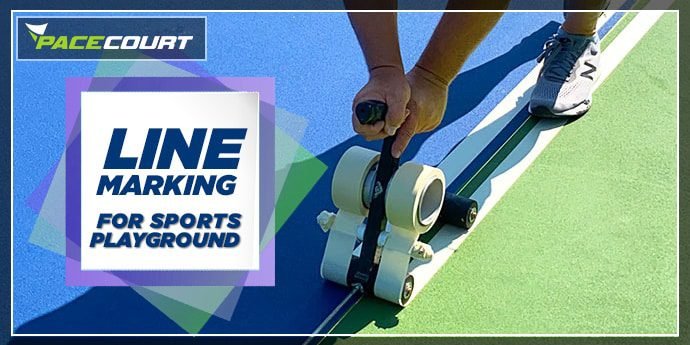
Is Tennis Court Line Markings Essential for Sports Playground?

Introduction One of the sports that is most appreciated for its elegance and precision is tennis, where it is vital to define the playing area. The lines on the tennis court for boundaries, services, and other purposes are not only arbitrary markers; rather, they are fundamental components that comprise the court’s laws and design. Both amateur and professional players should pay attention to these lines. In this piece, we’ll argue for outdoor surfaces—especially those composed of acrylic flooring—and explain why tennis courts need to have their lines drawn out. Additionally, a few case studies demonstrate how maintaining these marks has improved players’ games. The Role of Line Markings in Tennis The line markings of a tennis court perform numerous important functions. They indicate the limits of the playing area, indicate the service boxes, and help players comprehend the complex rules of the game. Here are some reasons why these markings are indispensable: The Importance of Using Synthetic Flooring for Tennis Courts When it comes to outdoor tennis courts, the choice of flooring material can significantly impact the quality of the playing experience. Synthetic flooring, particularly acrylic, offers several advantages: The Significance of Precision in Line Markings When it comes to the dimensions of a tennis court, precision in the marking may seem like an issue that is merely cosmetic; however, for players, it is more than just that. Unaligned and worn-out lines can result in arguments, misunderstandings, and occasionally, accidents. Below are reasons why precision is important: Case Studies Case Study: Upgrading a Community Tennis Court A real case study highlighting the advantages of proper line markings and synthetic flooring is discussed below. A community park in an emerging town opted to reconstruct its old tennis court. The old surface had faded lines and cracks that made playing uninteresting at times. Therefore, park management decided on new acrylic surfaces with properly defined line markings. Project Overview: The Process: The first stages of this project involved removing existing surface layers and addressing any structural issues. The following step involved applying a fresh coat of smooth acrylic top coat, which is supposed to endure for a long time. This also meant that in order to make lines stand out immediately and remain visually appealing for a considerable amount of time, black colors had to be used to mark them. Results: The neighborhood tennis players have been swarming the court since it was renovated. Its bright and clear ground markings make it easy for players to comprehend how they should play. The game is more fun than it has ever been because of the surface’s dependability and smoothness, which enable excellent ball control. Positive reports suggest that the park’s investment in a costly outdoor sports facility has pleased the locals. Case Study: Transforming a School’s Sports Facilities One more instance is related to a school that made a decision to improve its sports infrastructure, including tennis courts. The primary objective was to put in place a modern sports facility for the benefit of the students while attracting some local competitions. Decision makers resolved on an acrylic surface with more elaborate markings. Project Overview: The Process: There was a removal of the old courts, and leveling of the ground was done. A high-quality acrylic surface was then installed, followed by precise line markings. The school selected a color scheme that enhanced visibility and complemented the campus’s overall design. Results: Students found the new courts to be an excellent ground to familiarize themselves with, and local sporting bodies were drawn towards them. With well-defined boundary lines, students were assured of learning and practicing their game with a lot of ease. The school has also seen tennis participation rise, emphasizing the benefits that come with having good-quality sports facilities. The Future of Tennis Court Design and Sustainability Synthetic floorings, such as acrylic, may become more and more common with the increasing demand for green sports structures. Moreover, it is difficult to find any other materials that can match their blend of performance, durability, and environmental friendliness. Furthermore, the quality of these surfaces is continuously being enhanced through technological improvements that heighten their lifespan, hence making them appealing for sports complexes. It is imperative that line markings be done correctly, and this cannot be overstated. They are an essential component of the design of the court that affects how much fun a game is overall. Because of this, tennis courts all over the world need to keep spending money on high-quality supplies and precise line marking techniques in order to maintain their aesthetic appeal and standards as time goes on. Expert Guidance for Your Sports Project For any further queries and clarifications, you can get in touch with us Conclusion: The Essential Nature of Line Markings in Tennis Courts In summary, line marking is fundamental to the structure and fairness of tennis; it is not merely a formality. They serve as a boundary marker, aid in player movement guidance, and guarantee that all games are performed in accordance with these established regulations. High-quality synthetic surfaces, like acrylic, have the advantage of being long-lasting, secure, and environmentally benign. The case studies that are being presented demonstrate the transforming power of appropriate synthetic surfaces and line markings on tennis courts. These characteristics increase playability and encourage more people to visit towns, parks, and educational institutions. When it comes to facility proprietors, putting money into precise line markings and premium surfaces amounts to putting money into their sports activities’ future. Notably, clothing like Pacecourt, at the forefront of delivering quality synthetic flooring solutions, inspires hopes for sustainable and environmentally-friendly tennis court designs.

Tennis Court Maintenance

Mastering Tennis Court Maintenance – A Step-by-Step Guide

Introduction Pacecourt’s Ultimate Tennis Court Maintenance Guide. Whether you’re a tennis expert who has been in the trade for many years, a facility manager, or a homeowner who loves the game, maintaining the tennis court is important to last well and keep its quality. Pacecourt, one of the top manufacturers of synthetic acrylic sports flooring materials, realizes this and provides supporting and dependable information that helps you properly maintain your tennis court. Is keeping up a tennis court important? Undoubtedly, it’s essential to guaranteeing maximum durability, safety, and enjoyment. Synthetic flooring is becoming more and more common, especially on outdoor courts, which suggests that a lot of facility owners are choosing this environmentally beneficial choice. This comprehensive guide will walk you through the best practices for life cycle management and provide examples from actual experiences when it comes to maintaining a tennis court with acrylic flooring. Understanding Acrylic Flooring for Tennis Courts One of the best floorings out there today, acrylic flooring, which is a synthetic type of material, has gained immense popularity due to its durability, vibrancy, and being environmentally friendly. There are numerous pros associated with this type of surface as compared to the conventional ones that make it perfect for outdoor tennis courts; Step-by-Step Maintenance Guide Regular Cleaning Daily Sweeping: Dust off that court and keep it clean every day. You should use a broom with soft bristles to avoid scratching the acrylic surface. Take away dust, leaves, and other objects so that they do not accumulate, thus damaging the surface over time. Weekly Washing:Once a week, use a medium-sized liquid soap and water to scrub the surface. For cleaning, use a soft brush or a low-pressure power washer. Avoid using strong materials since they can damage the plastic coating. Make sure to thoroughly wash to remove any remaining cleaning chemical residue. Inspecting for Damage Monthly Inspections: Make sure you visit the court and take a look at it at least once every month. In addition to looking for wear indicators, check the surface for any chips or cracks. Focus your attention on lines and areas with a lot of traffic.Detecting problems early helps to have them fixed immediately, which stops more damage from occurring. Addressing Cracks and Chips: For smaller cracks and chips, utilize an acrylic patching compound. Clean the area in question, apply the patching material, even it out using a trowel. Let the surface rest to dry before utilization of the court. However, for bigger damages, ask a professional about how it should be done properly. Resurfacing When to Resurface:Depending on the usage and condition of the court, resurfacing is required every 4 to 8 years. Furthermore, if there is discernible fading or wear in comparison to the surrounding areas, a fresh coat of acrylic is needed. Resurfacing Process: Seasonal Maintenance Spring and Fall Preparations: During spring, make sure to thoroughly clean the court and look for any signs of damage from the winter. Whatever is wrong should be fixed before the rigorous playing season starts. At autumn’s end, prepare the court for the winter months by cleaning it and checking for potential problems. The Role of Synthetic Flooring in Sustainability Acrylic flooring stands out as a sustainable option for tennis courts. Its water-based composition and low VOC content contribute to a healthier environment. Additionally, the long lifespan of acrylic surfaces reduces the frequency of replacements, minimizing waste. By choosing synthetic flooring, facility owners not only enhance their courts but also make a positive impact on the environment. Case Studies Case Study: Community Sports Complex In Gujrat, a community sports complex put a stringent sanitization method into practice on its tennis pathways made of acrylic. With their daily brooming followed up by weekly cleansing, they have experienced a remarkable decrease in material usage. Not only do these surfaces look attractive but also perform well, which has led to increased patronage as well as a prolonged existence of this surface. Case Study: Private Tennis Club In Bangalore, a private tennis club used to conduct monthly reviews of their acrylic courts. They spotted minor fissures beforehand and fixed them by employing an acrylic sealing substance. By doing this, they were able to save on expensive repairs, and therefore the courts were always in good shape for the club members. Case Study: University Campus Courts A certain university in Delhi used to resurface its tennis courts once every six years. The careful way in which they resurfaced made it possible for the courts to be played on for longer while still being beautiful. The campus was left with these courts as one of the places that it could look up to in terms of playing for fun and contests. Case Study: Public Park in Delhi In the course of time, as the seasons changed, a public park located within Delhi made sure that their Acrylic Tennis Courts underwent periodic maintenance. During both spring and autumn seasons, preparations were done so that they remain in good shape all through the year. The effect of their precautionary measures against freezing is that ice does not cause any form of destruction, nor would it reduce the lifespan of the playing surface. Case Study: Eco-Friendly Tennis Academy In Chennai, an eco-conscious tennis academy has selected acrylic flooring for its new courts. They gave priority to sustainability by using water-based acrylic resins and adopting an elaborate maintenance schedule. This commitment towards eco-friendly practices drew in environmentally aware athletes and became a model for other sports complexes. Tips for Effective Maintenance Tennis Court Maintenance With Expert Guidance And Best Material Conclusion: Mastering Tennis Court Maintenance An acrylic surface tennis court requires routine cleaning, thorough inspections, timely repairs, and occasionally resurfacing. Owners of facilities can maintain their courts in good condition and make playing on them safe and pleasurable by following a set maintenance procedure. The case studies that are provided show how regular maintenance improves the performance and longevity of acrylic surfaces. Using artificial flooring, especially acrylic, improves the quality of courts

Scroll to Top
HOMEOWNERS
BUSINESS OWNERS
ARCHITECTS
MUNICIPALITIES

800+ Acrylic Colors

Get 10% off on sports flooring materials

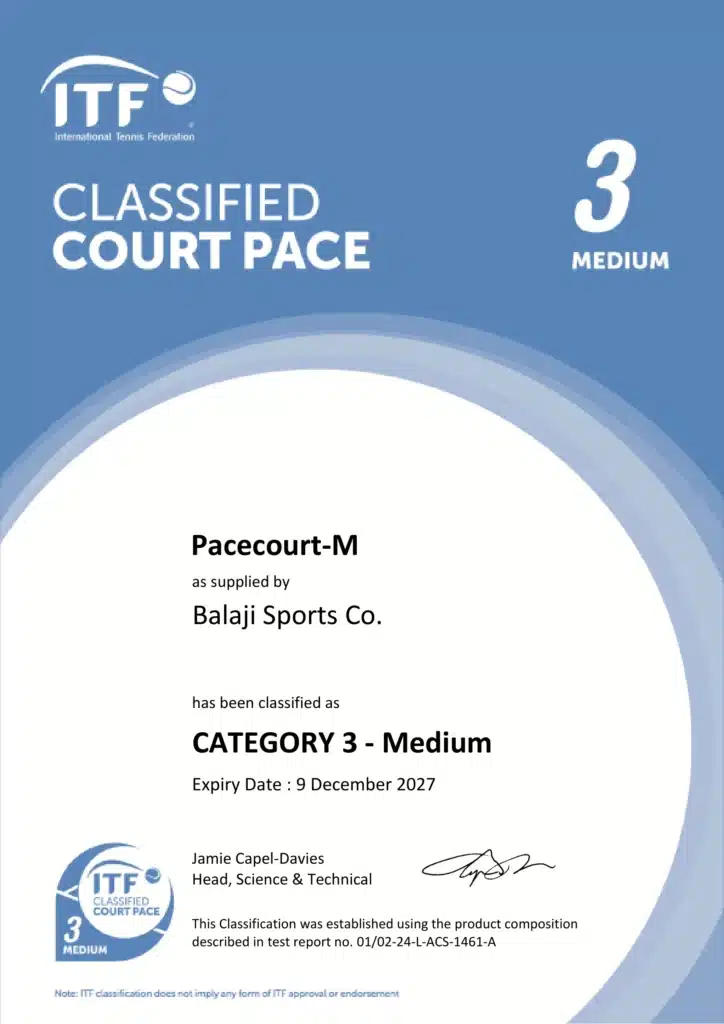
ITF-certified acrylic flooring for Tennis, Basketball, Badminton, Pickleball & more shipped worldwide.

    ISO-Certificate