Author name: Rahul

Rahul is a sports flooring expert and a key contributor at Pacecourt, a leading brand in acrylic and synthetic sports court solutions. Passionate about creating world-class playing surfaces, Rahul shares insights on tennis courts, basketball courts, and multi-purpose sports flooring. His goal is to help facility owners and sports enthusiasts choose durable, high-performance solutions that enhance the game experience.

Basketball Court Flooring Budget

Basketball Court Construction Cost: Key Factors & Budget Tips

Introduction Building a basketball court may be a fun project with many long-term advantages for sports facilities, athletes, and recreational players. Whether construction of a basketball court flooring for a school, community, or private setting, it’s critical to confirm that all associated costs are understood. We at Pacecourt provide the highest caliber building supplies for outdoor acrylic sports flooring. To ensure the effective building of a basketball court, this article will examine basketball court construction details from cost analysis, cost planning to real data. Breaking Down the Cost Factors in Basketball Court Construction The total cost encompasses a lot of factors when it comes to designing basketball courts. This is a detailed breakdown of the main factors that affect costs. Site Preparation Sub-Base Installation Acrylic Surfacing Line Marking and Customization Budgeting Tips for Basketball Court Construction Building a basketball court on the other hand does not mean that you need to spend a lot of money. Here are some tips on how to manage expenses while still getting a good-quality outcome: Keep in mind that outdoor basketball court construction specifications may be very expensive. Plan for the Long Term Use Professional Installation Services Choose the Right Location Regular Maintenance Saves Money Factors That Can Increase or Decrease Construction Costs Several factors could influence how much constructing a basketball court construction cost to vary. Making decisions and controlling expenses will be easier if you are aware of these in advance: Local Regulations and Permits Material Costs Labor Costs Why Choose Acrylic Flooring for Your Basketball Court? When evaluating the different options for the construction of an outdoor basketball court, acrylic flooring comes out on top as a great option. This is explained by its beauty, adaptability, and resilience. Here’s why using acrylic for surfacing is a wise use of resources: Weather Resistance Enhanced Safety and Performance Low Maintenance Requirements CASE STUDIES Case Study: Community Park Basketball Court Installation Project Overview Procedure Our trip began with us searching for the ideal location and setting it up appropriately. This required leveling the chosen area before removing any trees and other debris. When we were finished, we placed a concrete base with the proper slope for water drainage on top of that. Subsequently, we applied multiple layers of acrylic onto the surface before applying hoops and drawing lines. Results The basketball court was brand-new and quickly became quite well-liked in the park. It was made even more delightful by its smooth surface and vividly drawn outlines. Because of its sturdy acrylic flooring, it required minimal upkeep. The installation procedure depicted here was completed as quickly and efficiently as possible. Case Study: School Basketball Court Installation Project Overview Procedure The first steps of this project were site assessment and design. To prepare the land for construction, we graded and cleared it. The choice of asphalts is also economical. The last step of this operation was applying an acrylic surface, making precise line lines, and installing hoops. Results The school’s basketball team now has a top-notch playing surface thanks to the newly constructed outdoor basketball court flooring. The recently installed acrylic flooring provided excellent traction and high longevity. This project demonstrated the benefits of carefully planning and carrying out such plans since it was completed within budget and on schedule. Conclusion: To be able to afford the costs, building a system of basketball courts requires careful study of every detail. Long-lasting and effective playing fields can still be obtained at reasonable rates by using high-quality materials, choosing the right location, and putting a maintenance plan in place. For outdoor sports courts, Pacecourt offers premium acrylic surfaces that may be tailored to your specifications. Contact us today to discuss your project and learn how we can help you build the basketball court of your dreams. Frequently Asked Question
Cost To Build a Tennis Court

Synthetic Tennis Court Price Guide: What to Expect in 2025

Introduction to Synthetic Tennis Court Flooring In 2025, there was a notable increase in the construction of top-notch sports courts. Installing synthetic tennis courts is becoming more and more common among towns, and schools because of their low maintenance requirements, attractive appearance, and longevity. The focus of synthetic tennis courts is when it comes to budgeting, handling the cost or price associated with one is crucial. This guide will provide you with information on the price of synthetic tennis courts in 2025, with a focus on outdoor sports courts that use acrylic flooring. We’ll examine round-up expenses; this will contain an example that provides a thorough cost analysis as well as advice on how to utilize your funds most effectively. Acrylic flooring for outdoor sports courts finds its recognition due to its efficiency and versatility. These courts offer a uniform playing surface that can be tweaked in color and texture to improve the look and make the game better. It is made to withstand extremes of weather while remaining low maintenance, unlike traditional materials such as grass and clay, which are very high maintenance. Tennis players readily believe that acrylic flooring is the ideal choice when you mix its sturdy qualities with its capacity to offer the best ball bounce and traction. However, there are a variety of reasons why the price of a tennis courts can differ significantly. Making a decision is made simpler by being aware of these aspects. Factors Influencing Synthetic Tennis Court Price Several elements impact the total cost of installing an acrylic tennis court. Here are some key factors: Court Size and Layout Base Preparation Acrylic Layer Thickness and Coating Color Customization Court Accessories Labor and Installation Fees Comparison of Synthetic vs. Traditional Tennis Court Surfaces To truly understand the value of an acrylic surface, it’s essential to compare it to other materials: Grass Courts Clay Courts Hard Courts The Importance of Acrylic Flooring for Outdoor Sports Courts For example, acrylic flooring is widely used in outdoor sports courts—and not just because it’s less expensive and requires less upkeep. Tips for Managing Costs and Maximizing Value To optimize your investment, consider the following strategies: Plan for Long-Term Maintenance Choose a Reputable Installer  Opt for Durable, High-Quality Materials Take Advantage of Off-Season Discounts CASE STUDIES Case Study: Upgrading a Public Park Tennis Court To improve the playing experience for the local community, the Delhi Public Park decided to upgrade its aging tennis courts. They opted for acrylic floors, understanding their advantages over the court’s performance and resilience. Project Overview: The Process: Initially, the project started with taking off the old broken surface. A primer is then put on the prepared and leveled surface for strong adhesion. This was followed by multiple layers of acrylic coating, which yielded a smooth and long-lasting finish. Finally, markings of official dimensions were made on the courts so that they could agree with the required standards. Results: The enhanced courts received high satisfaction rates from the locals. The players acknowledged the better grip and even ball bounce that significantly improved their play. Additionally, the bright color of the new surface made those courts more attractive, hence increasing their utilization. Case Study: Enhancing a University’s Tennis Facilities Tennis facilities at a university in Chennai need to be improved for its expanding tennis program. The management chose to invest in acrylic flooring for their outdoor courts to provide students and athletes with a good playing surface. Project Overview: The Process: The courts that were already built in the community were thoroughly cleaned before the cracks that they had were repaired. To ensure a good grip on the new acrylic surface, a primer was applied. Several coatings of acrylic paint were layered on its surface to make it smooth and long-lasting. To make sure that they meet official standards, these courts were marked out with precise dimensions. Results: The University’s athletic facilities were dominated by new courts. Recreational and competitive players alike praised the consistent playing surface and better traction. Also, vibrant colors on the courts improved campus aesthetics. Conclusion The best way to truly understand the price of synthetic tennis courts is to spend the money necessary to build it. This is because of its extreme durability, attractiveness, and low maintenance requirements. Making a better decision can be aided by being aware of the cost aspects, particularly those on base preparation, supplies, and installation. Using cost management techniques and real-world examples will help ensure a high-quality installation within budgetary and functional constraints. Synthetic tennis courts make a great addition on a personal level or even to improve a community facility, as these courts are worth spending on.  Frequently Asked Questions

Volleyball Court Construction

Top Benefits of Choosing Synthetic Surfaces for Volleyball Court Construction

Introduction Numerous considerations go into selecting the materials to be used in the construction of a volleyball court. Although typical surfaces like grass and concrete may seem sufficient, they do not provide performance, safety, or the adaptability needed for a satisfying game. Constructing an artificial volleyball court is an issue that may be solved with strength and durability, especially when it comes to acrylic surfaces. This page will go over the factors that have led to the popularity of acrylic-based synthetic surfaces for outdoor volleyball courts. Throughout the process, we’ll also take a close look at real-world instances that demonstrate how these resources are altering the rules not just for players but also for facility owners and organizers. Why Acrylic Surfaces Stand Out for Volleyball Courts When building an outdoor volleyball court, several considerations need to be made, including performance, durability, and upkeep. Synthetic surfaces based on acrylic are one type of surface that provides exceptional performance in each of these areas. Let’s examine this further to determine why these surfaces are groundbreaking for volleyball courts. Durability in the Harshest Conditions The physically taxing nature of volleyball is typified by its frequent jumping, running, and swift movement changes. Thus, a robust surface is required. The most resilient surfaces are made of acrylic, which will not exhibit any signs of wear and tear throughout any serious volleyball match. As opposed to grass or dirt, which would eventually become uneven, a polished surface stays constant over time, which is crucial for player performance. Additionally, the use of acrylic in the construction of Sports surfaces, such as synthetic volleyball courts, increases their endurance because they can withstand any type of weather, including intense downpours and scorching, bright days. Additionally, they are UV stabilized, so long-term exposure to quilted basketing won’t cause the surface to age and develop fractures or discoloration.  Its durability protects owners from having to often resurface and purchase repairs, allowing them to keep the court in good condition for an extended period. Safety Features for Athletes Safety is always the top priority while building a volleyball court, especially since this sport involves a lot of jumps and dives. Shock absorption is a feature of acrylic synthetic flooring surfaces that serves to reduce impact on players’ joints and aid in the implementation of safety precautions. Athletes may perform at their best without worrying about long-term injury risks thanks to this cushioning effect, which helps prevent common problems like sprains and knee soreness. Furthermore, proper grip is made possible by acrylic surfaces, which is crucial for volleyball. Volleyball players must quickly shift directions, and there is a risk of injury from falls on slick floors. The huge surface area created by synthetic surfaces reduces the chance of slipping and boosts players’ confidence while they’re playing. Cost-Effective Maintenance Keeping an eye on the maintenance of an athletic facility is a crucial managerial responsibility. Clay or grass-based conventional courts require a lot of water intake, frequent mowing, and releveling of the court surfaces. Even concrete courts with a surface layer tend to break and become deformed, requiring costly repairs. However, acrylic synthetic surfaces require little upkeep over an extended period, which is advantageous financially. It is advised to clean the acrylic court regularly to get rid of dust or debris after installation. Because this material is resistant to mold, mildew, and stains, facility managers won’t have to spend extra money on maintenance or resurfacing procedures. Additionally, because these surfaces don’t fade easily, they don’t need to be painted constantly, allowing for minimal maintenance and a clean, new-looking court. Enhanced Aesthetic Appeal The aesthetic appeal of the volleyball court construction is crucial in drawing players, according to the volleyball court operators and owners. The volleyball court may be made in a wide range of colors thanks to advancements in acrylic synthetic surface technology. The glossy surface offers a tidy and appealing appearance, and the colors are highly resistant to fading over time. The court can be customized to match the cheerleaders of a team, their colors, or their real art fantasies, whether this is at a school, recreation center, or professional setup. Beautification is more than just a matter of hue. The acrylic court’s surface finish ensures that it stays glossy and smooth, adding a visually appealing element that raises player and spectator satisfaction. Environmental Sustainability In today’s environmentally conscious world, the majority of businesses have adopted eco-friendly options as a result of the building industry’s search for sustainable methods. Acrylic synthetic surfaces are an excellent alternative to think about when it comes to volleyball courts. Acrylic flooring is safe for the environment and does not endanger players or the surrounding area. Moreover, these surfaces do not employ the same degree of chemical treatment as, say, actual grass courts or the water needs of clay courts. In addition, the use of a synthetic surface helps the facilities in water conservation as well. In comparison to natural grass courts, which require consistent watering, acrylic surfaces do not use any water at all. These surfaces are therefore preferred in dry regions or places where water usage is heavily regulated. Versatility for Multi-Sport Use Even though volleyball is the main topic of discussion in this blog, it’s still vital to note that acrylic synthesis surfaces are unquestionably multipurpose and suitable for a variety of sports. This is an extra benefit for parks, schools, and even recreation centers that host a variety of events. With a few simple adjustments, a hall reserved for volleyball play one day might simply be transformed into a space suitable for tennis, basketball, or any other sport the following day. The presence of a multi-sport feature like this helps court owners because it draws more users and activities to their facilities. The versatility of synthetic surfaces is highly advantageous as it maintains. The court’s activity and productivity throughout the year. Regardless of the sport being played on it at any one moment. Case studies Case Study:  An acrylic volleyball court was erected in

Tennis court flooring

Why Synthetic Tennis Courts Are the Future of Sports Surface Technology

Introduction The kind of play environment has a significant impact on play time, safety, and performance in competitive sports. Tennis was once played on one of two surfaces: clay or grass. Those days are long gone. The advent of synthetic tennis court surfaces, particularly those made using cutting-edge acrylic technology, has completely changed how tennis courts are constructed for use in sports. The most widely used outdoor tennis court surfaces worldwide are made of acrylic because they provide exceptional strength, improved performance, and flexibility. This transition has affected Pacecourt because we provide the best acrylic flooring systems for outdoor sports courts. In any event, if one wants to make an informed decision, it is critical to recognize that synthetic surfaces are the inventions of the future, regardless of whether one is building a brand-new tennis court or renovating an old one. The benefits of synthetic tennis courts, how they enhance the game, with real-world examples included, and the reasons they are the greatest and most affordable option for modern sporting facilities will be the main topics of this blog. The Rise of Synthetic Tennis Courts The drawbacks of traditional tennis surfaces like grass and clay led to the voyage toward synthetic courts. Despite their popularity, these vintage fabrics have drawbacks like demanding upkeep, uneven wear, and play. Even though these surfaces are still utilized in some of the most competitive events, they are typically not the best option for use in extreme weather, especially on public and recreational courts. Synthetic tennis courts have long been equipped with acrylic systems that have functioned well without affecting the properties of the playing surface. But what is this acrylic fad all about? With its ability to give grip, absorb shocks, and be modified, acrylic has emerged as the ideal surface for outdoor tennis courts. Why Acrylic Flooring Is the Ideal Choice for Tennis Courts Unmatched Durability Even with regular foot traffic and the pressures of athletic activity, acrylic flooring is incredibly durable, showing very little damage. Synthetic surfaces do not need to be repaired or maintained daily like grass or clay do. Acrylic courts are perfect for outdoor venues since they can endure a variety of weather extremes, such as extremely hot and low temperatures and rain. Enhanced Gameplay Experience The advantage of acrylic surfaces for players is consistent texture and dependable bounce. There are very few bumps or unpredictable ball trajectories. In addition to enabling athletes to improve their performance, this ensures equality in sports. Faster turns and reactions are also made possible by the even surface, which also promotes foot conformation. Synthetic courts provide the perfect balance of control and pace for players. Low Maintenance Requirements The requirement for maintenance on traditional tennis courts is perhaps its biggest disadvantage. For clay surfaces to remain playable, they usually need to be rolled and watered on a regular basis, whereas grass requires frequent upkeep and mowing. Conversely, acrylic surfaces require very little maintenance. All it takes to keep them effective and fresh is a regular washing schedule. This guarantees that there is little downtime for players while facilitating the financial sustainability of the operators of such venues. Weather Resistance These courts can be utilized outside as well as indoors, where they will undoubtedly be subjected to weather conditions such as rain, sun damage, and temperature swings. The acrylic surfaces are designed to withstand these kinds of circumstances. Because this substance is UV-stabilized, exposure to sunshine will not cause it to decompose or alter color. Moreover, these courts feature efficient drainage systems that enable them to be utilized soon after a downpour. The surface also resists damage from freeze-thaw cycles and aids in maintaining the surface’s form all year round. Safety and Injury Prevention Safety is one of the most important aspects of any sport. One of the best qualities of synthetic acrylic courts is their high degree of grip, which means there is less chance of slipping, especially while moving quickly. Because of the surface’s shock-absorbing qualities, players can avoid joint problems and land on a soft surface when they jump or sprint. The possibility of conditions related to the game of tennis, such as sprains, falls, and other injuries in athletes, is reduced with a correctly constructed synthetic tennis court system. Sustainable Advantage: Acrylic Courts and the Environment There has been a shift in the way that sports facilities are built and used; sustainability is now a key component. In particular, courts with clay surfaces and natural turf require a significant amount of environmental resources. While the clay surface courts require frequent clay replacement, the grass courts require constant upkeep in the form of watering. Conversely, tennis courts made of acrylic offer a significantly more ecologically friendly substitute. Their longevity means that fewer resources are needed for repairs and replacements over a shorter time frame, and they require no water for maintenance. Furthermore, the necessity for diagonal construction and material waste can often be avoided by resurfacing the current courts with acrylic surfaces. Some acrylic systems, like Pacecourt’s, are made from recycled raw materials, further protecting the environment. In addition to being a wise strategic decision for the development of tennis facilities, the installation of these courts is also a positive step toward sustainability. Cost-Effectiveness of Synthetic Tennis Courts The economic feasibility of synthetic courts is another noteworthy benefit. Even though they may initially cost more to set up than conventional ones, there will be significant savings over time. The longer lifespan, less upkeep, and fewer needed repairs make synthetic courts more cost-effective in the long run. For instance, establishments that install acrylic surfaces typically recover their costs within a few years. Furthermore, the application of synthetic court systems is versatile. They guarantee that the entire court is used for many sports, not just tennis. Examples of these include pickleball, basketball, and many more. Synthetic surfaces are becoming more and more desirable for public parks, educational institutions, and other sports and recreation centers because of this multipurpose benefit. Customization for Unique

Basketball Court Material

How Weather and Environmental Conditions Affect Material Choice for Outdoor Basketball Court 

Introduction It is vital to pick the appropriate material for outdoor basketball court flooring to ensure durability, performance, and safety. More so in this case, since outdoor environments will require materials that can be used in varied weather patterns. The wear and tear of the court will affect its maintenance. Of all the options available, i.e., some other options available, acrylic flooring appears to be one of the best-suited materials. Outdoor basketball courts, combining durability, ease of cleaning and maintaining the courts, and sports performance. In the following, we will discuss the impact of various weather and environmental factors on material selection. Concentrating on the reasons why outdoor basketball courts should be constructed of acrylic flooring. Additionally, we’ll present some case studies in the field that will prove the efficacy of acrylic surfaces. Understanding the Impact of Weather on Outdoor Basketball Court Flooring The materials used for the outdoor basketball court installation or renovation must withstand all potential environmental effects. Furthermore, every feature has a climate component, ranging from strong sunlight to mild temperatures, moderate rainfall, and variations in humidity. Sun Exposure and UV Resistance A key issue when it comes to outdoor basketball court flooring material used as well as their exposure to the sun and more specifically UV rays. The sun can be harmful to many materials as it can cause a great deal of damage, leading to cracking, fading, or simply surface wear out. The fact that acrylic is a material that does not respond to UV light makes it a viable option for flooring. Excellent-quality dyes prevent color fading on acrylic-based floors, even if the material retains its excellent durability even when exposed to sunlight for extended periods. The UV-resistant properties incorporated into acrylic’s structure prevent it from breaking or fading over time, keeping surfaces looking brand new for several years. It is therefore especially suitable for courts constructed in highly sunny regions. Rainfall and Water Drainage Excessive rainfall or prolonged exposure to moisture can hurt the functionality and performance of outdoor basketball courts. Poor drainage creates water stagnation on the surface, which increases the risk of slipping and can lead to irreparable damage like mold growth or surface deterioration over time. The Science of Acrylic Flooring: Surfaces made of acrylic are designed to be extremely water resistant and quickly dry. Conversely, “acrylic courts” can feature a drainage channel or a slight slope if they are constructed correctly. Preventing water from sitting on the surface. The potential of water infiltration through joints or fractures. As is the case with tiled or segmented floor systems, is reduced by the watertight nature of acrylic floors and their lack of discrete joints. Temperature Fluctuations and Expansion/Contraction Materials used in regions with significant seasonal temperature variations should be able to withstand the expansion and contraction brought on by heat and cold. For example, some flooring materials deform in the heat, while others crack and stiffen in cold climates. The Reason Why Acrylic Flooring is Beneficial: The ability of acrylic to stretch and shrink without breaking is one of its greatest technical advantages. This feature makes it appropriate for regions that experience high-temperature differentials. Concrete or asphalt can often develop large fissures from freeze-thaw cycles. However, acrylic flooring is unblemished and allows for smooth play surfaces, making the court safe for players. Acrylic floor coating is a synthetic floor finish used in cold areas. The field can expand and contract without cracking from thermal or mechanical stress. Moreover, as compared to concrete or asphalt, acrylic flooring does not get damaged, maintaining the even surface of courts and minimizing the risks of injuries to game participants. Humidity and Airborne Moisture Humidity and moisture in the air can cause slippery surfaces, especially when non-absorbent and non-repellent materials are present. Because of the constant moisture, these courts are typically found in warm temperate or equatorial zones and are equipped with anti-slip flooring. The Importance of Using Acrylic in Flooring. Where the moisture level is high, acrylic surfaces do not lose their frictional resistance. Thanks to the textured finish that makes it easy to keep a footing even when it’s humid. An additional slip-resistant texture can be incorporated during the installation stage. Allows the athletes to go about their performance even when humidity is high in the air without the fear of slipping down. Environmental Factors Beyond Weather Apart from environmental factors like dirt, smoke, and litter, outdoor basketball courts also have to contend with other environmental toxins. All of these may have an impact on upkeep, robustness, and player experience. Dust and Debris Accumulation Due to their lack of weather protection, outdoor courts can accumulate debris such as leaves, dust, and grime on the playing surface. Certain materials have a greater tendency to retain these particles, necessitating more frequent and labor-intensive cleaning and upkeep. How Acrylic Flooring Services Operate: Because acrylic layers are smooth and nonporous, dirt. other foreign objects cannot adhere to them. Usually, all that is needed to get the court ready for play is a quick sweep or several rounds of rinsing. This is a huge benefit, particularly for outdoor courts located near busy roadways or in areas with a lot of tennis dust and debris. Pollution and Surface Degradation All floor finishing materials are subjected to airborne particles and cleanable toxic chemicals in high-pollution areas, which gradually erode the surfaces. Unbecoming pollution has the potential to discolor certain surfaces, making them extremely unsightly or, in worse cases, causing the surface to be attacked. The Reason Why Flooring Made of Acrylic Works: The rigid, flat structure of polyglycerol-3-methyl glucose distearate can be chemically altered to take on various physical characteristics. With the indoor court, one of the most modern interior building solutions, there are no concerns about wear or discoloration. Why Acrylic is the Best Choice for Outdoor Basketball Court Flooring Material When comparing flooring materials for outdoor basketball courts, acrylic flooring consistently ranks as the top choice due to its versatility and resilience. Unlike other options like concrete, asphalt,

sport Court dimension

The Effect of sport Court dimension on Player strategies, and Team Coordination

Introduction Generally speaking, an athlete’s ability to plan their tactics, move around the court, and communicate with teammates is largely determined by the sports court dimension when they play. Whether it’s a volleyball court, tennis court, or basketball court, the space occupied by the playing surfaces affects every aspect of the match. Additionally, the choice of materials is crucial, particularly since outdoor sports courts are likely to endure weather and have improved performance and longevity. Many athletic facilities have begun to install acrylic flooring for outdoor courts in the last few decades. In addition to being reasonably priced, this artificial course offers athletes a superior grip and a more seamless and improved playing experience. What impact does the court’s size have on a game, other than these materials? We’ll examine how Sports court dimension impacts tactics, mobility, teamwork, and coordination in this blog, paying particular emphasis to acrylic sports surfaces. Lastly, we will examine real-world instances that illustrate how the court’s dimensions and chosen surface affect the situation. Understanding Sport Court Dimensions: A Foundation for Strategy Every sport has specific parameters that its participants must stay within to perform at their best. The differences in basketball, volleyball, pickleball, and tennis court sizes and how they affect the dynamics of play are examples of this. Basketball Court Dimensions: Impact on Movement and Strategy For professional-level play, basketball courts are 94 feet by 50 feet and are designed to improve agility, fast action, and transitional speed. Conversely, smaller courts may limit the space available for positional play and dribbling, forcing players to go closer and use their ball-handling and passing skills. Nonetheless, the entire court is roomy enough to encourage quick breaks, making lengthy rebound passes and energetic plays more common and feasible. Tennis Court Dimensions: Precision and Control The playing area for singles is only 27 feet wide, compared to the typical tennis court’s dimensions of 78 feet long by 36 feet wide. Especially in singles matches, the sports court dimension affect both offensive and defensive. The confinement is standard due to the acrylic nature of the court, allowing players to aim precisely and put their shots with accuracy. The players can use spin techniques on the durable, smooth surface, which also helps them maintain control when facing prolonged resistance. Volleyball Court Dimensions: Team Coordination and Movement Volleyball is played on a court measuring 18 by 9 meters, with a net set lengthwise in the middle of the surface. Due to the dimensions, there is not much room for error in placement; therefore, both athletes must maintain balance. Everyone’s interactions or dynamics in a typical court are based on appropriate orientation, communication, and defense—all of which are crucial to the proceedings. Because of the size, players can also move very freely and make many decisions because they have to move fast through space. Because acrylic has strong shock absorption and anti-slip properties, flooring materials for outdoor volleyball can accommodate players’ mobility. This is especially true given how volleyball is a sport that requires rapid side-to-side movement and leaping. Movement and Team Coordination on Varying Court Sizes In team sports, the size of the court directly affects how the game is played out. A larger playing space might force players to walk around more, which would lead to increased interaction between players. In severe circumstances excepted, smaller courts would typically result in closer formations and, as a result, superior ball control with quicker and more precise movement bursts. Pickleball: Managing Smaller Dimensions Pickleball courts measure 44 feet by 20 feet, which is significantly less than the dimensions of a basketball or tennis court. The players must be extremely alert and collaborate well with their doubles partners because of the drastic drop in size. The game is more intense due to its small size, which also reduces the error margin. Pickleball court flooring with acrylic surfaces enable players to move quickly and with control, even in tiny spaces. The level surface reduces the possibility of trips and falls, allowing players to focus on their game. Basketball and Team Coordination The size of the court has an impact on player spacing in team sports, such as basketball. Teams can roam about, execute plays, and use the entire length and width of the floor when playing on a typical basketball court. Less time is wasted on offense or defense on thinner courts, which improves player fitness and teamwork. Enhancing Gameplay with Acrylic Flooring Not only is acrylic flooring a durable surface choice for outdoor courts, but it’s also a revolution. It reduces weather-related damage and offers improved grip and ball response. Because of the surface’s consistency, athletes may focus on their performance rather than being distracted by the floor’s potential wobble or the ball’s unpredictable bounce. Whether it’s pickleball, basketball, tennis, or volleyball, the sports court dimension combined with acrylic flooring create the ideal environment for strategy, mobility, and coordination. The use of acrylic ensures maximum playing comfort, longevity, and ease of maintenance for sporting facilities. Key Benefits of Acrylic Flooring: Case Studies Case Study: Upgrading a Public Park Tennis Court To improve the playing experience for the local community, the Delhi Public Park decided to upgrade its aging tennis courts. They opted for acrylic floors, understanding their advantages over the court’s performance and resilience. Project Overview: The Process: Initially, the project started with taking off the old broken surface. A primer was then put on the prepared and leveled surface for strong adhesion. This was followed by multiple layers of acrylic coating, which yielded a smooth and long-lasting finish. Finally, markings of official dimensions were made on the courts so that they could agree with the required standards. Results: The enhanced courts received high satisfaction rates from the locals. The players acknowledged the better grip and even ball bounce that significantly improved their play. Additionally, the bright color of the new surface made those courts more attractive, hence increasing their utilization. Case Study: Enhancing a University’s Tennis Facilities Tennis facilities at a university

Volleyball Court Construction

Cost-Effective Solutions in Synthetic Volleyball Court Construction

Introduction Building a sports playing field is crucial to improving performance and guaranteeing safety. Whether you are constructing a volleyball court for a professional team, a school, or even a leisure facility, the playing field’s surface is crucial. At Pacecourt, our specialty is building outdoor synthetic volleyball courts with acrylic flooring. We’ll discuss affordable solutions with long-term advantages, high performance, and durability in this blog. Why Acrylic Flooring for Synthetic Volleyball Courts? Acrylic flooring has become the go-to option for outdoor volleyball court flooring material. Its advantages lie in its versatility, weather resistance, and low maintenance requirements. The synthetic material offers superior traction, durability, and flexibility, all essential for high-performance gameplay. With the right construction approach, acrylic surfaces ensure longevity while keeping costs in check. Durability That Reduces Long-Term Costs One of the key factors that make acrylic flooring an inexpensive but sensible choice is its durability. For example, because of weather damage and high-impact activities, concrete or asphalt surfaces require frequent repairs and resurfacing, whereas acrylic lasts longer and eventually requires less maintenance. The recreational volleyball court at a public park was found to require annual concrete resurfacing costs by the city. However, over five years, maintenance costs decreased by 70% after switching to an acrylic floor. The surface merely needed a few minor modifications, such as occasional line repainting and occasional cleaning. Because of this kind of functionality, it becomes a reasonable and cost-effective choice for acrylic volleyball courts that are used in both public and private settings. The Importance of Surface Preparation The first step in creating a successful artificial volleyball court is to prepare the ground. The quality of the grading, drainage, and foundation layer work completed before the acrylic surface application determines the court’s lifespan and performance. Any error in these calculations may cause the playfield to become uneven, water to pool, or crack, necessitating a costly repair process. Pacecourt is very focused on completing the foundation work flawlessly and promptly. The ideal course of action would be to create a sturdy base, which is typically constructed of crushed stones or compacted gravel because they have good drainage qualities and create a level surface that makes applying acrylic easier. By taking your time and making an investment in a high-quality surface, you can prevent future maintenance needs and ensure trouble-free play on the court every season. UV-Resistant Coatings: Enhancing Durability One of the worst issues that outside athletes’ temples face is exposure to the environment. Rain, shifting temperatures, and UV radiation can all harm surfaces over time. The solution is found in acrylic floors, which include a UV-resistant coating that helps keep the surface from bleaching, peeling off, or even losing its flexibility. Premium UV-resistant coatings are applied by Pacecourt to all synthetic volleyball court structures. This preserves the court surface’s quality and prolongs its appearance. UV-resistant materials mean that resurfacing isn’t as often required, which means fewer maintenance expenses and an improved look for the court. Low Maintenance Requirements One of the best things about acrylic is that it usually requires minimal work to maintain. Acrylic courts simply require periodic cleaning, as opposed to conventional surfaces that require constant maintenance. A garden hose or pressure washer can be used to remove dirt, grime, and stains, making it simple for anybody to keep them in playable condition. For example, the community volleyball court with acrylic flooring only needs to be cleaned twice a year to remain in perfect condition. This can be compared to a nearby asphalt court that occasionally needs to be patched, sealed, and repainted. This resulted in significant long-term volleyball court construction cost savings, and this court quickly rose to the top as the venue of choice for tournaments and amateur games. Tailored Acrylic Formulas for Enhanced Performance Pacecourt offers acrylic formulations specifically designed for use on different types of volleyball courts. Depending on your specific needs, our staff may create recreational or professional athlete courts. These synthetic surfaces provide cost-effective options without sacrificing the quality, from grip level adjustments to improve player safety to elasticity tweaks to improve ball bounce ability. Environmental Benefits of Acrylic Flooring Acrylic surfaces are not only reasonably priced but also ecologically friendly. The majority of the materials used in their manufacture are recycled, and very little waste is generated while they are being installed. Making the environmentally conscious decision to install acrylic flooring for your volleyball court is commensurate with the growing awareness of sustainability in construction. Additionally, the durability of acrylic surfaces means that fewer alterations are needed, which reduces the need for new materials. By doing this, you not only lessen your environmental impact but also save money that would have been spent on surface ferret replacement. Quick Installation Reduces Labor Costs Acrylic flooring is another cost-effective feature due to its performance. Instead of spending hours on traditional concrete or asphalt surfaces that require lengthy curing and multiple layers of materials, acrylic can be applied in less than an hour. In turn, this fast installation means lower labor costs and quick realization of these projects. With the quick and simple method that Pacecourt offers, your synthetic volleyball court will be ready to use in a matter of days rather than weeks. We promise accuracy and speed with to our top-notch machinery and knowledgeable staff, giving you a better court without the protracted idle times typical of other surfaces. Versatility of Acrylic Surfaces Furthermore, the only other floor surface composed of acrylic is volleyball courts. This is quite helpful because multi-sport venues are sometimes limited in terms of both space and funding. Even a simple, traditional volleyball court can be used for basketball, tennis, and other sports with the addition of an acrylic surface. As a result, it draws in more enthusiast and offers a profitable return on investment. Case studies Case Study:  An acrylic volleyball court was erected in a public park in Gujrat with the expectation that the community would use it frequently. Acrylic was a wise decision because, despite the volume

Tennis Court Repair

Tennis Court Repair: The Complete Guide to Get Your Court Back in Top Shape

Introduction Tennis courts are a commitment to recreational and sporting activities alike, but even the best tennis court flooring eventually deteriorate. Deteriorated surfaces, faint paint lines, and cracks can all have an impact on a player’s playing style and safety. This step-by-step guide will show you how to restore your outdoor tennis court to its original condition with acrylic repairs. Pacecourt specializes in providing beautiful and long-lasting acrylic flooring for outdoor games. It discusses typical flaws and workable repair techniques and gives actual instances of the advantages of appropriate court upkeep. Why Regular Tennis Court Repair is Essential The outdoor tennis courts are always exposed to the elements, including wind, rain, and UV radiation. No court can avoid this kind of degradation over time, even with the use of premium acrylic surfaces. A court’s issues worsen with time if proper maintenance is not performed on it regularly, posing a risk to players’ safety and making play less pleasurable. Key benefits of regular tennis court repair include: Common Tennis Court Damage and Their Causes It is essential to understand the typical damages encountered on a tennis court before beginning any kind of repair work. This facilitates their prompt identification, leading to prompt and effective healing. Cracking One of the most common issues with tennis court surfaces is cracking. It occurs as a result of shifting foundation layers, changes in temperature, or moisture seeping through. Inadequate drainage of the ground can cause liquid to freeze and expand, resulting in the creation of cracks. Causes: Fading or Peeling Surface Coatings Acrylic tennis court paint fades, peels, or blisters over time due to weather, continual exposure to UV radiation, and intense use. The game itself is hampered by faded court lines because they are difficult to see. Causes: Surface Roughness and Wear Acrylic court surfaces are intended to give players traction during play; but, as the top layers deteriorate, they can become uneven, causing inconsistent ball bounces. Additionally, as the top layer ages, the court may become uneven, altering gameplay and raising the risk of injury. Causes: Ponding Water Ponding, or standing water on the court, is caused by uneven ground or insufficient drainage. This issue speeds up surface deterioration and increases the likelihood of cracks. Causes: Step-by-Step Guide to Tennis Court Repair Following a methodical strategy for repairs is essential to getting a tennis court back to its best state. Below is a detailed tutorial that explains how to resolve various issues that arise with acrylic tennis courts. Crack Repair Cracking is a common issue that requires immediate attention. Otherwise, they get larger and require costly repairs if not managed properly. Steps: Surface Resurfacing The acrylic resurfacing activity is responsible for the restoration of the appearance, grip, and performance of the court surface. This entails applying an acrylic top coat to renew the upper layer. Steps: Fixing Drainage Issues If there is standing water in your court, you need to fix the drainage system to prevent further damage. This typically involves scheduling the creation of water-draining systems or leveling the ground, depending on how severe they are. Steps: Acrylic Surface Maintenance for Longevity Despite their reputation for being resilient, acrylic tennis courts nevertheless require routine maintenance to be in optimal shape. Here are some recommendations for continuing upkeep to help your court last longer. Regular Cleaning If not may lead to a lot of premature wearing out. Thus regular cleaning is the only solution. Tips: Annual Inspection An annual inspection of the court is necessary to spot any minor issues before they get out of hand. Surface cracks, surface degradation, and drainage issues are examples of minor issues. Resurfacing Schedule Resurfacing is advised every five to eight years, depending on usage and climate. To maintain a smooth, playable surface, new acrylic material must be applied at this step. Case Studies Case Study 1: High School Tennis Facility A high school in a cold region saw several big splits forming on their courts. These cracks were impeding play and also posed safety hazards. Pacecourt made an extensive evaluation and found that the cracks were a result of old asphalt and cycles of freeze-thaw. There was a suggestion for a crack filling and overlay system. The whole job took only two weeks, after which courts were set for upcoming game seasons. The school delighted with these outcomes as they observed better playability and beauty. Case Study 2: Private Tennis Club Heavy use and lack of care caused serious damage to the championship court of this private tennis club. This had an impact on ball bounce as well as the game itself. Pacecourt suggested a resurfacing solution. Our team got rid of the old surface, fixed up the cracks, then added a fresh coat of acrylic material. Members of the club were awed at how much better it looked and felt to play there. Case Study 3: Community Recreation Center There were outdoor courts at a community recreational center that had varying degrees of cracking. A cost-effective solution that could extend the lifespan of the courts required by the center. A blend of crack sealing and spot resurfacing is suggested by Pacecourt. The work was finished on budget and early, letting the community use their courts without disturbance. The Cost of Tennis Court Repairs Repair costs might vary depending on the extent of damage, the size of the court, and the materials used. Larger repairs, like resurfacing or installing drainage, could seem pricey at first, but regular upkeep and prompt repairs can ultimately save you money by preventing the need to replace the court entirely. Factors Influencing Cost: Is Your Tennis Court in Need of Repairs? Let Our Experts Help You Restore It Conclusion: An outdoor tennis court requires upkeep, therefore one must remain vigilant. Every court will eventually develop cracks, but by addressing these early on, you may keep them from becoming more serious issues. At Pacecourt, we take pride in providing high-quality tennis court maintenance and repair services. We do all types of





pickleball court construction

Top Mistakes to Avoid When Constructing a Pickleball Court

Introduction Any pickleball court’s design and Pickleball court construction are essential to keeping it a sturdy and dependable playing area. Pickleball is becoming more and more popular, especially outside, which means more careful design, material selection, and construction work is required. We’ll also start our conversation by talking about the increasing preoccupation with acrylic flooring for outdoor spaces, especially pickleball courts. For high-quality surfaces, the majority of facilities contract out to certified companies like Pacecourt; yet, a few mistakes could jeopardize the established court’s success. Let’s examine each of the difficulties in more detail in the parts that follow. Mistake 1: Inadequate Planning for Pickleball Court Dimensions One of the most common mistakes made while building a pickleball court is not properly designing the area or not having enough vision for future growth. Pickleball is typically played on multi-sport facilities, so these projects also often include the court in other sports-oriented areas. Having said that, it’s crucial to remember that basketball has unique dimensions of its own. For both singles and doubles matches, a pickleball court’s standard dimensions are 20 feet wide by 44 feet long; however, these are only the approximate measurements. Key Considerations: Mistake 2: Neglecting Subsurface Preparation The nature of the foundation underneath your acrylic flooring is very important in the performance and durability of the pickleball court. Savings on subsurface preparation often result in cracks on surfaces, undulated surfaces, or water collecting in puddles which is detrimental to the playability and raises the cost of maintenance over time. Key Considerations: Mistake 3: Using the Wrong Acrylic Surface Material The selection of surface material is crucial when building or designing a pickleball court, especially when it comes to acrylic. In addition, acrylic encapsulants are valued for their durability, non-slip qualities, and color retention. However, not all acrylics are suitable for use in outdoor sports. Many institutions often make the mistake of choosing incorrect or lower-quality products. Which causes early deterioration and the eventual need for costly resurfacing. Key Considerations: Mistake 4: Overlooking Proper Drainage Solutions One of the most important factors in the design of pickleball courts is water drainage management. Rain and moisture will certainly cause the playing surfaces to become wet. Thus, they need to be built in a way that permits water to be removed quickly and effectively. Lack of adequate drainage will cause water to accumulate. Which could damage the underlying layer, produce dangerous working surfaces, or even impair playing fields. Key Considerations: Mistake 5: Failing to Select the Right Court Color Scheme Although the pickleball court color of the court may appear insignificant, it has a significant effect on player comfort, visibility, and even performance. The majority of the time, designers or even sports directors overlook the significance that different court colors have during play. Players may experience too much visual glare from shiny, bright surfaces. However, dull hues could make it harder for players to see, which would make it harder for them to follow the ball. Key Considerations: Mistake 6: Ignoring Regular Maintenance Needs Pickleball courts require routine maintenance to preserve both their aesthetic appeal and functional state, much like any other outdoor sports surface. It’s critical to keep an eye out for small features like cracks, color fading, or worn-out portions because ignoring them could eventually cause significant and costly damage. Turning courts are sometimes employed carelessly in facilities, particularly in high-play zones. Key Considerations: Mistake 7: Not Consulting with a Professional Contractor One of the biggest mistakes is attempting to oversee the entire building process alone, without consulting pickleball court construction company that specialize in pickleball court construction. Even though doing it yourself or hiring a general contractor could seem less expensive at first, these methods usually wind up pickleball court construction cost more in the long term because of the faults that occur and the need for extensive repairs or court renovations. Key Considerations: Case studies Case Study 1: A Community Park  The intense sunlight and frequent rain that the state experiences have to be considered. During the construction of the pickleball court at the community park. As a result, they chose to paint a deep blue acrylic surface as the primary hue. Adding white lines to indicate limits and green accents to non-playing regions. Players particularly benefited from this color scheme since it reduced heat absorption due to the dark blue surface. Made them stand out against the surroundings, making gaming more comfortable on hotter days. Furthermore, the ground combines hues, which combine artistic beauty with functionality. Many people view it as their playground for competitions or recreational activities. Case Study 2: A Sports Facility  The goal of the Chennai-based sports organization was to create. Distinctive pickleball court that would draw in players from nearby communities. They used yellow boundary lines to accentuate the brilliant green hue they chose for the main parts. Gray serves as the accent color in non-play areas. The yellow lines, on the other hand, improved players’ sight while enhancing the stark contrast between the green ball and the player’s color. Gray was utilized as an accent hue that blended well with the facility’s contemporary architectural features to give it a unified look. Finally, it should be noted that in addition to being a top-notch court. It also served as a focal point for the school and attracted new players. Case Study 3: A School Playground  A pickleball court construction was to be constructed at a Tamil Nadu school to provide enjoyment. Utility for students of all ages. The design group ultimately decided on a primary color scheme of bright blue with orange boundary lines. The lighter shade of blue for non-playing areas. Because of this, younger players were drawn to this brilliant color combination. Which allowed the court to entice them in and appeal to their visual sense. The court’s flooring was made of acrylic to ensure that it could endure the wear and tear that comes with being heavily used in a learning environment while also giving off a

Pickleball Court Flooring

What to Expect from a Professional Pickleball Court Contractor

Introduction Pickleball courts have become a much-needed addition to community centers, sports complexes, and even backyards across the nation. While this is undoubtedly a good thing for the sport, there has never been a more pressing demand for court construction services of that kind because of the long-term change in social behavior and other considerations. Hiring a skilled pickleball court contractor is a must for anyone interested in establishing their pickleball court, whether they are a person or an organization. They will help ensure that the surface is high-quality, long-lasting, and useful. This comprehensive guide will cover everything a qualified contractor can provide in detail, with a focus on acrylic flooring for outdoor pickleball courts that is the best in terms of performance, longevity, and aesthetics.  Initial Consultation: Understanding Your Vision Any pickleball court building project that can live up to the client’s expectations must begin with a consultation before any construction work is done. An authentic general construction contractor prioritizes understanding the unique requirements of each client, the project at hand, its overall design, and the client’s budget. This is a crucial phase since they assist clients in obtaining the best supplies, the best court configuration, and the court size that suits their needs. During these confinements, acrylic surface systems—which are highly suggested for outdoor pickleball court flooring—will be one of the important topics to discuss. The installer will explain how acrylic surfacing offers a level, even, non-slip surface that is UV-resistant and ideal for recreational and sporting uses. Site Evaluation and Preparation The contractor will conduct a thorough investigation and assessment of the location before starting any uplifting work. This means broadening his investigation to include the topography, drainage features, and environmental projects. To create a solid foundation, the site must be properly prepared. This prevents future issues like cracking, uneven surfaces, and the formation of water ponds in some places.  A knowledgeable pickleball court builder understands the effectiveness of acrylic floors, especially when such floors are installed over a smooth, compacted surface. They make sure that the surface is properly leveled to ensure that the court will last long and function properly. At this stage, any barriers, for example, trees, boulders, or loose earth, are dealt with. Design and Customization If you are a professional pickleball court manufacturers, you appreciate that each project is a unique challenge. Once the site is assessed, the contractor will help you adjust the design of the court to fit the particulars of the flatwork setting. In this nautilus, you will need to pick the color patterns, the arrangement, and the extra elements that are to be included, such as the logos, and other inscriptions. Acrylic court surfaces are of great variation; they come with bright and lasting pickleball court colors that serve the purpose of making the courts more attractive as well as making the game more interesting. Because acrylic surfaces come in nearly every color, you can select hues that complement your style or the aesthetic of your company. Additionally, pickleball court painting contractors can improve the acrylic finish by applying specific coatings to make it non-glare or reflective, which will improve its usability in a variety of lighting scenarios. Material Selection: Acrylic Flooring is the Best Choice Your pickleball court flooring’s durability and performance are greatly influenced by the materials you choose. Hence, while building outdoor courts, expert sports contractor typically use acrylic flooring. Acrylic surfaces are designed to withstand high foot traffic, harsh sunshine, and exposure to environmental conditions that might cause abrasion. Unlike asphalt or concrete, which can eventually fracture or rot, acrylic flooring essentially offers a flexible yet durable surface that helps absorb impacts, reducing the risk of injury from falls. The roughness of the acrylic makes for the ideal playing surface since it gives players the ideal amount of traction while allowing for fast lateral movements. To increase comfort and lessen impact stress on players’ joints, he will also talk about layering possibilities, such as adding extra cushioning layers. Installation Process: Precision and pickleball Expertise This is where the contractor’s main competencies are showcased. To complete the job according to the industry’s mandatory requirements, a qualified contractor follows a specific sequence of actions. The acrylic layer is added after the foundational layer, which is often made of concrete or asphalt, is put in place. A smooth, long-lasting finish is always achieved by applying acrylic in multiple coats. The contractor uses precise techniques to ensure that every layer is even and free of flaws or excesses that could affect gameplay. They also pay close attention to the weather because it might affect how the surface cures, depending on temperature and humidity. One of the biggest advantages of hiring a trained pickleball court contractor is that they can adjust to installation issues as they arise. For example, if the weather suddenly changes or if the court’s surface develops defects, a qualified contractor may quickly address these difficulties. Attention to Detail: Line Markings and Finishing Touches The finishing touches are what matter when the acrylic surface is installed. Painstakingly created by skilled contractors, pickleball court line marks are straight, durable, and extremely visible. A skilled contractor knows how to set line markings in a way that complies with the rules, which is necessary to guarantee that the game is fair. Post-Construction Support and Maintenance Guidance After the court is finished, casual pickleball court contractor don’t leave you on your own. They also make it possible for more support to be provided to keep the court operating smoothly throughout the coming years. This entails providing advice on basic maintenance, such as cleaning the surface, checking for damage, and carefully reapplying the acrylic resurfacing. Even though acrylic surfaces don’t need a lot of upkeep, frequent cleaning is still required to help prolong their lifespan. Contractors typically offer a maintenance schedule that details the precise times for cleaning and inspecting the court. The contractors might also offer resurfacing services to restore the court’s original appearance and functionality after years of

Scroll to Top
HOMEOWNERS
BUSINESS OWNERS
ARCHITECTS
MUNICIPALITIES

800+ Acrylic Colors

Get 10% off on sports flooring materials

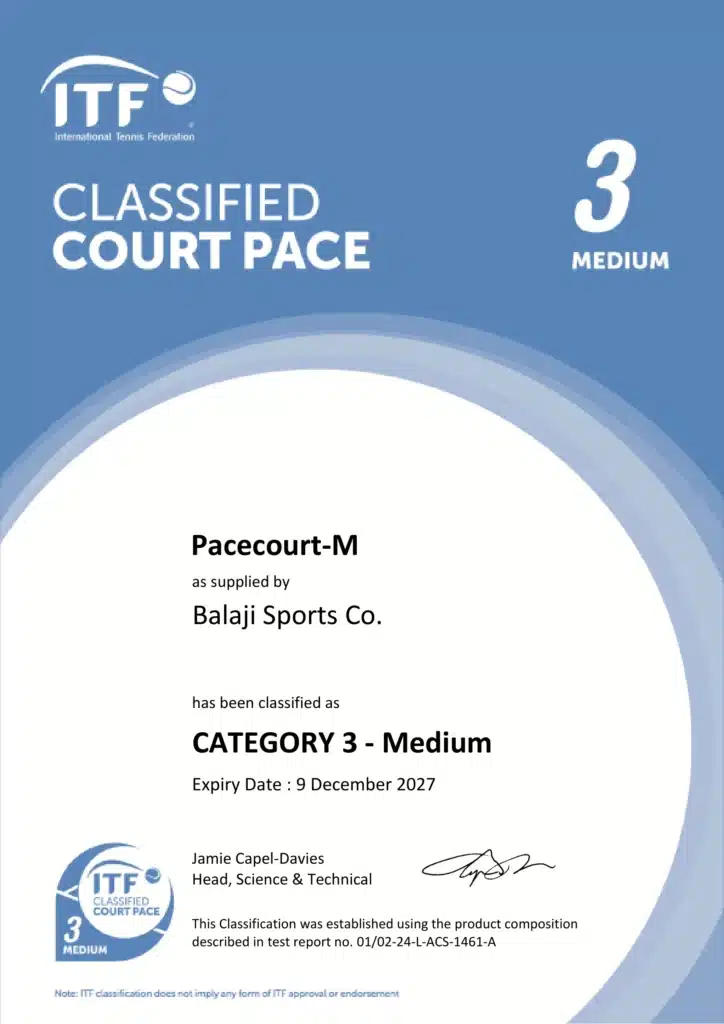
ITF-certified acrylic flooring for Tennis, Basketball, Badminton, Pickleball & more shipped worldwide.

    ISO-Certificate